
Outdoor Network Cable: Top 3 Powerful Picks 2024
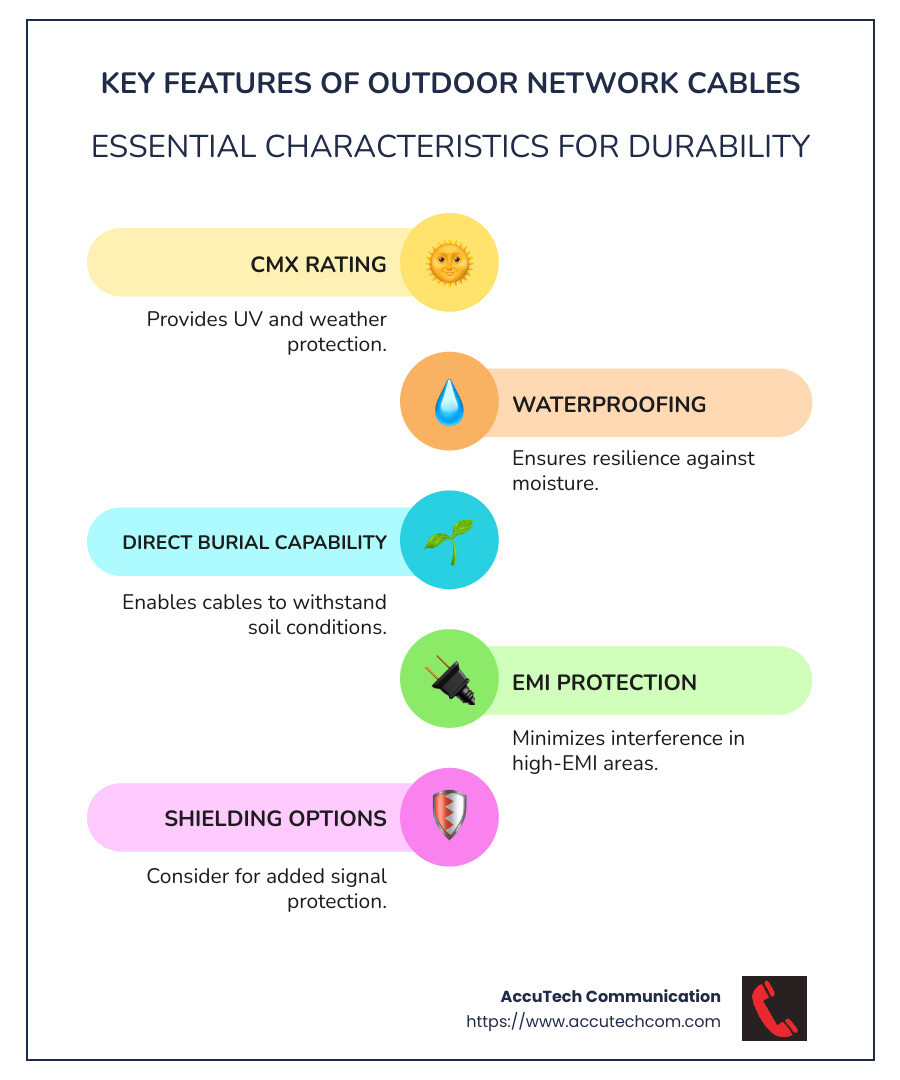
Outdoor network cable is crucial for businesses needing reliable networks that withstand the elements. Selecting the best cable for outdoor use ensures your network remains resilient, even in harsh environments. Opt for CMX-rated cables for UV protection and weather resistance. Prioritize features like waterproofing and direct burial capability to prevent downtime and costly repairs. Here’s what to focus on:
- CMX-rated cables: Essential for outdoor installations with UV and weather protection.
- Direct burial: Skip conduit, these cables withstand moisture and temperature changes.
- Shielding options: Consider EMI protection for areas with high electromagnetic interference.
The right outdoor network cable can make a significant difference in your network’s durability and performance.
As an expert with over 20 years in network cabling, I am Corin Dolan. My experience, particularly with outdoor network cable, equips me to offer the insights you need for a robust outdoor setup. Let’s dig into how you can improve your connectivity and safeguard your network investments efficiently.
Outdoor network cable terms made easy:
– Types of network wiring
– network cable categories
– network cable tester
Understanding Outdoor Network Cable
When setting up a network outdoors, choosing the right cable is key to ensuring long-lasting performance. Outdoor network cables must withstand various environmental factors, such as sunlight, rain, and temperature swings. This is where CMX-rated cables come into play.
CMX Rated: The Gold Standard for Outdoor Use
CMX-rated cables are specifically designed for outdoor applications. They feature a jacket made from treated LLDPE (linear low-density polyethylene), which provides several benefits:
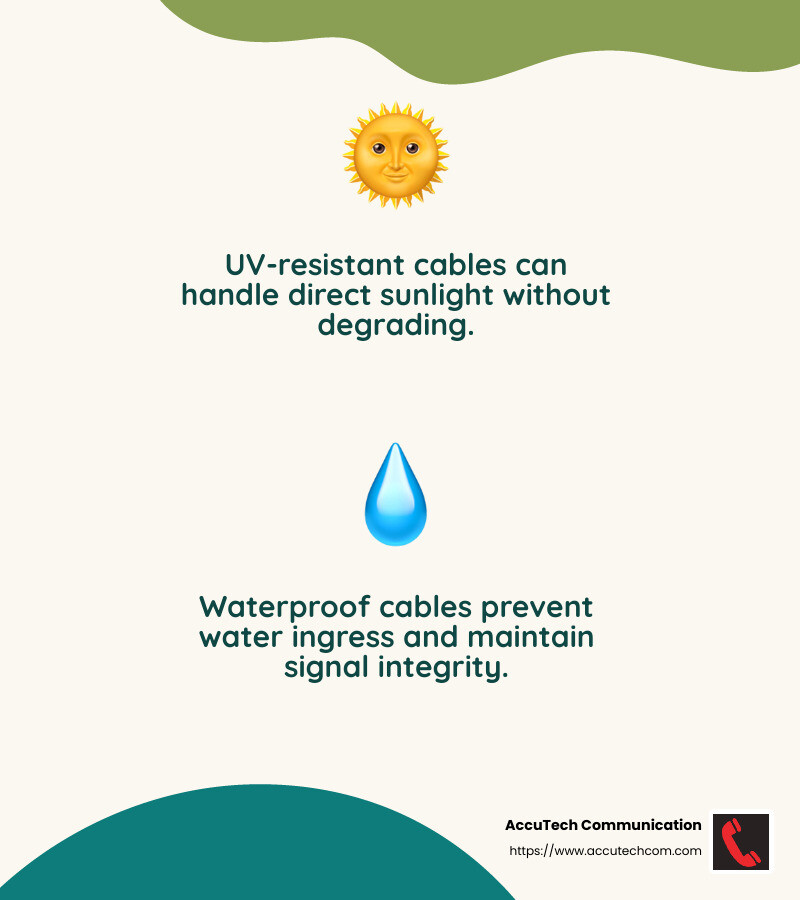
- UV Resistance: These cables can handle direct sunlight without degrading. This is crucial because UV rays can quickly wear down standard indoor cables, leading to failures.
- Waterproofing: CMX jackets are excellent at blocking moisture vapor, which is essential for preventing water from entering the cable and causing damage.
- Temperature Resilience: These cables can withstand extreme temperature swings, ensuring they remain functional in both hot summers and cold winters.
Waterproof and Weatherproof: Built to Last
Outdoor environments are unpredictable. Rain, snow, and ice can all impact your network if you don’t use the right cables. Waterproof cables are a must-have for any outdoor installation. They are designed to resist water ingress, preventing short circuits and maintaining signal integrity.
- Direct Burial: Some outdoor cables are rated for direct burial, meaning they can be placed directly in the ground without additional protection like conduit. This feature simplifies installation and reduces costs.
- Durability: These cables are built to last, shrugging off the harshest elements Mother Nature can throw at them.
By choosing the right outdoor network cable, you are investing in a solution that ensures reliable connectivity and reduces the need for frequent maintenance or replacement.
In the next section, we’ll explore the different types of outdoor network cables available, such as Cat6 and Cat5e, and discuss their specific applications and benefits.
Types of Outdoor Network Cables
When it comes to selecting the right outdoor network cable, understanding the differences between types is crucial. Let’s explore the specifics of Cat6, Cat5e, shielded, and unshielded cables to help you make an informed choice.
Cat5e vs. Cat6: What’s the Difference?
Cat5e (Category 5e) cables are a popular choice for home networks. They support speeds up to 1Gbps and can handle distances up to 328 feet (100 meters). These cables are often sufficient for basic networking needs, like connecting computers and routers.
In contrast, Cat6 (Category 6) cables offer improved performance. They can support speeds up to 10Gbps, though this is typically effective over shorter distances (around 33-55 meters). Cat6 cables are ideal for setups requiring higher bandwidth, such as streaming high-definition video or gaming.
Shielded vs. Unshielded: Tackling Interference
Unshielded cables are suitable for environments with minimal interference. They are often more flexible and easier to install, making them a great choice for residential applications where electromagnetic interference (EMI) is not a concern.
On the other hand, shielded cables are designed to combat EMI, which can disrupt network signals. These cables are equipped with a foil shield that wraps around the twisted pairs, providing an extra layer of protection. Shielded cables are recommended for industrial settings or areas with heavy electronic equipment.
Choosing the Right Cable for Your Needs
- Residential Use: For most home networks, unshielded Cat5e cables will suffice. They are cost-effective and easy to work with.
- High-Performance Needs: If you require faster speeds or have a lot of devices, Cat6 is the way to go. Consider shielded Cat6 if you’re in an area prone to interference.
- Commercial or Industrial Settings: Shielded cables, whether Cat5e or Cat6, are advisable to ensure signal integrity in environments with potential EMI.
By understanding these differences, you can select the best outdoor network cable for your specific situation. In the next section, we’ll discuss best practices for installing these cables to maximize their effectiveness and longevity.
Installation Best Practices
Once you’ve chosen the right outdoor network cable, it’s time to think about installation. Proper installation is key to ensuring your network performs well and lasts a long time. Here are some best practices to consider:
Direct Burial: A Reliable Option
Direct burial is a common method for installing outdoor network cables. This involves placing the cable directly into the ground without any protective conduit. It’s a straightforward approach that works well if you bury the cable at least 18 inches deep. This depth helps protect it from physical damage and temperature fluctuations.
When using direct burial, it’s important to choose a cable that is specifically rated for this purpose. These cables are designed to withstand moisture and soil conditions. To further protect your cable, consider laying it in a lazy “S” pattern. This allows for some flexibility if the ground shifts over time.
Conduit: Added Protection
For those seeking extra protection, using a conduit is a great option. A conduit is a tube that encases the cable, shielding it from physical damage and environmental factors like moisture. This method is especially useful in areas with rocky soil or where future digging might occur.
When installing in a conduit, make sure to use a conduit that is large enough to allow for easy cable installation and future maintenance. Also, ensure the conduit is sealed at both ends to prevent water ingress.
EMI Protection: Shielding Your Signal
Electromagnetic interference (EMI) can be a concern, especially in areas with a lot of electronic equipment or power lines. To protect against EMI, consider using shielded cables. These cables have a special foil layer that helps block interference, ensuring a clear and stable signal.
Proper grounding is also crucial for EMI protection. Make sure the shield of your cable is grounded at both ends to effectively drain off any interference or static electricity. This is particularly important for cables that are suspended in the air, as they can generate static from wind movement.
By following these installation best practices, you can ensure your outdoor network cable is set up for optimal performance and longevity. In the next section, we’ll address some frequently asked questions to help further guide your choices.
Frequently Asked Questions about Outdoor Network Cables
Can you run network cable outside?
Yes, you can run network cable outside, but it’s important to use outdoor-rated cables. These cables are specifically designed to withstand the elements, such as rain, UV rays, and temperature changes. Look for cables with a CMX jacket, which provides the necessary protection for outdoor installations. This jacket ensures the cable remains durable even when exposed to harsh weather conditions.
What Ethernet cable is suitable for outdoor use?
When it comes to choosing an Ethernet cable for outdoor use, Cat6 cables are a solid choice. They offer higher bandwidth capabilities, making them suitable for high-speed internet connections. Additionally, Cat6 cables are built for durability, ensuring they can handle the wear and tear of outdoor environments. If you’re setting up a network that requires long cable runs or is prone to electromagnetic interference, consider using shielded Cat6 cables for added protection.
Is it better to put direct burial outdoor cable into conduit or just bury it directly in the ground?
This decision depends on your specific needs and environment. Direct burial is a reliable option, as mentioned earlier. It involves placing the cable directly into the ground, which is cost-effective and straightforward. However, the cable must be rated for direct burial to resist moisture and soil conditions effectively.
On the other hand, using a conduit provides an extra layer of protection. A conduit can shield the cable from physical damage and moisture, making it ideal for areas with rocky soil or where future digging might occur. It also allows for easier maintenance and future upgrades. If you choose this method, ensure the conduit is sealed properly to prevent water ingress.
Both methods have their advantages, so consider factors like soil conditions, potential for future disturbances, and budget when deciding the best approach for your outdoor network cable installation.
Conclusion
When it comes to selecting and installing outdoor network cables, AccuTech Communications stands out as a trusted partner. With over two decades of experience, we are committed to providing certified, reliable service that meets the highest quality standards.
Our team understands the importance of using the right materials and methods for outdoor network installations. Whether you need Cat6 cables for high-speed connectivity or are considering direct burial versus conduit installation, we offer expert guidance custom to your specific needs.
At AccuTech, we pride ourselves on our competitive pricing and unwavering dedication to quality. Our certified technicians ensure every installation is optimized for performance and durability, so your network remains robust and reliable, no matter the environmental challenges.
For businesses in Massachusetts, New Hampshire, and Rhode Island, we provide comprehensive network cabling solutions that improve communication and data transfer capabilities. Trust AccuTech Communications to make your network stronger and more efficient.
Explore our network cable services to learn more about how we can support your outdoor and indoor cabling needs.
