Pre-Terminated vs. Field-Terminated Fiber: Which Fits Your Building?
Learn how route measurements, connector clearance, installation access and future changes determine whether factory-built fiber assemblies or on-site termination make more sense.
The short answer
- Pre-terminated fiber fits well when the route is confirmed and protected connectors can pass through it.
- Field termination offers flexibility when cable lengths or final equipment locations remain uncertain.
- Compare the complete installed scope, including pulling, termination, slack storage and testing.
- Factory testing does not replace testing the completed fiber link after installation.
Understand what each option actually includes
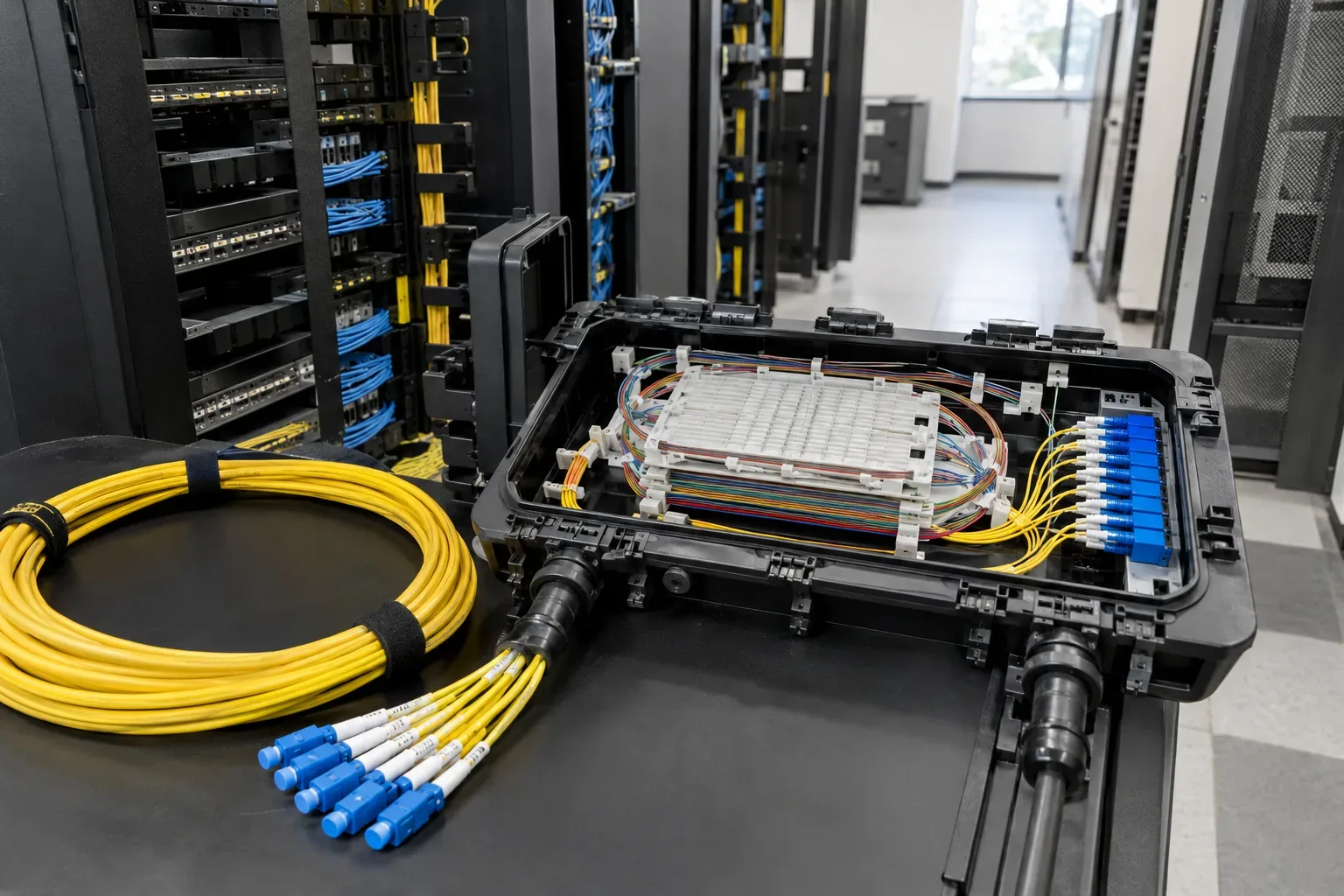
Pre-terminated fiber arrives with connectors already attached to one or both ends. The assembly is built and tested at the factory, then installed and connected on site. It can reduce connector preparation in your building, provided the assembly fits the planned route and termination locations.
Field-terminated fiber is installed as cable and finished on site. That may mean splicing its strands to factory-connectorized pigtails inside an enclosure, or attaching suitable field-installable connectors. Ask which method a proposal includes: “field termination” alone does not describe the finished connection.
The distinction matters because a field-terminated link may still use factory-made connectors. You are choosing where and how the installed cable gets finished, rather than simply choosing factory quality versus technician workmanship.
Accutech Communications installs fiber for backbones, outdoor runs and links between buildings in Hopkinton, Greater Boston and MetroWest. Its fiber optic cabling installation services include pre-terminated assemblies, along with termination and testing.
Confirm the route and connector clearance before ordering
A factory assembly needs an order length based on the complete route between its termination points. A floor-plan distance between rooms misses vertical travel, turns, cabinet entry, routing within enclosures and planned service slack.
Before ordering, have the installer confirm:
- The final rack, enclosure and termination positions at both ends.
- The actual pathway, including transitions and sections that cannot be seen from the room.
- Space for protected connector ends, fanouts and any pulling grip.
- Where excess cable can be stored safely and accessibly.
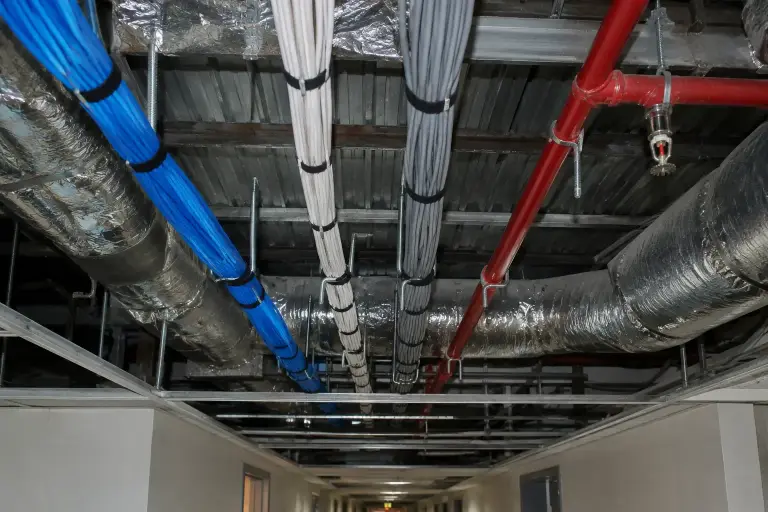
A pathway that accommodates bare cable may not accommodate the larger protected end of a pre-terminated assembly. Existing cables, tight turns and small openings can change the answer. A qualified installer should assess the complete pulling arrangement and the manufacturer's handling requirements.
Field termination can help when the route is uncertain or connector clearance is limited, because the main cable can be routed before its ends are finished. It still requires a suitable pathway and enough working cable at each end.
For planning, use existing drawings and photos from accessible locations. Leave ceiling access, pathway investigation and cable pulling to professionals.
Never look into a fiber connector or handle exposed fiber strands; leave inspection and termination to a trained technician.
Match the method to access and installation sequencing
Pre-terminated fiber can be useful when on-site connector work would be awkward, such as a network closet with limited working space. However, it does not eliminate time spent gaining access, protecting connectors, routing cable, mounting enclosures, cleaning connections or testing.
Field termination adds work at the endpoints. Splicing requires appropriate equipment and a suitable work area; field-installable connectors also need careful preparation and verification. Ask where that work will happen and whether the room will remain accessible throughout the job.
In an occupied office, discuss these separate scheduling questions:
- When can technicians access the full route?
- When can they work inside each network room?
- When can IT disconnect existing equipment and move connections?
These windows may differ. Installing a new cable does not necessarily require an immediate switchover, and a pre-terminated assembly does not make equipment migration automatic.
Accutech coordinates work with your contractor or schedules around staff in an occupied office. Share access restrictions early so the installation method and work sequence can be considered together.
Compare total installed work and future changes
Comparing a factory assembly's purchase price with a reel of unfinished cable leaves out much of the project. Request a comparison that includes the cable, connectors or pigtails, enclosures, pulling accessories, installation labor, termination, testing and documentation.
Also discuss what happens if equipment moves:
- Length changes: Confirm the required assembly length before ordering.
- Excess length: Additional cable needs planned storage without crowding the enclosure or obstructing service access.
- Expansion: Spare strands and available enclosure capacity may support future connections with either method.
- Repairs: Repair options depend on the damage location, accessible slack and enclosure design, not just the original termination method.
Neither approach makes future changes effortless. Specify which changes you reasonably expect—another cabinet, additional connections or a relocated rack—and ask how the proposed design would accommodate them.
Plan slack storage before ordering extra length; excess cable becomes a maintenance problem when it has nowhere suitable to go.
Put the important decisions in the purchasing scope
A useful proposal describes a complete link, rather than simply listing “pre-terminated fiber” or “fiber termination.” Give bidders the same requirements so their recommendations can be compared fairly.
Your scope should address:
- Application: Equipment being connected, intended link speed and any planned upgrades.
- Fiber and strand count: Single-mode or multimode, working strands and any agreed spare capacity.
- Endpoint details: Enclosure positions, connector types and how connections reach the equipment.
- Route verification: Who confirms the route and approves assembly lengths before ordering.
- Installation method: Factory termination, on-site splicing, field-installed connectors or a combination.
- Physical arrangement: Cable protection, connector clearance, slack storage and enclosure capacity.
- Handover: Labels, port assignments, agreed test results and records of the installed route.
If multi-fiber connectors such as MPO are proposed, have the installer and IT team agree on compatibility and polarity—the arrangement that connects transmitting fibers to the correct receiving fibers. Matching connector shapes alone is insufficient.
When you request an estimate from Accutech Communications, share available floor plans, endpoint photos and known access restrictions. Identify uncertain details clearly so they can be checked before materials are ordered.
Choose by building conditions, then verify the finished link
Use these examples as starting points for discussion, rather than universal recommendations:
- Confirmed route between established racks: Pre-terminated fiber is worth considering when the full route is accessible, its length is verified and protected connectors can pass through.
- Existing pathway with uncertain turns or endpoint locations: Field termination may offer useful flexibility, subject to a professional pathway assessment.
- Different conditions at opposite ends: An assembly finished at one end and terminated on site at the other may be an option. Have the installer explain the handling and testing plan.
Whichever method you choose, require testing of the installed link. Factory results describe the assembly before its journey through your building; installation damage, contamination or connection errors can still affect performance.
Accutech terminates and tests each fiber link before handover. Agree beforehand on the test scope and records you will receive. At acceptance, check that results correspond to the installed labels and intended fiber pairs, and keep those records with the network documentation for future troubleshooting.
Common questions
Is pre-terminated fiber always better quality?
No. Factory preparation provides controlled assembly and testing, but a properly installed and tested field-terminated link can also perform well. Cable handling, connector cleanliness and the completed link's test results matter with either approach.
Can we use both termination methods in the same building?
Yes. Different routes can use different methods, and some assemblies are factory-terminated at only one end. Keep fiber types, connectors, labeling and test requirements coordinated across the design.
Can pre-terminated fiber be used outdoors or between buildings?
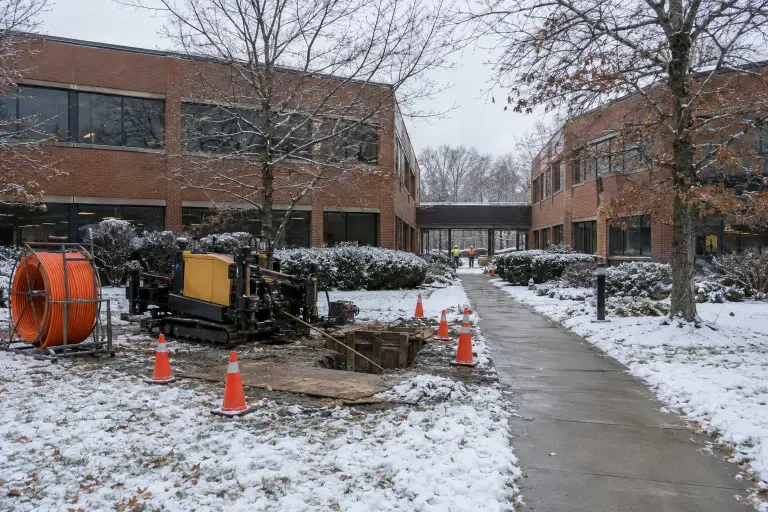
Yes, when the cable assembly and its installation arrangement are suitable for the environment. Factory-attached connectors do not make a cable weather-resistant or suitable for underground use. Have the installer assess the route, cable construction and protection at transitions.
What if a connector on a pre-terminated assembly is damaged?
A damaged connector does not automatically mean the entire cable must be replaced. A technician should assess the assembly construction, available slack and repair options, which may include retermination or splicing. Do not attempt to trim or reconnect exposed fiber yourself.