
security and alarms systems companies: 5 Best Powerful Picks 2025
Finding Peace of Mind: Comparing Today’s Top Security Solutions
Have you ever lain awake at night wondering if your home is truly secure? You’re not alone. Peace of mind is priceless, which is why choosing the right security solution matters so much.
Security and alarms systems companies have evolved dramatically in recent years, offering sophisticated protection that goes well beyond the basic burglar alarms of yesterday. Today’s systems don’t just detect intrusions—they create an intelligent safety ecosystem around your property.
Did you know that over 80% of convicted burglars admit they’d skip houses with visible security systems? That single statistic speaks volumes about the deterrent power of modern security solutions, according to a study by the University of North Carolina.
Let’s look at how the industry leaders stack up:
| Provider | Installation Type | Monitoring Options | Smart Home Integration | Standout Feature |
|---|---|---|---|---|
| Provider A | Professional | 24/7 Professional | Alexa, Google | 150+ years experience |
| Provider B | DIY or Professional | Self or Professional | Alexa, Google | No contracts required |
| Provider C | Professional | 24/7 Professional | Alexa, Google, Z-Wave | Smart Deter technology |
| Provider D | DIY | Self or Professional | Alexa | Affordable video options |
| Provider E | Professional | 24/7 Professional | Smart home compatible | 90+ years experience |
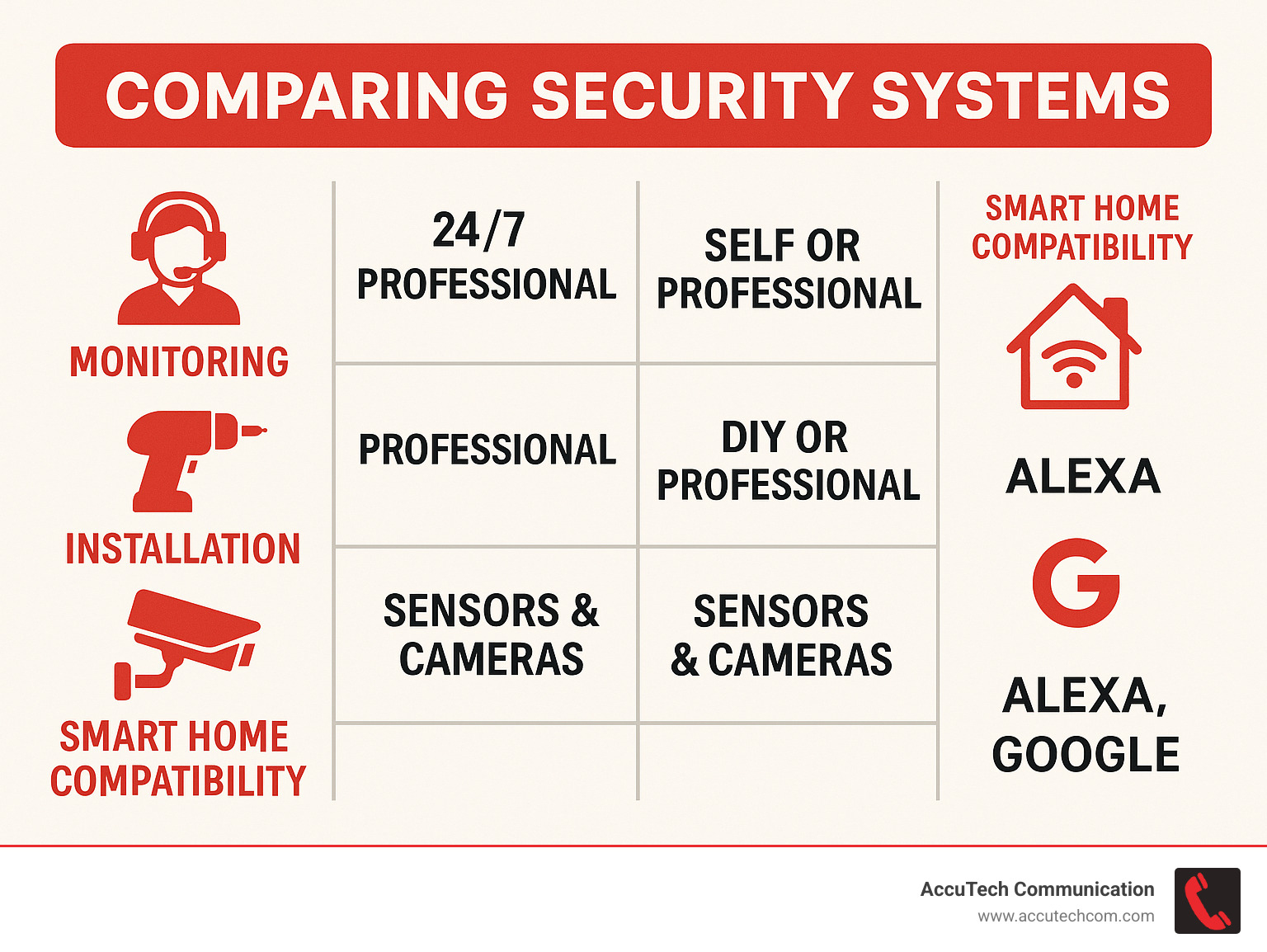
The choice between DIY and professional installation isn’t just about convenience—it’s about matching your lifestyle. Prefer hands-on control? A DIY system might be perfect. Want experts to handle everything? Professional installation ensures nothing is overlooked.
Similarly, monitoring options reflect how you want to interact with your security. Professional 24/7 monitoring means trained specialists are always watching your back, while self-monitoring puts control literally in your hands through smartphone apps.
Today’s security landscape has expanded beyond simple door sensors. Modern systems now integrate seamlessly with your smart home, offering voice control through Alexa or Google Assistant. Many use artificial intelligence to distinguish between your teenager coming home late and an actual intruder—reducing those frustrating false alarms.
Hi there! I’m Corin Dolan, owner of AccuTech Communications. For over 30 years, I’ve helped businesses like yours implement custom security solutions that truly protect what matters most. My team specializes in designing integrated security infrastructure that grows with you, ensuring you’re never left vulnerable as your organization evolves.
Whether you’re exploring commercial security systems, need a comprehensive video surveillance camera system, or are interested in our CCTV / CATV Installation Services, we’re here to guide you through the options. We don’t believe in one-size-fits-all solutions—your security needs are unique, and your protection system should be too.
The best security system isn’t necessarily the most expensive or feature-packed—it’s the one that fits your specific needs and provides that invaluable peace of mind you’re looking for.
Quick Glance: Types of Home Security Systems
When navigating home security, understanding the different types of systems available is crucial to making an informed decision. Let’s break down the main categories to help you determine which might be the best fit for your needs.
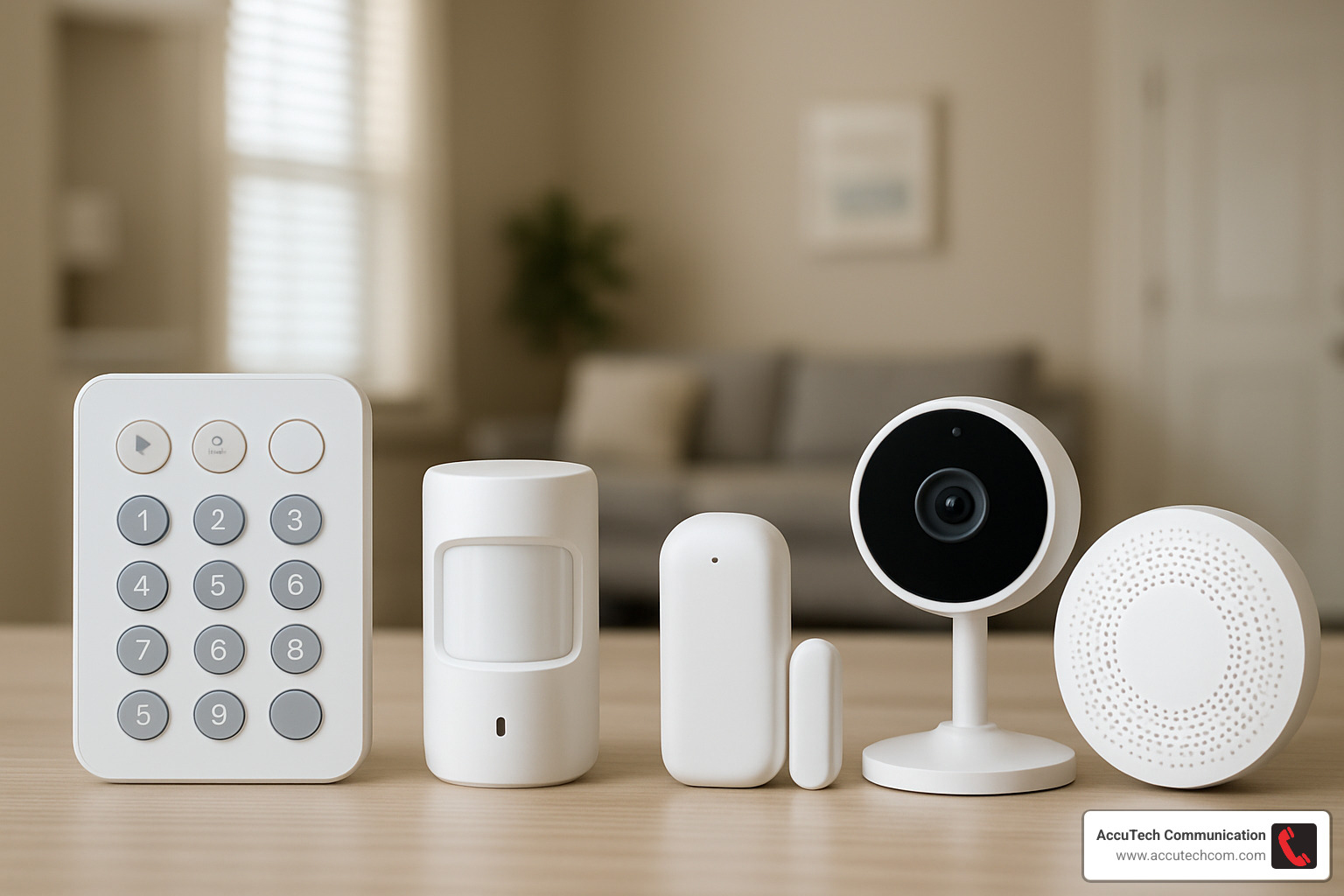
Modern security systems generally fall into three main categories that fit different lifestyles and needs. DIY Systems let you take control with self-installed equipment and optional professional monitoring. Professional Systems offer peace of mind through expert installation with 24/7 monitoring services. Hybrid Solutions give you the best of both worlds – professionally installed equipment with self-monitoring options if that’s your preference.
Beyond how they’re installed, systems differ in how they stay connected. Wired systems are hardwired into your home’s electrical system, providing reliable connections but requiring more invasive installation. Wireless systems use battery-powered components that communicate via radio frequency or Wi-Fi, offering flexibility and easier installation. And don’t forget about cellular backup – a critical feature that keeps your system connected even when your internet goes down.
“The scope of features goes way beyond our imagination. It is like comparing a bicycle to a jet plane,” one customer told us during our research. It’s true – today’s security systems have evolved dramatically from the basic alarm setups of yesteryear.
Most modern systems now incorporate Video Surveillance as a core component, allowing you to verify alarms visually and capture evidence when needed. This integration has transformed security systems from simple alert mechanisms into comprehensive monitoring solutions that put control at your fingertips.
DIY Systems – Fast & Flexible
DIY security systems have surged in popularity, especially among renters, tech-savvy homeowners, and budget-conscious families. These user-friendly systems typically feature peel-and-stick sensors that require no drilling or wiring, app-guided setup processes that walk you through installation step-by-step, and portable components that can move with you to a new home.
As one customer shared with a smile, “This may sound like a really small thing, but I loved the minimalistic, clearly-marked packaging. It made unboxing and setting up the system just that little bit easier.”
DIY systems shine in their flexibility – you can start small with a basic package and expand your security coverage over time as your needs or budget allows. Many popular systems offer starter kits with the option to add additional sensors, cameras, and smart home devices as needed.
The primary advantage? Their no-commitment approach. Most don’t require long-term contracts, making them perfect for renters or those who might relocate frequently. Just remember that while installation is DIY, many still offer professional monitoring services for an additional monthly fee – giving you options as your needs change.
Professionally Installed Systems – White-Glove Approach
For those seeking a hands-off experience with maximum reliability, professionally installed systems deliver comprehensive protection with expert guidance. These premium systems come with certified technicians who strategically place sensors and cameras, code compliance knowledge to ensure systems meet local regulations, and in-home training to familiarize you with all system features.
A local security technician once summarized the value perfectly: “Making you our highest priority means tailoring every component to your exact needs.” That personalized service is a hallmark of professional installation.
Professional installation particularly benefits larger homes, properties with complex layouts, or folks who aren’t comfortable with technology. Teams with decades of experience bring extensive knowledge to each installation.
The white-glove approach typically includes a comprehensive security assessment, where technicians identify vulnerable entry points and recommend appropriate equipment placement. This expert guidance helps ensure no security gaps are overlooked – something DIY installers might miss without professional training.
While professional installation usually comes with a setup fee, many companies offer promotions that waive this cost with the purchase of a monitoring plan. The real value lies in the peace of mind that comes from knowing your system was installed correctly by security experts who understand both the technology and potential security vulnerabilities in your specific home.
Head-to-Head Comparison of security and alarms systems companies
Shopping for a security system can feel overwhelming with so many options out there. Let’s cut through the noise and compare what really matters when choosing between security and alarms systems companies for your home or business protection.
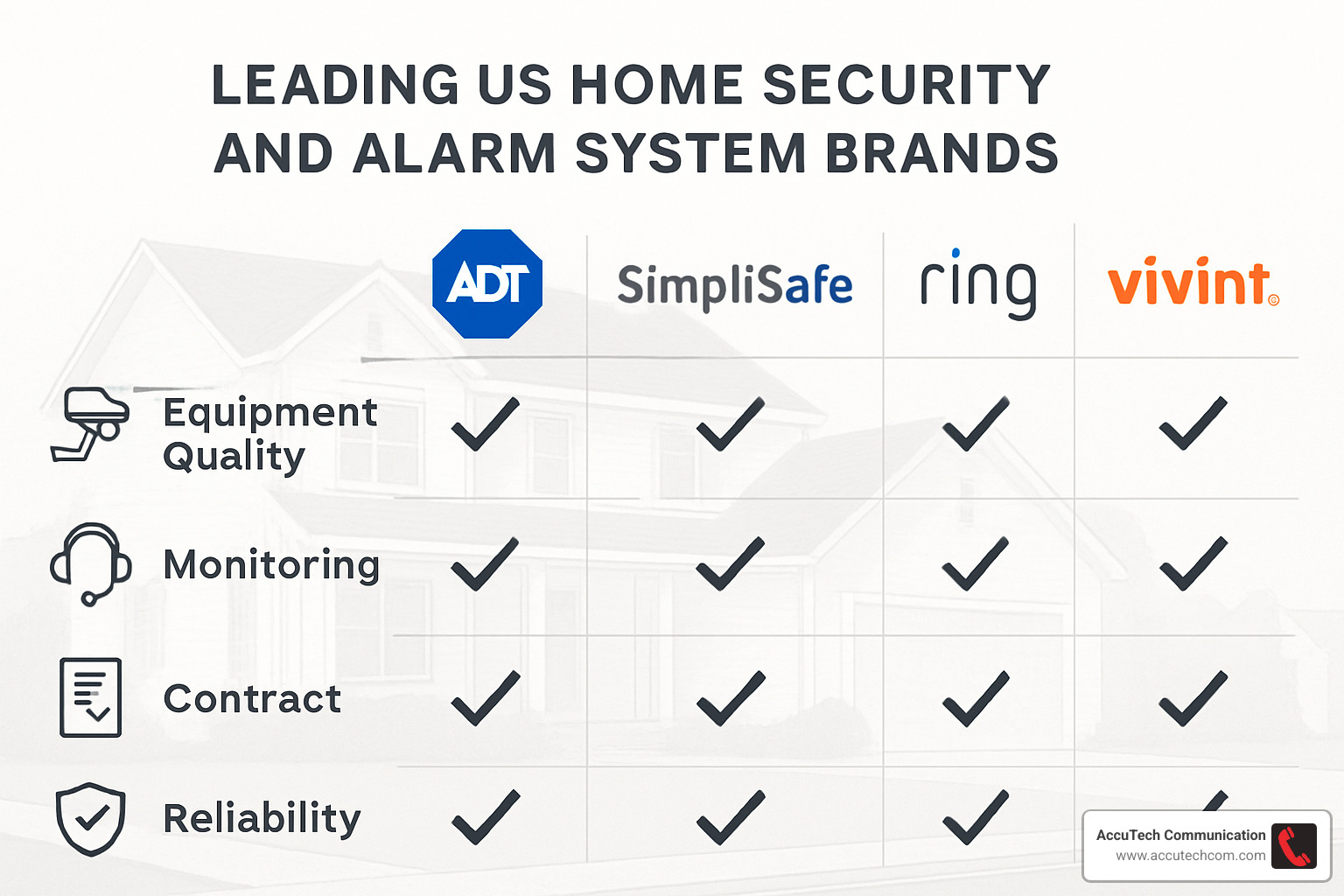
I’ve spent countless hours talking with homeowners about their security needs, and the same questions always come up: Which system is most reliable? Will it be easy to use? Can I trust the company to be there when I need them? These are the benchmarks that truly matter.
The security landscape has transformed dramatically in recent years. Traditional providers with decades of experience now compete with tech-savvy newcomers, each bringing different strengths to the table.
When it comes to equipment quality, there’s something for every preference. Some providers have cleverly partnered with smart home manufacturers, blending traditional security expertise with cutting-edge smart home features. Others take a different approach with sleek, DIY-friendly devices that won’t clash with your decor. Many systems now feature impressive Smart Deter technology that actively scares off potential intruders with light and sound—something my clients particularly appreciate for that extra peace of mind.
Monitoring reliability varies too. Some companies maintain multiple monitoring centers spread across the country (redundancy is your friend when it comes to emergency response), while others have built a reputation for quick 30-second average response times. As one customer told me recently, “It’s not just about having someone watching—it’s about how quickly they can help when seconds count.”
The user experience can make or break your satisfaction with a security system. As one tester put it: “The app is pretty straightforward and easy to use. Arming and disarming the system is very simple, and the user experience makes it near impossible to accidentally trigger the alarm.”
But not all interfaces hit the mark. Another tester noted about a different system: “It feels odd to have badges or achievements in a home security system. It doesn’t affect functionality, but feels like gamifying, rather than taking security seriously.” I couldn’t agree more—security isn’t a game, and the best interfaces focus on simplicity and reliability rather than flashy features.
Professional-Monitoring Leaders in security and alarms systems companies
When it comes to 24/7 professional monitoring, some security and alarms systems companies truly stand above the rest. These are the providers I recommend when clients tell me they want the absolute best in protection and peace of mind.
The industry leaders have impressive credentials – some with over 150 years of experience—that’s not just marketing talk, it’s a track record that speaks volumes. The best providers maintain networks of multiple monitoring centers for redundancy; if disaster strikes one location, the others seamlessly take over without you even noticing. UL-listed facilities (that’s Underwriters Laboratories certification—the gold standard in security) respond in about 30 seconds on average when an alarm triggers.
For folks who value local expertise, regional providers bring decades of trusted service with monitoring centers staffed by people who actually know your community. There’s something reassuring about knowing the person responding to your alarm understands the specific challenges of your neighborhood.
Some providers have carved out their niche with monitoring centers that hold the prestigious Five-Diamond certification. What really impresses me about the best approaches is Smart Deter technology, which allows monitoring agents to actively intervene when they spot suspicious activity—potentially stopping a break-in before it happens. That proactive stance represents the next evolution in security monitoring.
The advantages of professional monitoring extend far beyond basic intrusion detection. When you choose this route, you’re getting emergency dispatch without needing to grab your phone, multiple communication methods for reliability (cellular, landline, internet), and monitoring for life-threatening emergencies like fire and carbon monoxide. The verification protocols these companies use also help reduce false alarms, which means faster police response when you truly need it.
As one satisfied customer put it, “Professional outdoor protection truly makes me feel safer. Now, I can rest easier knowing someone is checking on my cameras when I’m sleeping.” That sentiment captures exactly why professional monitoring remains so valuable—it works while you rest, relax, or focus on what matters most to you.
DIY Innovators among security and alarms systems companies
The DIY security revolution has changed the game entirely, with innovative security and alarms systems companies making home protection more accessible than ever. These providers have reimagined security from the ground up with user-friendly technology that doesn’t require a professional installer or long-term contracts.
Leading DIY providers have become the names to beat in DIY security, with millions of customers trusting their homes to their systems. Their plug-and-play approach means you can set up comprehensive protection in under an hour, even if you’re not particularly handy. The testimonials speak for themselves: “I just switched from a security company I will not name. I am extremely pleased,” shared one customer. Another put it more succinctly: “Easiest. Thing. I. Have. Ever. Installed.”
Some providers (now part of larger tech companies) have built impressive ecosystems around affordable, camera-focused security. Their seamless integration with popular voice assistants makes voice control a breeze, and their flexible approach to monitoring has attracted customers who value freedom of choice.
What makes these DIY innovators special is their customer-first approach. They offer no-contract flexibility that lets you activate or pause professional monitoring as needed—perfect for seasonal travelers or those on tight budgets. Their mobile alerts arrive instantly on your smartphone, keeping you connected to your home no matter where you are. The user-friendly apps consistently earn 4.6+ star ratings from tens of thousands of users, proving that security technology doesn’t have to be complicated to be effective.
These systems typically feature wireless components that install in minutes without tools, battery backup to keep you protected during power outages, and expandable designs that grow with your changing security needs. As one reviewer summed it up perfectly: “This system just works. Zero complaints.”
The DIY approach has truly democratized home security, making it accessible to renters who can’t drill holes, budget-conscious homeowners who want control over their spending, and tech-savvy individuals who prefer to manage their own systems. It’s security on your terms—and that’s a powerful innovation indeed.
Monitoring: Professional vs. Self — Which Fits Your Lifestyle?
Choosing between professional and self-monitoring might be one of the biggest crossroads you’ll face when shopping for a security system. It’s a bit like deciding between hiring a personal assistant or handling everything yourself—both can work, but they suit different people.

When you opt for professional monitoring, you’re essentially hiring a team of security experts who never sleep. These folks sit in monitoring centers 24/7, ready to spring into action when your alarm triggers. They’ll try calling you first to check if everything’s okay, and if they can’t reach you or you confirm there’s a problem, they’ll dispatch the appropriate emergency services. Think of them as your security guardians—always watching, always ready.
With self-monitoring, you become your own security command center. Your phone buzzes with alerts when something triggers your system, and you decide whether to call 911 or ignore that alert because you just remembered your teenager was coming home early. It puts you in complete control, but also places all responsibility on your shoulders.
As one security expert candidly admitted: “Trust us, we’ve tested dozens of security systems over the years, and we still can’t give a straight answer anytime someone asks us what the best security system is.” That’s because the right choice depends entirely on your specific situation, budget, and comfort level.
Professional monitoring really shines in its reliability. Most systems use multiple communication paths—if your Wi-Fi goes down, cellular backup kicks in. If power fails, battery backup takes over. This redundancy ensures your home stays protected even when things go wrong. Our Security Camera Monitoring services at AccuTech Communications leverage these enterprise-grade solutions to keep businesses comprehensively protected.
Self-monitoring tools have gotten impressively sophisticated. Many leading security apps now hold 4.6–4.8-star ratings from tens or even hundreds of thousands of users, proving that intuitive design and reliable notifications are no longer optional—they’re expected.
Pros & Cons Snapshot
When it comes to professional monitoring, the biggest upside is lower anxiety. There’s something deeply reassuring about knowing trained professionals are watching over your home even when you’re unreachable—whether you’re in a meeting, on a plane, or just sound asleep. Many insurance companies recognize this value too, offering discounts of 10-20% on homeowners policies with professionally monitored systems.
The flip side? You’ll pay monthly fees (typically between $20-60) for that peace of mind. Some municipalities also charge for false alarms, and while many companies have moved away from long-term contracts, some still require them.
Self-monitoring wins big on cost—there’s typically no monthly fee beyond what you might already pay for internet service. You also maintain complete control over when and if authorities get called, and there’s no third party accessing your system, which some privacy-conscious homeowners prefer.
The downside is the responsibility. If you miss an alert because you’re in a meeting, swimming, or in an area with spotty cell service, your home is effectively unprotected. There’s also the emotional burden of being your own emergency dispatcher—making high-pressure decisions in moments of crisis isn’t for everyone.
Your lifestyle should guide this choice. If you travel frequently, work in areas with poor cell reception, or simply want to maximize peace of mind, professional monitoring makes a lot of sense. If you’re budget-conscious, tech-savvy, and typically well-connected, self-monitoring might provide sufficient protection while saving you money.
The good news? Many security and alarms systems companies now offer flexible approaches. Some let you switch between professional and self-monitoring seasonally or as needed. Others offer hybrid options with basic professional monitoring at lower price points. This flexibility means you don’t have to permanently commit to one approach—your security can evolve as your life does.
At AccuTech Communications, we help customers evaluate these options based on their unique situations, guiding them toward the monitoring solution that balances security, convenience, and budget in a way that makes sense for their specific needs.
Must-Have Equipment & Smart Integrations
Creating an effective security system is like building the perfect recipe—you need just the right ingredients working together. Let’s explore the essential components that create a truly comprehensive security solution for your home or business.
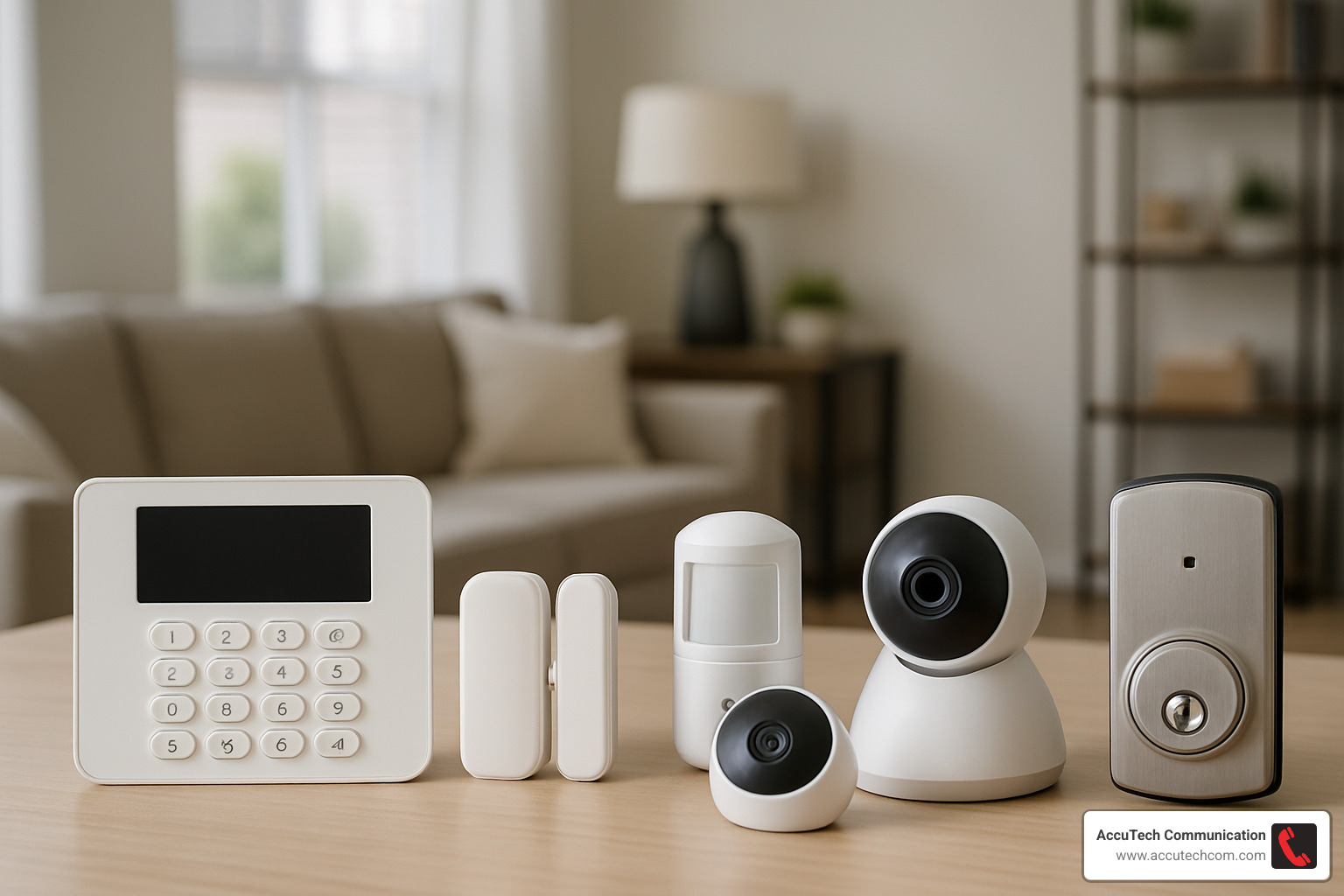
At the heart of every security system sits the control panel or hub—think of it as the brain that coordinates everything else. Connected to this hub, door and window sensors serve as your first line of defense, alerting you the moment someone attempts to enter. These small, unobtrusive devices are the workhorses of home security, with most homeowners needing between 6-10 sensors for complete coverage.
Motion detectors add another layer of protection by identifying movement inside your home when the system is armed. Modern motion sensors are smart enough to ignore pets (usually under 40-80 pounds, depending on the model) while still catching human intruders.
No modern security system is complete without cameras. From doorbell cameras that let you see who’s knocking to outdoor cameras that monitor your perimeter, video verification has become essential. As one security expert told us, “Video doesn’t just catch criminals—it prevents crime altogether when would-be burglars spot your cameras.”
Our Security Camera Installations service at AccuTech Communications helps businesses position cameras for maximum coverage with minimal blind spots—a crucial consideration often overlooked in DIY installations.
Today’s security systems do more than just detect break-ins. Environmental sensors protect against other dangers like smoke, carbon monoxide, water leaks, and extreme temperatures. These sensors can literally be lifesavers, alerting you to dangers even when you’re miles away from home.
The magic happens when your security system connects with other smart home devices. Smart locks eliminate the need for physical keys and let you grant temporary access to visitors. Smart lighting can be programmed to make your home look occupied even when you’re away, while voice assistants like Alexa and Google Assistant let you control your system with simple commands.
“The first time I said ‘Alexa, arm my security system’ and watched everything lock up automatically, I felt like I was living in the future,” shared one homeowner we interviewed. “Now I can’t imagine going back to the old way.”
The emerging Matter smart home standard promises to make these integrations even smoother in the future, though our research shows it’s currently arriving for non-camera devices while security cameras are still catching up. This standard will eventually allow devices from different manufacturers to work together more seamlessly.
Building a Future-Proof Kit
When investing in security equipment, thinking long-term saves both money and headaches down the road. A truly future-proof system includes several critical elements:
First, never underestimate the importance of battery backup. Power outages often coincide with increased crime, making this feature essential. Look for systems offering at least 24 hours of battery protection—the best systems provide up to 72 hours of continuous operation during outages.
Modular expandability is another key consideration. Your security needs will evolve over time, whether you’re adding a home office, welcoming a new baby, or adapting to aging in place. Choose systems that grow with you, allowing you to add sensors, cameras, and specialized equipment without replacing your entire setup.
Regular firmware updates are the unsung heroes of security technology. These invisible improvements patch vulnerabilities, add new features, and ensure your system remains compatible with other smart devices. Before selecting a security provider, check their track record for software updates—the best companies provide them frequently and seamlessly.
A seasoned installer once noted, “Skipping professional guidance can lead to costly mistakes in system design.” While DIY systems have improved dramatically, professional expertise often helps avoid oversights that compromise security.
At AccuTech Communications, we specialize in helping businesses create scalable security infrastructures. Our approach prevents the costly “rip-and-replace” scenarios that occur when systems can’t adapt to changing needs. Whether you’re securing a small retail space or a multi-building campus, thinking ahead about your security needs pays significant dividends.
The best security systems don’t just protect your property—they provide genuine peace of mind through thoughtful integration, reliable performance, and the ability to evolve alongside your changing life circumstances.
Costs, Contracts & Hidden Fees Uncovered
Understanding the true cost of security systems requires looking beyond the advertised price to examine the complete financial picture, including equipment costs, monitoring fees, and potential hidden charges.
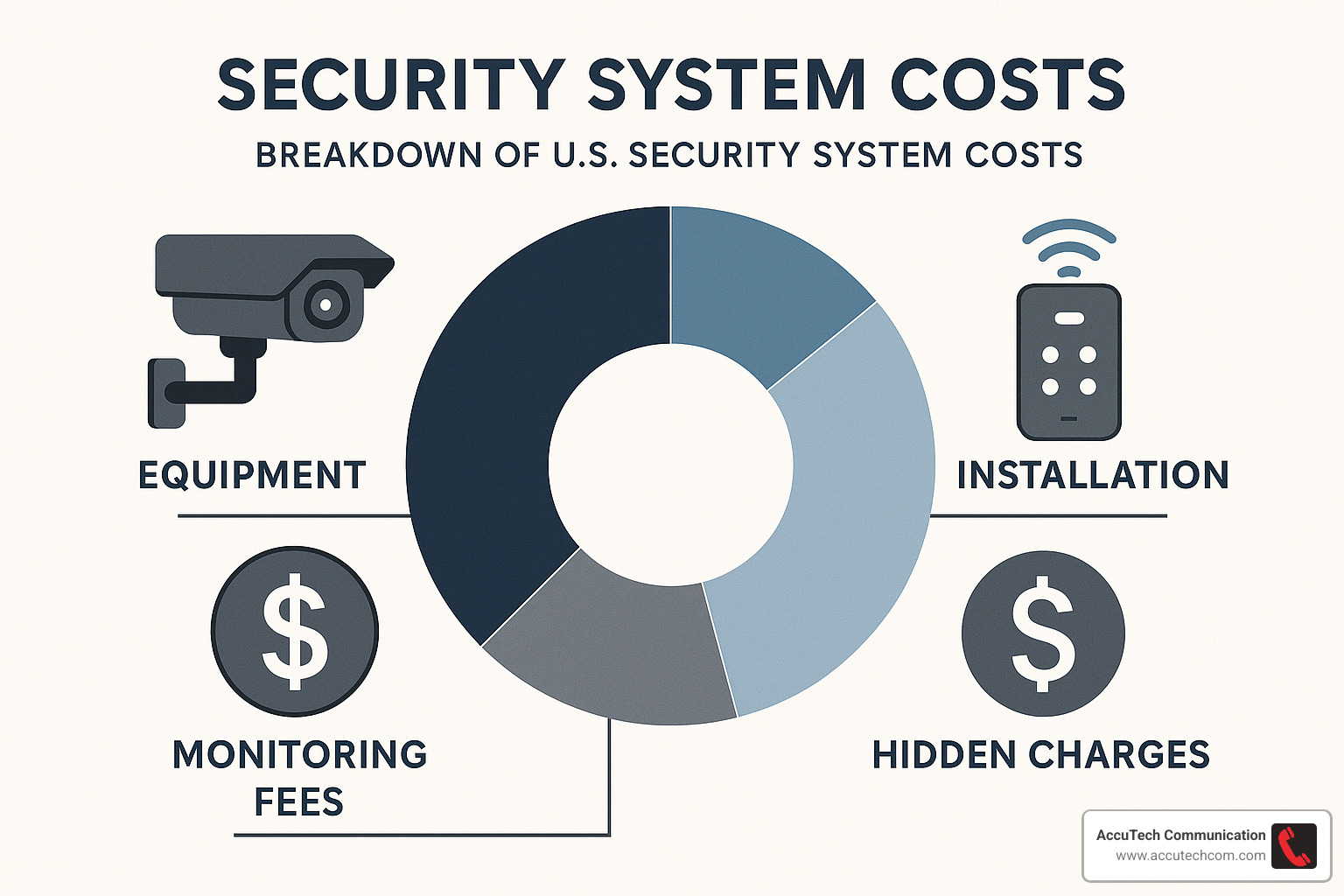
When I talk with clients about security systems, the first question is almost always about cost. The truth is, it’s not as simple as a single price tag. Let’s break down what you’re really paying for when you invest in home security.
Most home security starter systems will set you back between $150 and $300, though more comprehensive setups can climb to $1,000 or beyond. Your basic starter kit typically includes a base station or control panel, a handful of door/window sensors, and at least one motion detector. Many also throw in a keypad or key fob for easy arming and disarming.
If you’re looking for more bells and whistles, premium systems add HD cameras (both indoor and outdoor varieties), video doorbells that let you see who’s at your door from anywhere, smart locks for keyless entry, and environmental sensors that detect everything from smoke to flooding.
“I was surprised at how affordable getting started actually was,” one of our clients told me recently. “A starter kit under $300 felt reasonable for the peace of mind.” Budget-conscious shoppers might appreciate that some companies offer even lower-cost entry kits, making them among the most wallet-friendly options available.
The equipment is just your first expense, though. Monthly monitoring is where the ongoing costs come in:
Self-monitoring options are often free or run about $5-10 monthly if you want basic video storage. You’ll handle all alert responses yourself through your smartphone.
Basic professional monitoring typically costs between $10-30 monthly, with trained professionals ready to respond to alerts 24/7.
Premium monitoring with video verification capabilities usually ranges from $30-60 monthly, offering the highest level of protection.
One business traveler told me, “I pay about $40 a month, which includes monitoring for my system with several cameras. Knowing professionals are keeping an eye on things while I’m on the road is worth every penny.”
Here’s where things get interesting – and potentially expensive if you’re not careful. Security and alarms systems companies often have additional fees that don’t make it into their marketing materials:
Installation fees typically run $50-200 for professional setup, though many providers offer promotions that waive this cost entirely.
Activation fees can add a one-time charge of $25-100 when you first start service.
Relocation fees might surprise you if you move – some companies charge $100-300 to reinstall your system at a new address.
Permit fees are required in many municipalities, typically costing $10-50 annually.
False alarm fees can really add up, with local jurisdictions charging anywhere from $50-500 for repeated false alarms. (This is one reason quality equipment and proper installation are so important!)
The good news? Many providers now offer financing options, including 0% APR deals for up to 60 months. These buy-now-pay-later arrangements can make premium systems more accessible, though they typically require a credit check and approval.
A significant benefit that often gets overlooked is the homeowner’s insurance discount. Most insurance companies offer 5-20% off your premiums when you have a professionally monitored system. Over several years, these savings can substantially offset your security costs.
For our business clients, AccuTech Communications’ Business Security Monitoring services provide cost-effective solutions custom to commercial needs. We pride ourselves on transparent pricing structures – no one likes surprise bills.
No-Contract vs Long-Term Agreements
“Do I have to sign a contract?” is usually the second question clients ask me. The security industry has evolved significantly in recent years, moving from requiring long-term commitments to offering much more flexible options.
No-contract systems have gained enormous popularity, especially with younger homeowners and renters. These arrangements give you the freedom to cancel anytime without penalties, allow month-to-month monitoring with no long-term commitment, and often let you switch between self-monitoring and professional monitoring as your needs change.
The trade-off? You’ll typically pay more upfront for equipment since there’s no contract to offset those costs. Many modern providers have built their entire business model around this approach, proudly advertising “No contracts. No cancellation fees. No kidding.” This flexibility is particularly valuable for renters, frequent movers, or those who simply prefer keeping their options open.
Long-term agreements still have their place, typically spanning 24-36 months. These arrangements usually offer lower upfront equipment costs (sometimes even free equipment), lock in your monitoring rates to protect against price increases, and often include perks like professional installation and extended warranties.
The catch? Early termination fees can be substantial, sometimes reaching several hundred dollars if you need to cancel before your contract ends.
One client described his experience with a national provider: “I paid a few hundred dollars upfront with a monthly fee on a 36-month contract. I knew I’d be in my home for at least that long, so the commitment didn’t bother me. Plus, I received more equipment than I would have with a no-contract option.”
When weighing these options, it’s worth doing some early-termination math. If you sign a 36-month contract but need to cancel after 18 months, you might face a fee calculated as the remaining months times a per-month penalty. On a $40/month plan with 18 months remaining, this could result in a $720 penalty, though some companies prorate these fees based on how much of the contract you’ve completed.
Long-term contracts often include valuable bundled perks that no-contract plans don’t offer: free equipment upgrades during your contract term, service calls without additional charges, extended warranties covering equipment replacement, and price-lock guarantees protecting against rate increases.
At AccuTech Communications, we understand that every client’s situation is unique. We respect your preferences and can recommend systems that align with your contract comfort level, whether that means maximum flexibility or long-term cost optimization. We’ve helped countless businesses across Massachusetts, New Hampshire, and Rhode Island find the security solution that fits both their protection needs and financial considerations.
Cutting-Edge Tech & Future Trends
The security industry is evolving at breakneck speed, with innovations that would have seemed like science fiction just a few years ago. From smart cameras that can tell the difference between your teenager and a stranger to systems that actively deter criminals before they strike – we’re witnessing a revolution in how we protect our homes and businesses.
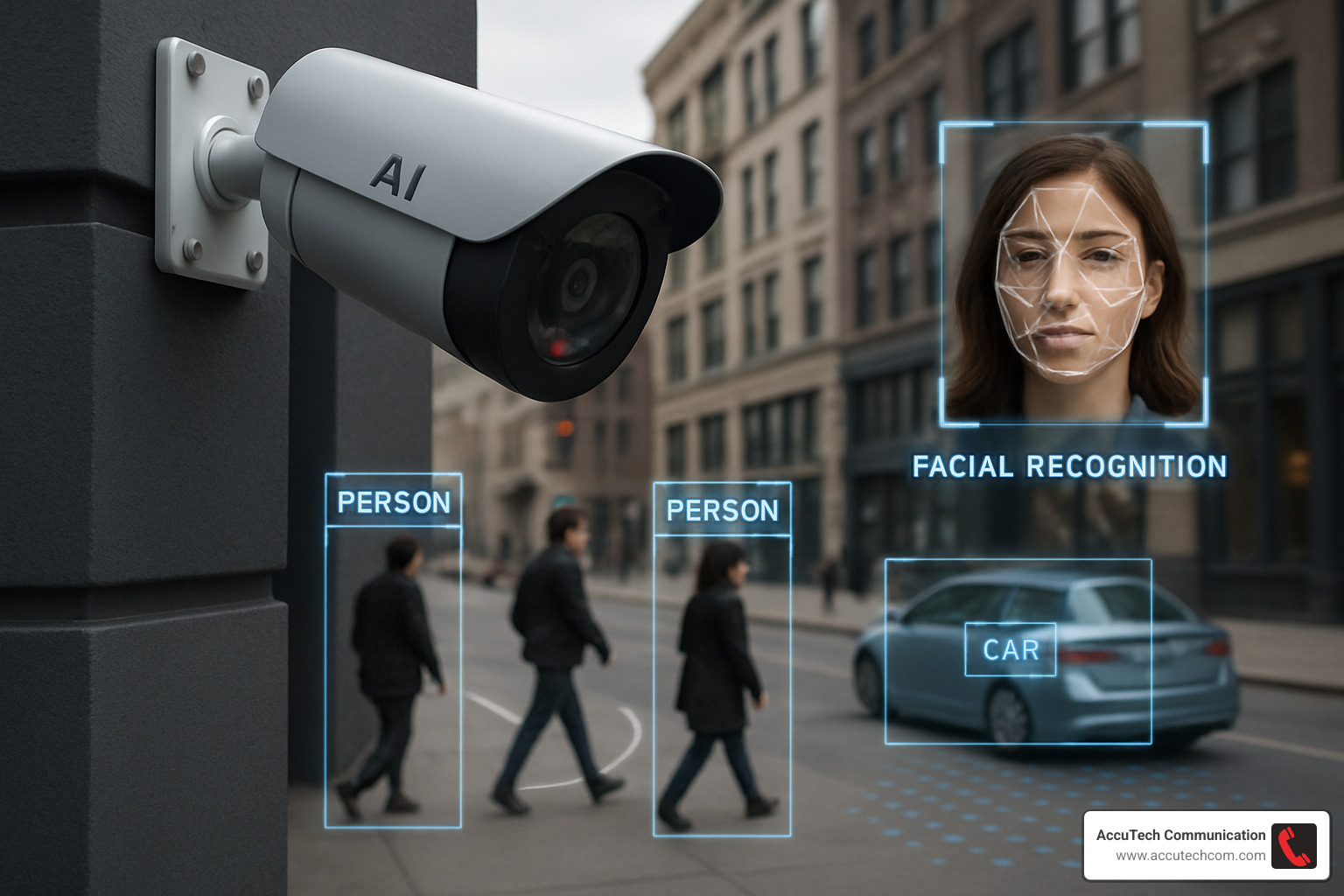
Remember when security cameras just recorded endless footage you’d never watch? Those days are gone. Today’s AI-powered systems are actively watching for you, with remarkable intelligence. Modern cameras can distinguish between a curious raccoon and a potential intruder, recognize familiar faces, and even spot when a package has been delivered – or taken!
One of the most impressive innovations we’ve seen is proactive deterrence. Smart Deter technology uses light and sound to scare away potential troublemakers before they even attempt a break-in. It’s like having a security guard who never sleeps, turning your system from a passive recorder into an active defender.
“I was skeptical about all this AI stuff until I got an alert showing someone checking car doors in my driveway at 2 AM,” shared one of our clients. “The system flashed lights, the person ran off, and nothing was stolen. That’s when I became a believer.”
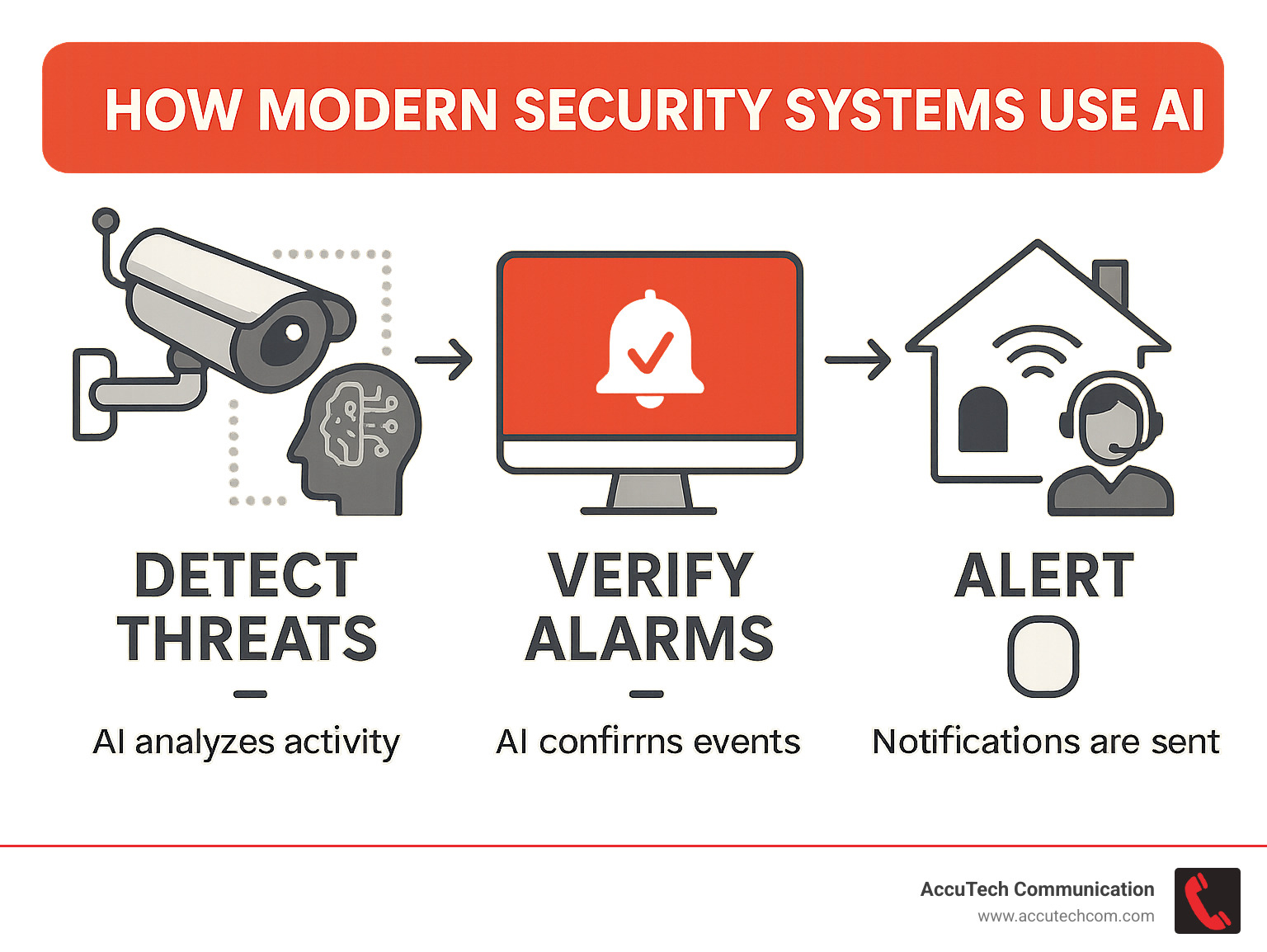
Security and alarms systems companies are also revolutionizing how monitoring centers respond to alerts. Video verification technology has been a game-changer, allowing monitoring professionals to see exactly what triggered an alarm. This visual confirmation:
- Dramatically reduces false alarms (by up to 95% according to studies we’ve reviewed)
- Gets faster police response since authorities prioritize verified emergencies
- Creates valuable video evidence for investigations or insurance claims
As one industry expert put it, “Agents can now help stop crime in real time” by viewing live feeds when alarms trigger. This real-time intervention capability transforms the entire security paradigm from documenting crimes to preventing them.
Of course, with all this technological power comes legitimate privacy concerns. The good news is that security and alarms systems companies are taking these concerns seriously, building robust safeguards into their systems. End-to-end encryption now protects video feeds and stored footage from prying eyes. Physical privacy shutters on indoor cameras let you decide when they can and can’t see. Many systems also feature customizable privacy zones that blur sensitive areas like bedrooms or bathroom entrances.
“We’ve noticed a significant shift in how companies handle data requests,” notes our security consultant. “Most now respond only in genuine life-or-death emergencies, with clear policies about when and how they’ll share your information.”
At AccuTech Communications, we believe you shouldn’t have to choose between effective security and personal privacy. We help our clients implement systems that protect both their physical assets and their sensitive information, with transparent policies every step of the way.
Smart-Home Platform Integration
Remember when your security system was just… a security system? Today’s solutions have become the heart of the modern smart home, working seamlessly with other technologies to create environments that are both safer and more convenient.
“My security system has basically become the command center for my entire house,” laughs Sarah, one of our residential clients. “It locks my doors, adjusts my thermostat, turns off forgotten lights, and yes, keeps the bad guys away too.”
Alexa integration has become nearly universal among top security providers, enabling voice commands that transform how you interact with your system. Rather than fumbling with a keypad while juggling groceries, you can simply say, “Alexa, disarm my security system” (with appropriate voice PINs for security, of course). You can check system status with quick questions like “Is my security system armed?” or view camera feeds on Echo Show devices with commands like “Show me the front door.”
Google Home offers similar capabilities, with particularly tight integration for Nest devices. This partnership approach exemplifies how traditional security expertise can blend with cutting-edge smart home innovation. The result is a system that feels intuitive and responsive, reacting to your needs before you even express them.
For Apple enthusiasts, HomeKit compatibility is growing, though still less common than Alexa or Google support. HomeKit-enabled security systems offer Siri voice control, secure video storage in iCloud, and Apple’s characteristic focus on privacy protection. The seamless integration with iPhones and iPads makes these systems particularly appealing for Apple-centric households.
Perhaps the most exciting integration possibilities come through IFTTT (If This Then That), which allows for creative automations limited only by your imagination. Your security system can trigger all sorts of helpful scenarios:
“I’ve set up my system to turn on my porch lights when my doorbell camera detects movement after dark,” explains Michael, another client. “It also sends me a special notification if it sees a car in my driveway when I’m not expecting visitors. It’s like having a personal assistant who’s always looking out for me.”
These smart integrations create cohesive “scenes” that coordinate multiple devices with a single command. A “Goodnight” scene might lock all doors, arm the security system, turn off lights, and lower the thermostat – all automatically at your bedtime or with a simple voice command.
Looking ahead, the emerging Matter standard promises to improve compatibility between different manufacturers’ devices, though our research shows it’s currently “arriving for non-camera devices but not yet supported by security cameras.” This standard will eventually make it easier to mix and match components from different companies without compatibility headaches.
At AccuTech Communications, we help businesses create integrated security and automation solutions that improve both protection and workplace efficiency. Whether you’re looking to secure a small office or implement enterprise-wide security infrastructure, we’ll design a system that grows with your needs while keeping things simple for your team.
Frequently Asked Questions about Security and Alarm Systems
What’s the average upfront cost for a starter package?
When folks ask me about security system costs, I tell them it’s a bit like buying a car – there’s a basic model and then there are all the fancy add-ons! For most homeowners, a basic starter package typically runs between $150 and $300.
What do you get for that investment? Usually the essentials: a central hub that serves as the brain of your system, a couple of door/window sensors to detect intrusions, a motion detector for added protection, and a keypad or key fob to control everything.
If you’re looking for something more comprehensive (and many families are these days), you might consider packages in the $300-$600 range. These typically include extras like indoor cameras to keep an eye on things, video doorbells so you can see who’s at the door from anywhere, smart locks for keyless entry, and additional sensors for more complete coverage.
In my conversations with customers, I often mention that several leading brands offer starter kits beginning around $250, while some budget-focused options dip closer to the $100 mark for price-sensitive homeowners.
Don’t want to pay everything upfront? Most security and alarms systems companies now offer monthly payment plans, with some even providing interest-free financing for up to 60 months. And while professional installation might add $50-200 initially, I’ve noticed many companies run promotions that waive these fees entirely.
For our business clients at AccuTech Communications, we take a more customized approach, designing systems specifically for your company’s unique needs and space. We pride ourselves on transparent pricing with no surprises down the road.
Do I need cameras at every entry point?
“Do I need cameras everywhere?” is probably the question I hear most often from new customers. The short answer: absolutely not! What you need is strategic placement, not cameras watching every inch of your property.
Most security professionals (myself included) recommend focusing on these priority areas:
Your front door deserves special attention since about 34% of break-ins happen right through the main entrance. The back door comes in second at 22%, making it another critical area for camera coverage. Don’t forget about first-floor windows facing streets or areas with limited visibility, plus driveways and garages where valuable items are often stored.
I always tell my clients to think of security as layers. Your cameras work alongside door/window sensors on all ground-level entry points, motion detectors in main pathways through your home, and perhaps glass break sensors in vulnerable areas. These components work together to create a comprehensive security blanket.
One of my favorite advancements in recent years is how smart today’s cameras have become. As a security expert recently explained to me, “Video analytics can filter out rain or falling leaves and detect people, animals, and vehicles,” which means you get fewer false alarms and more meaningful alerts.
When deciding on camera placement, consider your property’s specific layout and vulnerabilities, local crime patterns, your budget constraints, and privacy considerations for family members and neighbors.
For our business clients, AccuTech Communications offers thorough security assessments to determine the optimal camera placement that maximizes coverage while minimizing costs. Our Video Surveillance expertise ensures you get exactly the right coverage without wasting money on unnecessary equipment.
Can I move my system to a new home without penalties?
Moving homes is stressful enough without worrying about your security system! The good news is that most modern systems can relocate with you, though the process varies depending on what type you have.
If you’ve got a fully DIY system, you’re in luck! These systems are designed with portability in mind. You can simply peel off your sensors, pack up your hub, and reinstall everything at your new place. Just remember to update your address in the app or account, and you might need to reconfigure some sensors based on your new layout. The best part? There’s typically no relocation fee.
One customer told me their experience was the “Easiest. Thing. I. Have. Ever. Installed,” which speaks volumes about how user-friendly these systems have become.
For professionally installed systems, the process is a bit more involved. You’ll likely need a professional to reinstall the equipment (with fees typically ranging from $100-300), they might want to conduct a new site survey at your new location, and depending on your new home’s layout, you might need additional equipment.
If you’re under contract, there are a few more considerations. Most companies will transfer your service if you’re moving within their service area. Moving outside their coverage? That might trigger early termination fees, though some contracts include one free move during the term. Some companies might ask you to extend your contract when moving – a small trade-off for continued protection.
To avoid any surprises when relocating with your security system:
1. Give your provider a heads-up 30-60 days before moving
2. Ask specifically about relocation programs or discounts
3. Try to schedule installation at your new home before you move in
4. Update your monitoring address immediately to ensure proper emergency response
At AccuTech Communications, we help our business clients plan security implementations with future growth in mind. We understand that businesses evolve and sometimes relocate, so we design systems with portability in mind whenever appropriate. Our goal is to provide security that adapts to your changing needs, not holds you back.
Conclusion
Selecting the right security system involves balancing technology, service, installation preferences, and budget considerations. Throughout this comparison of security and alarms systems companies, we’ve explored the key factors that should inform your decision:
When it comes to installation type, DIY systems offer wonderful flexibility and generally lower costs. I’ve heard from many homeowners who appreciate being able to set things up on their own schedule. Meanwhile, professional installation provides that expert touch and genuine peace of mind that everything is configured correctly from day one.
The monitoring approach you choose makes a big difference in your day-to-day experience. Professional monitoring is like having a vigilant guardian watching over your property 24/7, ready to respond even when you can’t. Self-monitoring puts you in the driver’s seat, eliminating those monthly fees while giving you full control over when authorities are contacted.
Don’t overlook equipment quality! The best systems feature reliable components that stand the test of time. Look for options with battery backup (those power outages always seem to happen at the worst times) and regular firmware updates that keep your system current with emerging threats.
Smart home integration has transformed security from isolated systems to the backbone of connected homes. Whether you’re an Alexa enthusiast, a Google Home fan, or an Apple devotee, choosing a platform that plays nicely with your existing tech makes life so much simpler.
Contract terms matter more than many people realize. Do you value the flexibility to change providers, or would you prefer those lower upfront costs that often come with longer commitments? There’s no universal right answer – it’s about what fits your lifestyle and plans.
The security landscape continues to evolve in fascinating ways. AI-powered analytics can now distinguish between a curious raccoon and an actual intruder. Video verification helps police respond faster to genuine emergencies. Smart deterrence technologies actively discourage potential threats before they become problems. These innovations are shifting security systems from passive recorders to proactive protectors.
As one industry expert so perfectly put it, “Security must come first. It always has at American Alarm, and it always will.” This principle guides everything we do at AccuTech Communications. Since 1993, we’ve been helping businesses throughout Massachusetts, New Hampshire, and Rhode Island implement effective security solutions that provide genuine protection and peace of mind.
Our team at AccuTech specializes in designing custom security infrastructure that works harmoniously with your existing technology. Whether you need comprehensive video surveillance to monitor critical areas, access control systems to manage who enters your facility, or monitored alarm solutions that provide round-the-clock protection, we provide certified, reliable service with competitive pricing and an unwavering commitment to quality.
The return on investment for security systems goes far beyond preventing theft or property damage. There’s something truly valuable about the peace of mind that comes from knowing your home or business is protected. It allows you to focus on what truly matters—whether that’s growing your business or enjoying precious time with family.
For more information about enhancing your security infrastructure, including network cabling upgrades that support modern security systems, contact AccuTech Communications today. Our friendly team of experts is ready to help you steer the complex security landscape and implement solutions custom to your specific needs.
Security isn’t just about technology—it’s about creating environments where people feel safe and protected. With the right system in place, that peace of mind is within reach for every home and business. Let us help you get there.
