
Security Systems for Office Buildings: Top 10 Essential Elements
Safeguarding Your Business: Understanding Modern Office Security
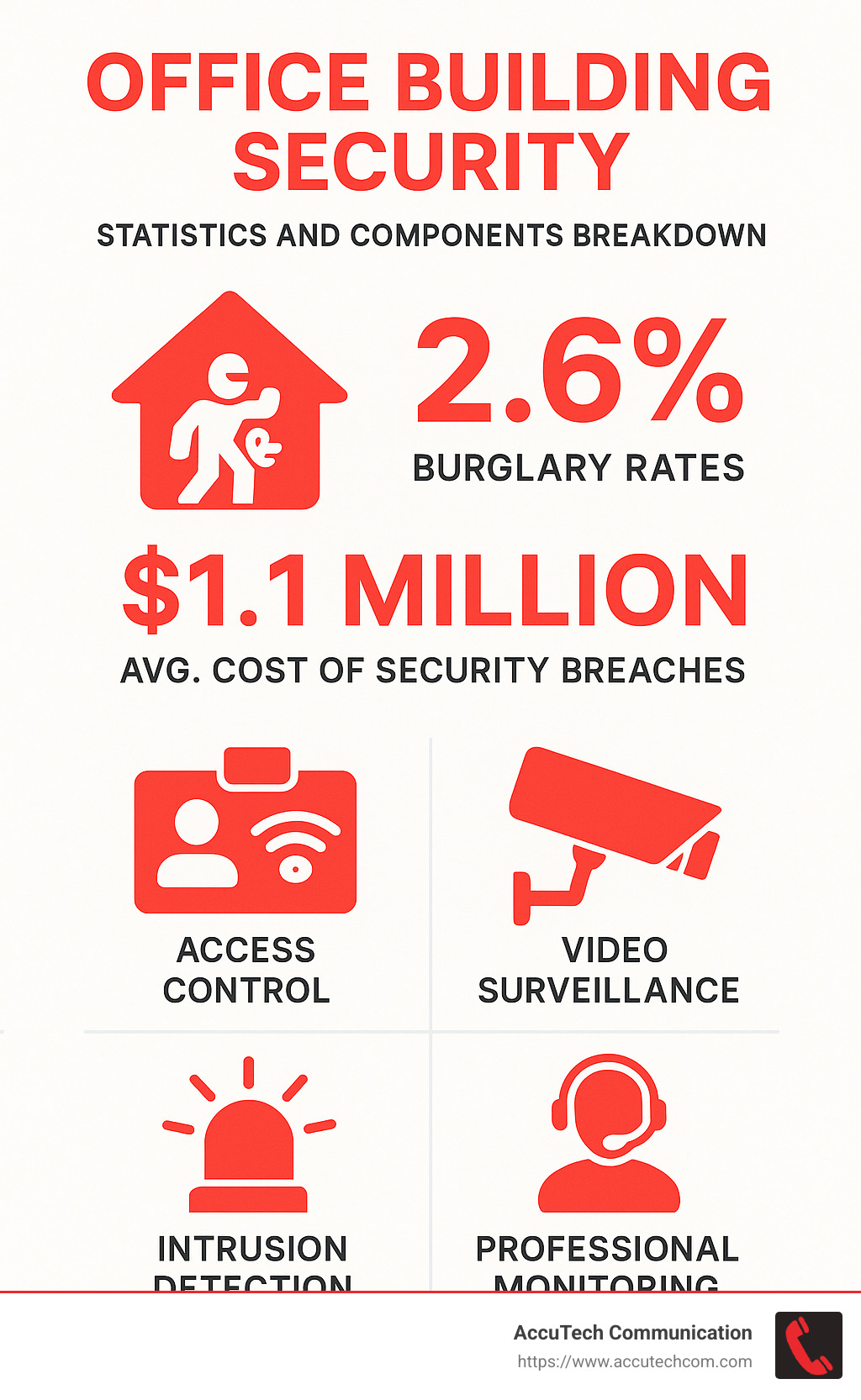
Security systems for office buildings are essential protective measures that safeguard your employees, assets, and sensitive information from various threats. Given that approximately 50,000 commercial buildings are burglarized each year, implementing comprehensive security is no longer optional—it’s a necessity.
Key Components of Effective Office Security Systems:
- Access Control Systems – Card readers, biometric scanners, and mobile credentials that restrict entry
- Video Surveillance – HD cameras with AI capabilities for monitoring and evidence collection
- Intrusion Detection – Motion sensors and alarms that detect unauthorized access
- Smart Sensors – Environmental monitoring for fire, water damage, and other hazards
- Professional Monitoring – 24/7 oversight with rapid response protocols
Modern office security has evolved beyond simple locks and keys. Today’s integrated systems combine physical protection with cybersecurity measures, creating multiple layers of defense that work together seamlessly.
With as many as 56% of small businesses reporting theft in 2025 and vandalism incidents costing an average of $3,370, the financial case for robust security is clear. Not only do these systems deter crime, but they can also reduce insurance premiums and provide crucial evidence in the event of an incident.
I’m Corin Dolan, owner of AccuTech Communications, with over 30 years of experience implementing security systems for office buildings across Massachusetts, New Hampshire, and Rhode Island. My team specializes in designing customized security solutions that integrate with your existing infrastructure while preparing your business for future technological advancements.
Security systems for office buildings word guide:
Essential Components of Security Systems for Office Buildings
When it comes to protecting your office building, having the right security components in place makes all the difference. Think of these elements as team members, each playing a vital role in keeping your business safe while working together seamlessly.
Modern security systems for office buildings have evolved dramatically in recent years. Gone are the days of simple alarms and basic cameras – today’s systems offer intelligent protection that adapts to your specific needs.
Let’s explore the core components that form the backbone of effective office security:
Access control systems serve as your first line of defense, determining who can enter your building and specific areas within it. Video surveillance provides visual monitoring and evidence collection. Intrusion detection systems immediately alert you to unauthorized entry attempts. Smart sensors monitor everything from motion to environmental conditions, adding an intelligent layer to your security setup.
These components work together to create multiple layers of protection. This layered approach is crucial because while a determined intruder might bypass a single security measure, defeating several integrated systems becomes significantly more challenging. It’s like having multiple locks on your front door – each one adds another level of protection.
Access Control Systems in Security Systems for Office Buildings
Today’s access control technology has come a long way from traditional keys and locks. Modern systems give you unprecedented control over who enters your facility, when they can enter, and exactly which areas they can access.
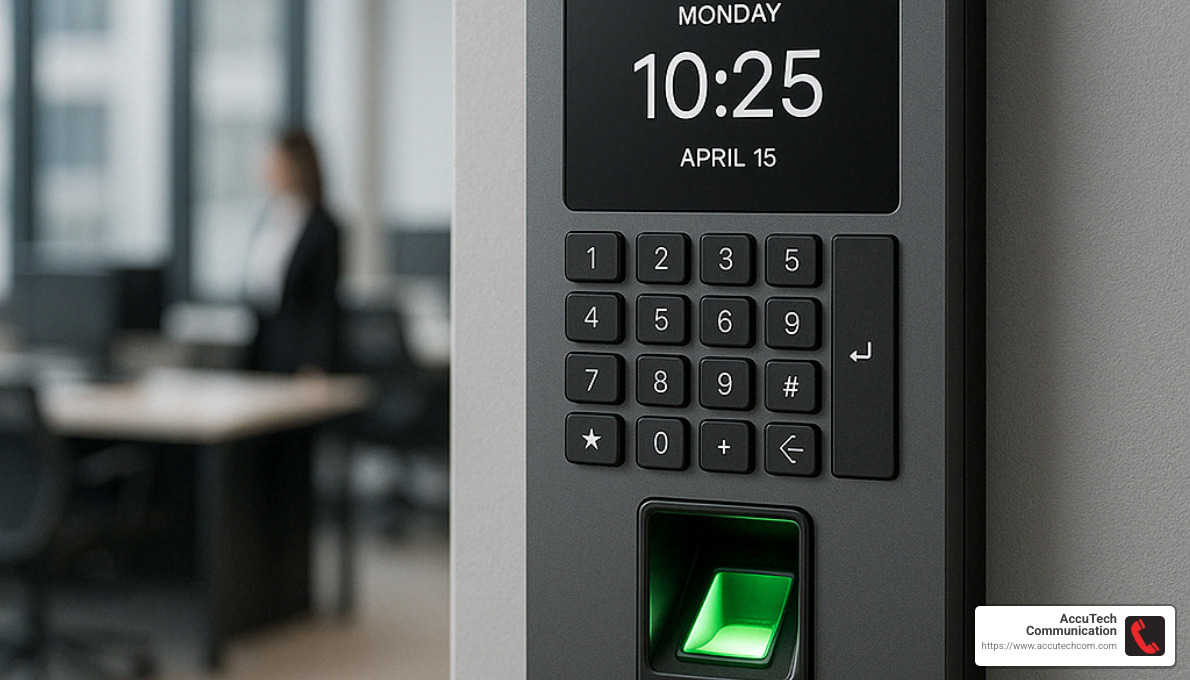
You now have multiple options for credentials that fit your specific needs. Keycards and fobs offer easy management – they can be quickly issued to new employees and deactivated when someone leaves. Biometric readers using fingerprints or facial recognition provide even stronger security for sensitive areas. Mobile credentials let employees use their smartphones for access, eliminating the need to carry additional items. Many businesses are now implementing multi-factor authentication for their most critical areas, combining different credential types for improved security.
“Modern access control systems not only improve security but also improve operational efficiency.”
The beauty of modern access control goes beyond security. When an employee leaves your company, there’s no need to change locks or worry about key duplication – simply deactivate their credentials with a few clicks. This capability alone can save thousands in rekeying costs over the years.
Another significant advantage is detailed reporting. These systems maintain logs of all entry attempts – both successful and unsuccessful – providing valuable information for security audits and investigations. If something happens at 2 AM on a Sunday, you’ll have a record of who accessed the building.
At AccuTech Communications, we’ve seen how access control transforms security for our clients across Massachusetts, New Hampshire, and Rhode Island. One multi-tenant office building in Boston reduced unauthorized access incidents by 87% in their first year after upgrading from traditional keys to a card-based system with role-based permissions.
Video Surveillance in Security Systems for Office Buildings
Video surveillance forms the eyes of your security system, providing visual verification of events while creating a powerful deterrent against criminal activity. The capabilities of today’s camera systems would have seemed like science fiction just a decade ago.
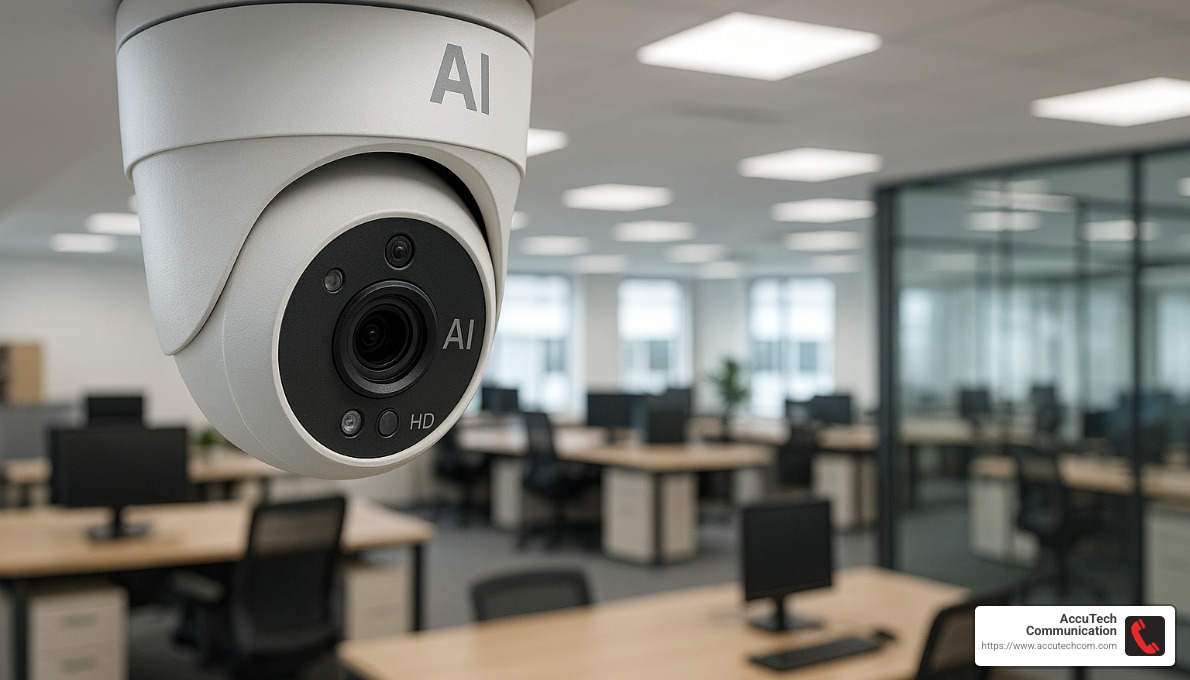
Modern surveillance systems feature high-definition imaging that captures crystal-clear footage for identification purposes. Many now include AI-powered analytics that can automatically detect suspicious activities, drastically reducing false alarms. Today’s cameras offer impressive low-light performance, providing clear video even in minimal lighting conditions. Remote viewing capabilities let you monitor your property in real-time from anywhere using your smartphone or tablet.
Don’t underestimate the deterrent effect of visible cameras. The mere presence of surveillance equipment can significantly reduce theft and vandalism by making your facility a less attractive target. As security expert Anthony Travaglia notes: “Having security cameras will help to prevent and or catch any security guards that decide they would rather commit crimes rather than stop them.”
The intelligence built into modern systems is remarkable. AI analytics can distinguish between a person, vehicle, or animal, and can even recognize specific behaviors like loitering or unauthorized access attempts. This intelligence allows security personnel to focus on genuine threats rather than reviewing hours of uneventful footage.
We recently installed an HD camera system with AI analytics for a medical office in Worcester. Within the first month, the system detected after-hours access to a restricted medication storage area. The high-quality footage provided clear identification of the unauthorized individual, allowing management to address the security breach immediately.
Smart Sensors and IoT Devices
The Internet of Things (IoT) has revolutionized office security by connecting various sensors and devices to create a comprehensive monitoring network. These smart technologies extend protection beyond traditional intrusion detection to include environmental monitoring and operational efficiency.
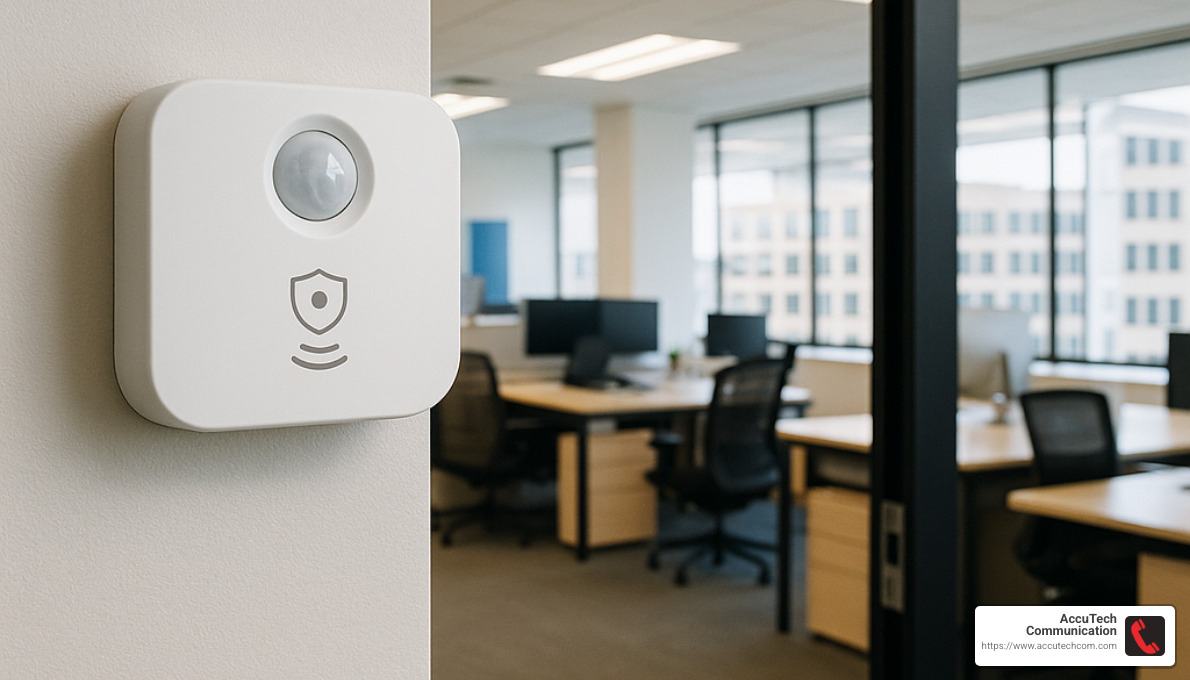
Motion detectors identify movement in restricted or after-hours areas, while glass break sensors detect the specific frequency of breaking glass. Environmental sensors protect your property by detecting smoke, fire, water leaks, or extreme temperatures before they cause significant damage. Occupancy sensors serve double duty – they monitor for unexpected presence in restricted areas while also helping to improve energy efficiency by controlling lighting and HVAC systems based on actual usage.
These smart devices create what security professionals call “situational awareness” – a comprehensive understanding of what’s happening throughout your facility at all times. This awareness allows for faster, more informed responses to both security incidents and environmental hazards.
A manufacturing client in Marlborough implemented our integrated sensor network throughout their facility. Beyond the security benefits, the system reduced their energy costs by 23% through optimized lighting and climate control. The environmental sensors also detected a water leak in a server room before it caused significant damage, potentially saving hundreds of thousands in equipment replacement and downtime costs.
Smart sensors truly represent the future of security systems for office buildings – not just protecting against intruders, but creating safer, more efficient workspaces that save money while providing peace of mind.
Integrating Physical Security with Cybersecurity
The days when physical security and cybersecurity existed in separate worlds are long gone. Today’s security systems for office buildings rely heavily on network connectivity, creating a new landscape where physical and digital protections must work hand-in-hand. This integration isn’t just a good idea—it’s essential for truly comprehensive protection.
Think about it: What good is a state-of-the-art lock if someone can simply hack into your access control system? Similarly, the strongest firewall won’t protect your data if an intruder can physically access your server room. These interconnections mean that a weakness in either domain can compromise your entire security infrastructure.
At AccuTech Communications, we’ve seen this integration challenge across Massachusetts, New Hampshire, and Rhode Island. Many businesses still operate with security departments and IT teams that rarely communicate—a dangerous gap in today’s connected environment. Our approach brings these traditionally separate teams together, ensuring your security strategy addresses both physical and digital vulnerabilities.
Network-connected security devices like cameras, access readers, and alarm panels are powerful tools—but they’re also potential entry points for cyber attacks. Identity management systems that control both physical access and digital permissions need special attention to prevent them from becoming single points of failure. Your security operations center should monitor both physical intrusions and network anomalies, with incident response procedures that address threats from both domains.
Perhaps most importantly, employee training must evolve to cover the full security spectrum. The receptionist who buzzed in a “delivery person” without verification and the employee who clicked a phishing link both created security breaches—just through different doorways.
Protecting Security Systems from Hacking
As your security systems become more connected, they can become targets themselves. Protecting these systems requires a dedicated approach that blends physical security expertise with cybersecurity best practices.
The stakes are high: a compromised security system doesn’t just mean potential theft or vandalism—it could expose your business to significant liability and reputational damage. According to recent industry reports, 39 percent of businesses experienced some form of security breach in the previous year, with nearly half noting an increase in attack severity or scope.
To protect your security systems, start with network segmentation by placing them on isolated network segments away from your main business operations. Ensure all data transmission uses strong encryption protocols, and maintain a rigorous schedule of regular updates to patch security vulnerabilities before they can be exploited.
Strong authentication measures like complex passwords and multi-factor authentication should be mandatory for anyone accessing your security systems. Regular security audits can identify weaknesses before attackers do, while network traffic monitoring helps spot unusual patterns that might indicate a breach in progress.
Don’t underestimate the human element. System administrators need training that bridges both physical and cyber domains, and clearly documented incident response plans ensure everyone knows their role when problems arise.
We recently helped a retail client in Waltham implement this integrated approach. Their system included automatic vulnerability scanning and firmware updates for all connected devices. When a major security vulnerability affecting IP cameras was finded industry-wide, their system automatically applied patches before attackers could exploit the weakness—demonstrating how proactive, integrated security can protect your business when it matters most.
The bottom line? Physical security and cybersecurity are two sides of the same coin. By addressing them together rather than separately, you create a more resilient defense that protects what matters most—your people, property, and data.
What Can Vandalism Cost a Business?
Benefits of Cloud-Based Security Systems Over On-Premise Solutions
The security landscape for businesses has undergone a dramatic change with the rise of cloud-based security systems for office buildings. Unlike traditional on-premise solutions that require extensive hardware installations, cloud systems store data and run applications on remote servers, creating a more flexible and accessible security ecosystem.
| Feature | Cloud-Based Systems | On-Premise Systems |
|---|---|---|
| Initial Investment | Lower (subscription model) | Higher (capital expense) |
| Scalability | Easily expanded as needed | Limited by hardware capacity |
| Maintenance | Handled by provider | Requires internal resources |
| Updates | Automatic and continuous | Manual and scheduled |
| Remote Access | Built-in functionality | Requires additional configuration |
| Redundancy | Multiple data centers | Limited to local backups |
| IT Resources Required | Minimal | Substantial |

What makes cloud-based security so isn’t just the technology—it’s how it removes barriers that once made comprehensive security unattainable for many businesses. Remember when implementing a robust security system meant a massive upfront investment? Those days are gone. Today’s cloud solutions convert what was once a hefty capital expense into a predictable monthly operational cost, making enterprise-grade security accessible to businesses of all sizes.
Advantages of Cloud-Based Security for Office Buildings
When I talk with clients about switching to cloud-based security, their eyes often light up when they understand the practical benefits for their specific office environments.
Remote management capability is perhaps the most immediately valuable advantage. Picture this: you’re on vacation when you get a text about a potential security issue. Instead of cutting your trip short, you simply open an app on your phone, check your camera feeds, and adjust access permissions—all while still enjoying your beachside view. This anywhere, anytime control has been a game-changer for busy executives.
The centralized control aspect is particularly beneficial for businesses with multiple locations. One of our clients, a property management company with office buildings throughout Rhode Island, was previously juggling different security systems at each location—each with its own interface, rules, and maintenance requirements. After implementing our cloud-based platform, they now manage everything from a single dashboard. Their administrative workload dropped by about 70%, while their security response times improved dramatically.
Automatic updates mean you’re always protected with the latest security patches without scheduling maintenance windows or system downtime. Scalability allows your security to grow alongside your business—adding a new office location or expanding your existing space no longer requires ripping out and replacing your entire security infrastructure.
The disaster recovery capabilities of cloud systems proved invaluable during recent severe weather events in Massachusetts. When on-site equipment was damaged by flooding at one client’s location, their security data remained safe and accessible in the cloud, allowing for continuous monitoring during repairs.
Reduced maintenance needs translate to both cost savings and fewer disruptions to your daily operations. With less hardware on your premises, there are simply fewer things that can break or require servicing.
The integration capabilities of cloud systems also create exciting possibilities. One manufacturing client connected their cloud security system with their HR database, automatically updating access permissions when employment status changed. This eliminated security gaps during employee transitions and reduced administrative workload.
The COVID-19 pandemic unexpectedly highlighted another benefit of cloud-based security. When businesses suddenly needed to operate with minimal on-site staff, cloud systems allowed security teams to maintain complete oversight while working remotely. Buildings remained protected despite dramatic operational changes, providing peace of mind during an already stressful time.
For more information about implementing effective surveillance systems that leverage cloud technology, visit our Surveillance Camera Installation page.
Cost Considerations When Planning Security Systems
Let’s face it – we all want top-notch security for our offices, but budgets have a funny way of bringing us back to reality. When planning security systems for office buildings, finding that sweet spot between protection and price is crucial for most businesses.
Think of your security system as an investment rather than just an expense. Like any good investment, it requires thoughtful planning and consideration of both short-term costs and long-term value.
The financial picture includes several key elements: the equipment itself (cameras, access readers, control panels), professional installation, any needed infrastructure upgrades, software licenses, monitoring services, maintenance, staff training, and future expansion possibilities.
While it’s tempting to focus solely on the initial price tag, savvy business owners look at the total cost of ownership. That budget-friendly system might end up costing more in the long run if it requires frequent maintenance or becomes obsolete quickly. Sometimes paying a bit more upfront for quality equipment with longer service life and lower maintenance needs makes better financial sense.
Balancing Cost and Security Needs
Finding the right balance between what you can afford and what you actually need is where the art of security planning really shines.
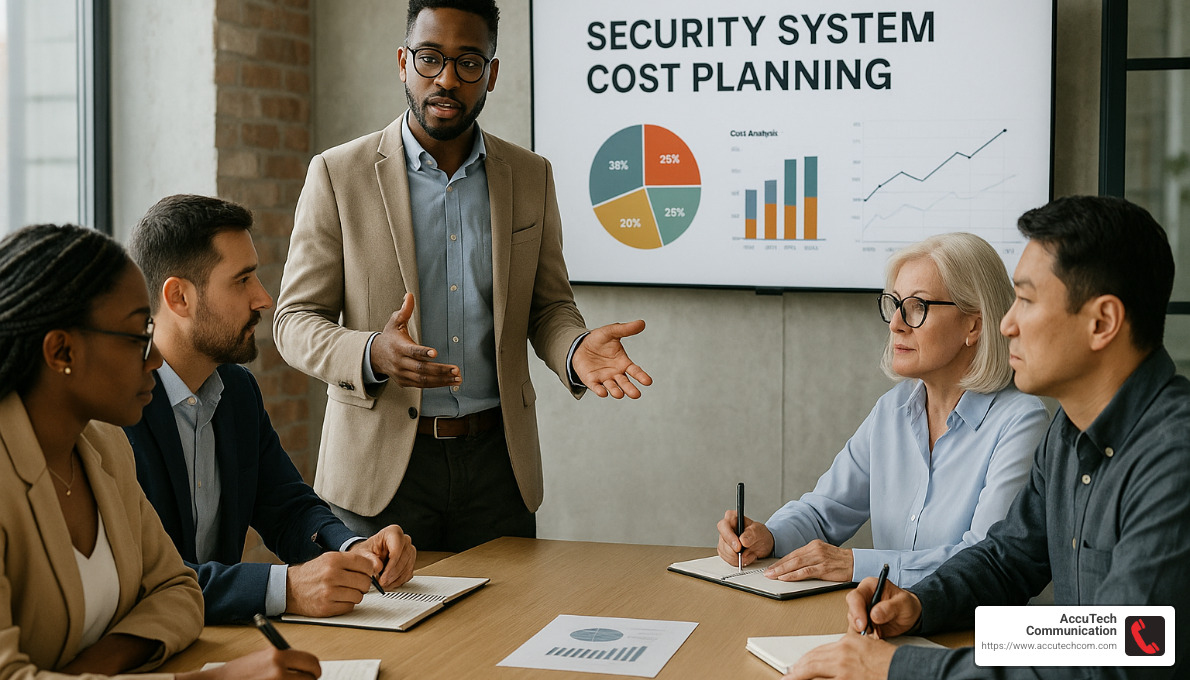
The smartest approach starts with a professional risk assessment. This helps identify your most significant vulnerabilities so you can focus resources where they matter most. Not every area of your office requires the same level of protection – prioritizing critical areas like server rooms, executive offices, or inventory storage can help manage costs while addressing your biggest risks.
If budget constraints are a reality (and when aren’t they?), consider a phased implementation approach. Start with core components that address your most pressing security concerns, then expand the system over time as budget allows. This approach helps spread costs while still improving security immediately.
Financing options can also make advanced security more accessible. Many businesses find that leasing or subscription models reduce the initial capital outlay, making it easier to implement comprehensive systems without a massive upfront investment.
Don’t forget to calculate ROI beyond just security benefits. Many insurance providers offer premium discounts – sometimes 5-20% – for businesses with modern security systems. These savings, combined with potential reductions in theft and vandalism costs, can significantly offset your investment over time.
Scalability is another crucial consideration. At AccuTech Communications, we’ve seen too many businesses outgrow their security systems within a few years, requiring costly complete replacements. We recommend choosing platforms that can grow with your needs, allowing you to add components or expand coverage without starting from scratch.
Whenever possible, leverage existing infrastructure. Using your current network setup where feasible can substantially reduce costs. We recently helped a law firm in Boston implement comprehensive security while staying within budget by carefully utilizing their existing network infrastructure and developing a phased approach that addressed critical vulnerabilities immediately while building a foundation for future expansion.
The true value of security systems extends beyond preventing theft. The peace of mind that comes from knowing your people, property, and data are protected allows you to focus on what really matters – running your business. And that’s something that’s hard to put a price tag on.
Integrating Smart Building Technologies with Security Systems
When we talk about modern security systems for office buildings, we’re not just looking at standalone protection anymore. Today, these systems can work hand-in-hand with your building’s smart technologies, creating something truly special—a building that’s not only more secure but also more efficient and comfortable.
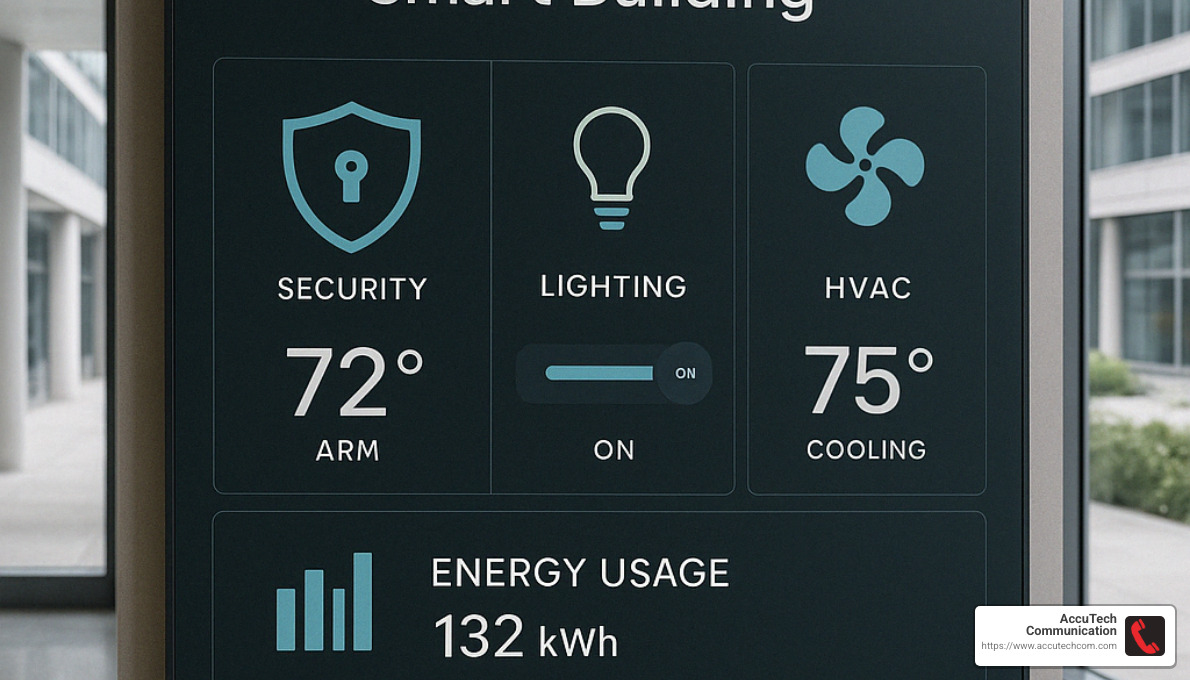
Think about it: your security sensors already know when people are in a room. Why not use that information to control other systems? That’s the beauty of integration—your security investment pulls double-duty.
For example, when your access control system registers the last person leaving a department at night, it can automatically tell your building systems to turn down the heat and switch off lights. Your security cameras aren’t just watching for intruders; they’re helping you save money on your energy bills.
One of our clients, a tech company in Sudbury, saw their energy costs drop by 31% after we integrated their security and building management systems. The office literally responds to how people use it—lighting up when occupied and conserving energy when empty.
As Martin Almerud, a Technical Manager we worked with, put it: “These cameras allow me to integrate and produce data for integrations in all our properties to better track energy consumption. That’s just value-added.”
Smart lighting integration is particularly powerful. Motion sensors that watch for intruders can also control lights, ensuring no area stays illuminated unnecessarily. This not only saves energy but improves security by illuminating areas when someone enters—whether they’re supposed to be there or not.
Your HVAC systems benefit too. Why cool an empty office over the weekend? Smart building integration means your AC knows when the building is vacant and adjusts accordingly. The same sensors that detect an unauthorized entry can help optimize temperature settings throughout the day.
Beyond the obvious energy savings, these integrated systems provide valuable insights about how your office actually functions. The data can reveal which conference rooms sit empty most days or which entrances see the heaviest traffic. This information proves invaluable when planning renovations or allocating resources.
Visitor management becomes seamless when integrated with your security systems. A guest checks in at the front desk, and their temporary access card automatically grants them entry only to appropriate areas. The system knows exactly who’s in your building at all times—improving both security and emergency response.
Even your parking facilities can join this intelligent ecosystem. The same access credentials that get employees into the building can control parking gates and direct drivers to available spaces, reducing congestion and frustration during busy mornings.
At AccuTech, we’ve seen how these integrations transform ordinary offices into responsive, efficient workplaces. The technology creates a seamless experience for employees while giving management unprecedented insight into building operations. Best of all, you’re maximizing the return on your security investment by leveraging it for operational improvements.
The future of office buildings isn’t just about security or efficiency in isolation—it’s about creating intelligent spaces that respond to human needs while protecting assets. When your security systems for office buildings work in harmony with other building technologies, everyone benefits: better protection, lower costs, and a more comfortable workplace.
Advantages of Professional Monitoring Services
While DIY security options have become more accessible and affordable, professional monitoring services remain the gold standard for security systems for office buildings. For businesses with valuable assets or sensitive operations, the peace of mind that comes with 24/7 professional oversight is simply irreplaceable.
Think of professional monitoring as having a dedicated security team that never sleeps, takes breaks, or gets distracted. When an alarm triggers at 3 AM, you won’t need to wake up and assess the situation yourself—trained security professionals are already on it, making split-second decisions that could protect your business from significant losses.
The value of human intelligence in security monitoring cannot be overstated. Professional monitoring centers employ specialists who can quickly distinguish between a false alarm and a genuine threat. They can see that what appeared to be an intruder was actually the cleaning crew arriving early, or conversely, recognize suspicious behavior that automated systems might miss.
These monitoring professionals become familiar with your business’s normal patterns and can spot anomalies that might indicate trouble. When something truly concerning occurs, they’ll immediately contact authorities with specific, actionable information that can speed up response times dramatically.
I recently worked with a manufacturing client in Framingham who experienced this benefit firsthand. Their professionally monitored system detected unusual activity in their warehouse at midnight. The monitoring team verified the threat through video surveillance, contacted police with precise details about the intruders’ location, and alerted the company’s security manager. Police arrived within minutes, apprehending the would-be thieves before they could access high-value inventory. The client later told me the prevented loss would have paid for their monitoring service for the next decade.
Professional monitoring also complements on-site security guards beautifully. As Anthony Travaglia, a security expert, points out: “Having security cameras will help to prevent and or catch any security guards that decide they would rather commit crimes rather than stop them.” But beyond this accountability factor, monitoring services extend what your security personnel can do, allowing them to focus on their immediate surroundings while the monitoring center keeps eyes on everything else.
For businesses with regulatory compliance requirements, professional monitoring provides another significant advantage: comprehensive documentation. Every alert, verification attempt, and response action is carefully logged, creating an audit trail that can be invaluable for both security improvements and demonstrating compliance with industry regulations.
The redundancy built into professional monitoring services adds another layer of reliability. Most monitoring companies operate multiple centers in different geographic locations, ensuring that even if one facility experiences problems due to weather or power outages, your business remains protected without interruption.
At AccuTech Communications, we’ve seen businesses of all sizes benefit from adding professional monitoring to their security systems for office buildings. From small offices to multi-building campuses, the combination of advanced technology and human expertise creates a security solution that’s far more effective than either component alone.
For more information about how professional monitoring compares with self-monitoring options, you might find this resource helpful: Understanding Professional Monitoring and Self-Monitoring
Frequently Asked Questions about Security Systems for Office Buildings
What are the security risks in an office?
When it comes to keeping your workplace safe, it helps to know what you’re up against. Office buildings face a variety of security challenges that might surprise you.
Most business owners immediately think about theft of computers, equipment, or inventory when considering office security. While these are legitimate concerns, the reality is much broader. Unauthorized access represents one of the biggest vulnerabilities in any office environment. Whether it’s a former employee using an old key card or a stranger following someone through the door (known as “tailgating”), unauthorized individuals gaining entry can lead to numerous problems.
Data breaches often begin with physical access. A visitor left unattended in a server room or an open workstation can lead to significant data theft. This is why modern security systems for office buildings increasingly integrate physical and cybersecurity approaches.
Sadly, workplace violence remains a concern for many businesses. A proper security system creates a safer environment for everyone by controlling access and providing video documentation of incidents.
We’ve also seen many clients underestimate insider threats. In our experience at AccuTech Communications, a surprising number of security incidents involve people who already have legitimate access to your building. This is why layered security approaches work best – they provide checks and balances that protect against both external and internal threats.
Environmental hazards like fires and water leaks might not seem like security issues, but modern systems often incorporate sensors that can detect these problems early, potentially saving thousands in damage.
How can businesses ensure their security systems are protected from hacking?
It’s a bit ironic – the very systems designed to protect your business can become vulnerability points if not properly secured. As security systems for office buildings become increasingly connected to networks, cybersecurity becomes just as important as physical security.
Strong passwords form your first line of defense. It sounds simple, but you’d be surprised how many businesses never change the default passwords on their security equipment. These defaults are widely known and represent an easy entry point for hackers. Create unique, complex passwords for all devices and change them regularly.
Regular updates are crucial for security. Manufacturers constantly release firmware and software patches to address newly finded vulnerabilities. Establishing a regular update schedule keeps your systems protected against known threats.
Employee training often makes the difference between a secure system and a compromised one. Your team needs to understand basic security practices like password protection, recognizing phishing attempts, and proper access procedures. At AccuTech, we often include training sessions when implementing new systems to ensure everyone understands not just how to use the technology, but how to keep it secure.
Network segmentation provides an additional layer of protection by isolating your security systems from your general business network. This means that even if your main network experiences a breach, your security systems remain protected.
For one of our healthcare clients in Worcester, we implemented a comprehensive approach that included quarterly security assessments and automated patch management. This not only protected their physical security systems but also helped them maintain compliance with strict industry regulations.
Do offices need professional monitoring if they have a security guard?
This question comes up frequently, and for good reason – both options represent significant investments. The truth is that security guards and professional monitoring complement each other beautifully rather than replacing one another.
Think of it this way: security guards are human, with all the strengths and limitations that implies. They can make judgment calls, intervene directly in situations, and adapt to unusual circumstances. However, they can only be in one place at a time, need breaks, and occasionally miss things.
Professional monitoring fills these gaps by providing continuous oversight of your entire facility. When your guard is handling an incident in the lobby, monitoring services ensure someone is still watching the loading dock and server room. This comprehensive coverage is particularly valuable for larger facilities or businesses with multiple locations.
“Having security cameras will help to prevent and or catch any security guards that decide they would rather commit crimes rather than stop them.”
This quote from security expert Anthony Travaglia highlights another important point – monitoring systems provide accountability for everyone in your facility, including security personnel themselves.
For a retail client with several Massachusetts locations, we implemented a hybrid approach that placed on-site guards at their larger facilities while providing professional monitoring across all locations. This strategy optimized their security budget while ensuring comprehensive protection. When incidents occurred, the monitoring center could direct guards to the exact location while simultaneously alerting management.
The most effective approach views guards and monitoring as partners in your security strategy rather than competing alternatives. Each brings unique strengths that create a more robust protection system when combined.
Understanding Professional Monitoring and Self-Monitoring
Conclusion
Protecting your office building isn’t just about installing a few cameras and calling it a day. In today’s increasingly complex business environment, comprehensive security systems for office buildings have become essential investments rather than optional extras. The rising incidents of commercial burglaries, internal theft, and sophisticated security breaches demand thoughtful, layered protection strategies.
What makes a security system truly effective is how well it’s custom to your specific situation. Every business has unique security needs based on several critical factors. Your building’s layout creates distinct vulnerability points that need addressing. The nature of your daily operations influences what needs protecting most urgently. Many industries face specific regulatory requirements that mandate certain security measures. And of course, your budget realities and existing infrastructure will shape what’s practical to implement.
At AccuTech Communications, we’ve spent nearly three decades partnering with businesses throughout Massachusetts, New Hampshire, and Rhode Island to develop security solutions that make sense for their particular circumstances. We always start with a thorough assessment of what you currently have and what you actually need—because security shouldn’t be a one-size-fits-all proposition.
The good news is that today’s security systems for office buildings offer remarkable capabilities that weren’t available even a few years ago. AI-powered analytics can distinguish between normal activity and genuine threats, reducing false alarms. Cloud-based management lets you monitor your facility from anywhere. Smart building integration means your security system can work with other building systems to improve energy efficiency and operational insights.
But perhaps the most satisfying aspect of investing in quality security is seeing the unexpected benefits beyond basic protection. Our clients regularly report pleasant surprises: reduced insurance premiums that offset system costs, employees who feel more confident in their workplace, clients who notice and appreciate your commitment to security, and valuable business intelligence gathered from system data that helps improve operations.
Whether you’re updating an aging system that no longer meets your needs or securing a brand-new facility, navigating the complex landscape of available technologies is much easier with experienced guidance. The right expertise can help you avoid costly mistakes and design a solution that truly addresses your specific requirements while preparing for future growth.
For more information about how AccuTech Communications can help secure your office building with customized security systems designed specifically for your business needs, please visit our Commercial Security page.
