
Structured Cable Systems: Top 5 Benefits for 2025
Structured cable systems are the backbone of modern telecommunications infrastructure, critical for any business aiming for high performance and reliability.
- Standardized Design: These systems use organized frameworks for easy management and scalability.
- Subsystems include Entrance Facilities, Equipment Room, Backbone Cabling, Telecommunications Rooms, Horizontal Cabling, and Work Areas.
- Flexibility: Supports various applications like Ethernet, fiber optic, and wireless tech.
- Future-Proof: Easily integrate new technologies without overhauling the entire system.
Structured cable systems offer a solid foundation that ensures efficient data, voice, and video transmission within a building or campus. This article digs into its components, benefits, and comparison with unstructured systems, equipping you with valuable insights for optimizing your business network.
I’m Corin Dolan, here to share my expertise in structured cable systems garnered over years in business communications. Join me as we explore how these systems can improve your infrastructure and ensure seamless operations.
Basic structured cable systems glossary:
– cabling installation
– network installation services
– it structured cabling
Understanding Structured Cabling Systems
Structured cabling systems are like the nervous system of a building, designed to keep everything connected and working smoothly. Let’s break down what makes these systems so essential.
Standardized Elements
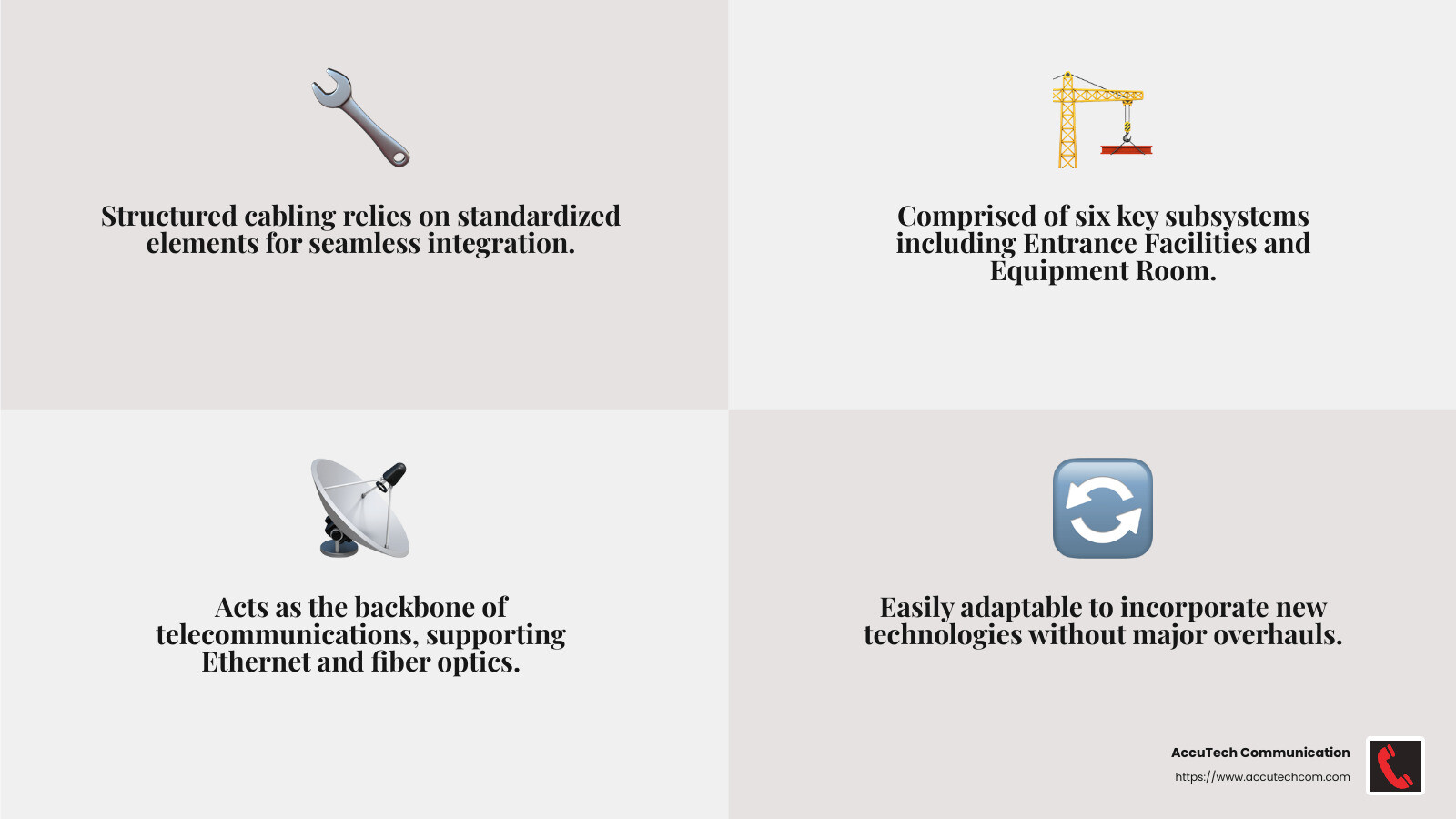
Structured cabling systems rely on standardized elements to ensure everything fits and works together seamlessly. This standardization means that whether you’re in Massachusetts or New Hampshire, the components and their functions remain the same. This uniformity is crucial for easy management and scalability, making it simpler to upgrade or expand your network as needed.
Subsystems: The Building Blocks
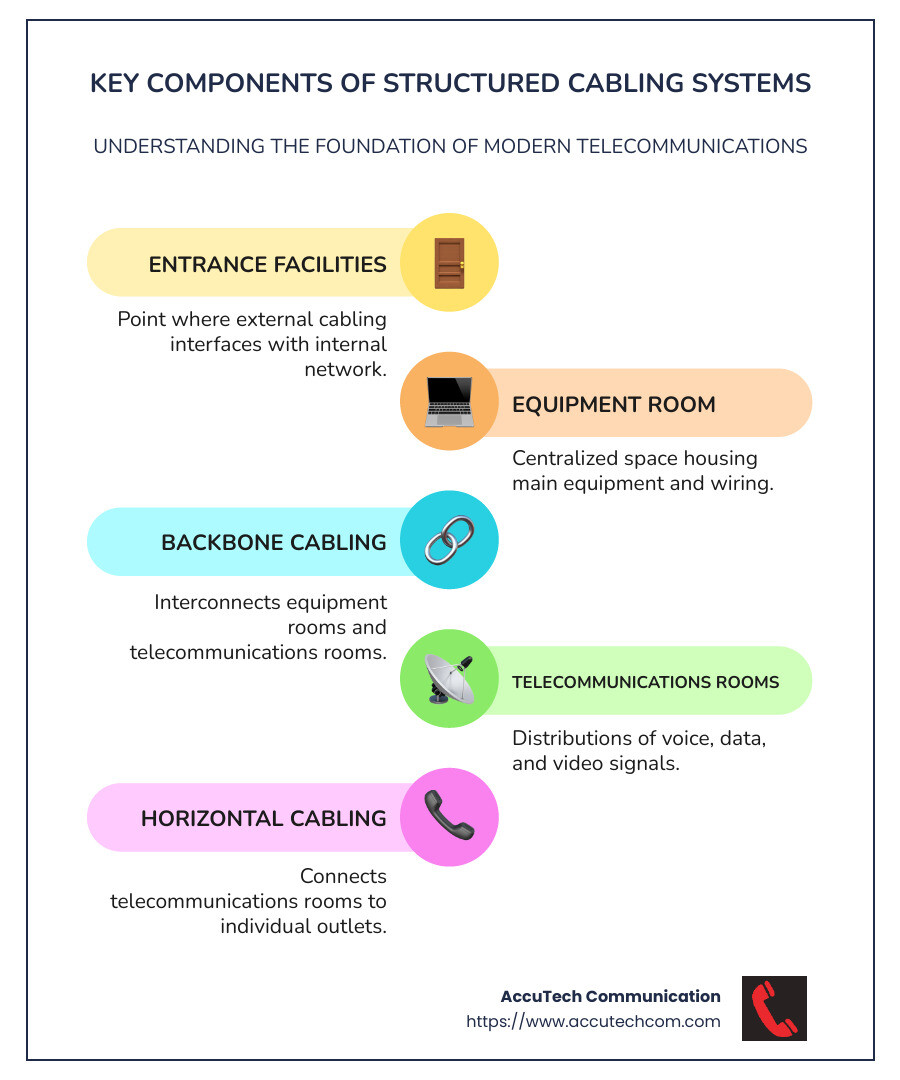
Think of structured cabling as a puzzle made up of six key subsystems:
- Entrance Facilities: This is where external cables enter the building. It’s the gateway for all incoming communication lines.
- Equipment Room: The hub of your network, housing essential equipment like servers and switches.
- Backbone Cabling: These cables connect different equipment rooms and telecommunications rooms, acting as the main data highways.
- Telecommunications Rooms: These rooms distribute and manage connections to various work areas.
- Horizontal Cabling: This subsystem connects telecommunications rooms to individual work areas, ensuring that data reaches every desk and device.
- Work Area: The final destination for data, where users interact with the network via computers, phones, and other devices.
Telecommunications: The Heartbeat of Connectivity
Telecommunications are vital for business operations. Structured cabling systems form the backbone of this connectivity, supporting various technologies like Ethernet, fiber optic, and even wireless solutions. By providing a reliable and efficient framework, these systems ensure that data, voice, and video signals flow seamlessly throughout the building.
Future-Proof and Flexible
One of the standout features of structured cabling is its flexibility. As technology evolves, these systems can easily adapt, allowing new devices and applications to be integrated without a complete overhaul. This adaptability not only saves time and resources but also ensures that your network infrastructure is always ready for future advancements.
In summary, structured cabling systems are the unsung heroes of modern telecommunications, providing a standardized, scalable, and flexible framework that supports a wide range of technologies and applications. Understanding these systems will be crucial for optimizing and future-proofing your business network.
Components of Structured Cabling
In structured cabling systems, understanding each component is key to building a reliable and efficient network infrastructure. Let’s explore the six essential components that form the backbone of these systems:
1. Entrance Facilities
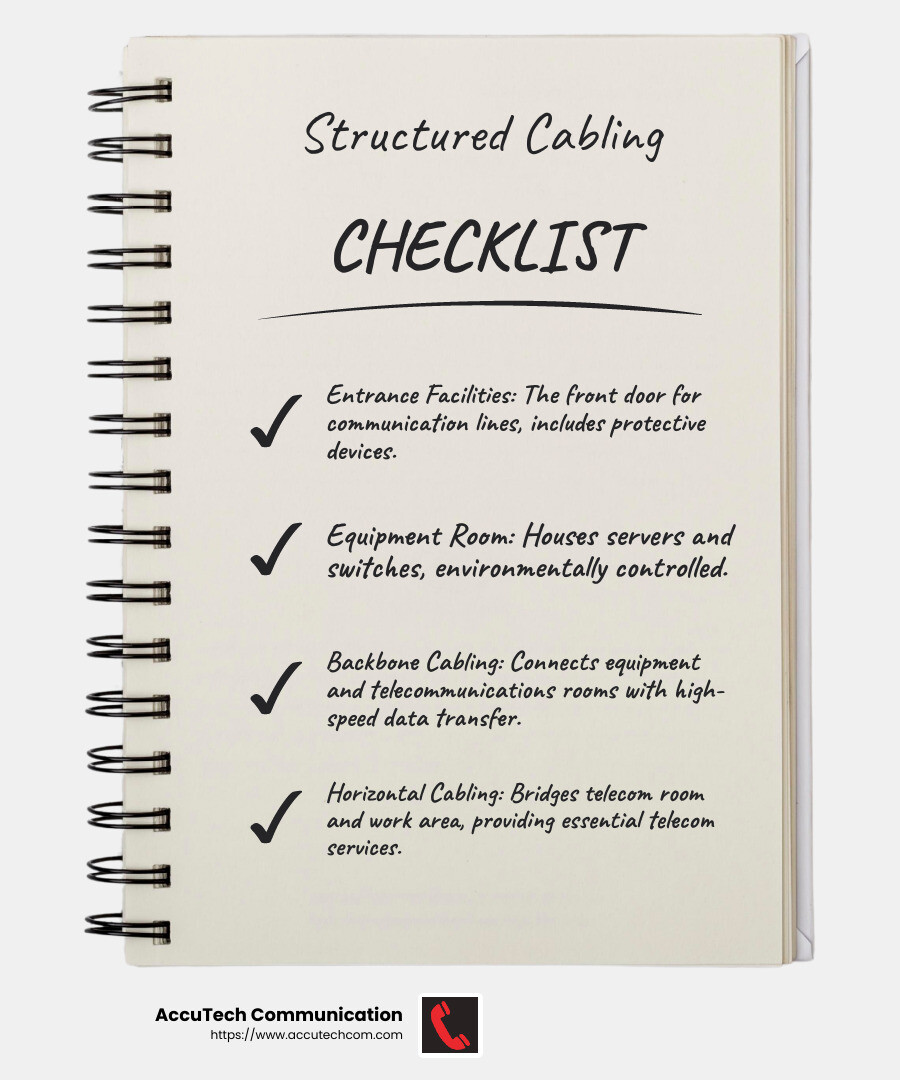
The Entrance Facilities serve as the primary entry point for telecom services entering a building. Imagine this as the front door for all your communication lines. Here, cables from a service provider or a private network make their way inside. The facilities often include conduits, network connection points, and protective devices to shield against electrical disturbances like lightning.
2. Equipment Room
The Equipment Room is the heart of your network. It’s where the magic happens, housing crucial equipment such as servers, switches, and patch panels. This room ensures that all the incoming and outgoing data is processed and managed efficiently. Keeping this area environmentally controlled is vital for maintaining optimal performance and protecting sensitive equipment.
3. Backbone Cabling
Think of Backbone Cabling as the highways of your network. These cables connect different equipment rooms and telecommunications rooms, providing a robust pathway for data to travel between floors and sections of a building. Backbone cabling typically includes twisted-pair cables and fiber optics, ensuring high-speed data transfer across long distances.
4. Telecommunications Room
The Telecommunications Room acts as a distribution center, linking backbone cabling to individual work areas. It’s where horizontal and backbone cables terminate, and where network devices come together. This room is crucial for managing connections and ensuring data reaches every corner of the building efficiently.
5. Horizontal Cabling
Horizontal Cabling is the bridge between the telecommunications room and the work area. It extends the network to individual desks and devices, ensuring that each user has access to the necessary telecom services. This subsystem includes cables, connectors, and patch panels, all designed to deliver data seamlessly to end-users.
6. Work Area
The Work Area is where the structured cabling system meets the end-user. It’s the final stop for data, connecting devices like computers, phones, and printers to the network. In this space, wall outlets and cables work together to provide a reliable and efficient connection, enabling seamless communication and collaboration.
By understanding these components, businesses can ensure their network infrastructure is both effective and future-proof. Each part plays a crucial role in maintaining a smooth and efficient flow of data, supporting the diverse needs of modern organizations. As we continue exploring structured cabling, let’s look at the benefits that make these systems a wise investment for any business.
Benefits of Structured Cabling Systems
Structured cabling systems offer a wide range of benefits that make them a smart investment for businesses of all sizes. Here’s why they stand out:
Reliability
A properly installed structured cabling system provides a reliable network infrastructure. By following industry standards, these systems minimize signal loss and interference, ensuring that your network runs smoothly with minimal downtime. This reliability is crucial for businesses that rely on consistent, high-speed communication.
Scalability
One of the standout features of structured cabling is its scalability. As your business grows, you can easily add new devices and technologies without major disruptions. This flexibility allows you to expand your network infrastructure to accommodate new employees and emerging technologies effortlessly.
Flexibility
Structured cabling systems are designed to support a variety of network applications, including data, voice, and video. This flexibility means you can integrate different technologies and services as your business needs change. Whether you’re upgrading to a new phone system or adding video conferencing capabilities, a structured cabling system can handle it.
Cost Efficiency
While the initial investment in a structured cabling system might be higher than other cabling options, it offers long-term cost savings. By reducing the need for frequent updates and repairs, businesses can save money over time. Plus, the organized nature of structured cabling makes troubleshooting and maintenance tasks simpler and less time-consuming.
Easy Troubleshooting
With clearly labeled and organized cables, network administrators can quickly identify and resolve connectivity issues. This ease of troubleshooting minimizes downtime and keeps your business operations running smoothly.
Structured cabling systems provide a reliable, scalable, and cost-effective solution for businesses looking to future-proof their network infrastructure. Let’s compare structured cabling to its less organized counterpart, unstructured cabling, to see why organization truly matters.
Structured Cabling vs. Unstructured Cabling
When it comes to network infrastructure, choosing between structured cabling and unstructured cabling can make a big difference in how your system performs and how easy it is to manage. Let’s explore why structured cabling is often the better choice.
Organization
Structured cabling is all about organization. Imagine a well-organized library where every book is in its place. That’s what structured cabling does for your network. It uses standardized elements and subsystems to ensure that every cable is labeled and placed correctly. This makes it easy to find and fix any issues that might pop up. On the other hand, unstructured cabling can resemble a tangled mess of wires, making it difficult to troubleshoot and manage.
Appearance
Looks matter, especially in a professional setting. Structured cabling systems are neat and tidy. They keep cables out of sight, using pathways like conduits and trays. This not only makes your workspace look better but also creates a safer environment. Unstructured cabling often results in a chaotic appearance, with cables running in every direction, which can be distracting and unprofessional.
Space Management
Efficient use of space is another advantage of structured cabling. By organizing cables into designated pathways, structured cabling helps free up valuable space in your office or data center. This can lead to better airflow and cooling, which is important for maintaining the performance of your equipment. Unstructured cabling, with its haphazard setup, can take up more room and block airflow, potentially leading to overheating issues.
Accidental Damage
Cables that are not properly managed are more prone to accidental damage. With unstructured cabling, the risk of someone tripping over a loose cable or pulling the wrong one is higher. This can lead to network outages and costly repairs. Structured cabling minimizes these risks by keeping cables secure and out of the way, reducing the potential for human error and accidental disconnections.
In summary, structured cabling offers a clear advantage over unstructured cabling in terms of organization, appearance, space management, and protection against accidental damage. As we dig deeper into network cables, let’s explore the different types used in structured cabling systems.
Types of Network Cables in Structured Cabling
When setting up a structured cabling system, choosing the right type of cable is crucial. Each type of cable has its own strengths and is suited for different applications. Let’s explore the four main types of network cables used in structured cabling systems: coaxial, fiber optic, shielded twisted pair, and unshielded twisted pair.
Coaxial Cables
Coaxial cables have been around for a long time and are known for their durability. They have a thick, insulated copper core, which makes them ideal for long-distance transmissions with minimal signal loss. You’ll often find coaxial cables used in video surveillance systems and cable TV connections. Their robust design helps protect against interference, making them a reliable choice for stable, long-distance communication.
Fiber Optic Cables
Fiber optic cables are the champions of speed and distance. They use light to transmit data, allowing for ultra-fast communication without signal degradation over long distances. There are two main types: single-mode for long-range communications and multi-mode for shorter distances. While they can be more expensive and complex to install, fiber optic cables are perfect for future-proofing your network. Their immunity to electromagnetic interference makes them an excellent choice for critical infrastructure like data centers.
Shielded Twisted Pair (STP) Cables
Shielded twisted pair (STP) cables come with a protective shielding that reduces electromagnetic interference. This makes them ideal for environments with high electrical noise, like industrial settings. STP cables are a bit more expensive and harder to install than their unshielded counterparts, but their ability to maintain signal integrity in noisy environments can be worth the investment.
Unshielded Twisted Pair (UTP) Cables
Unshielded twisted pair (UTP) cables are the most common type of network cable, especially in office and home environments. They’re cost-effective, easy to install, and handle well, making them a practical choice for rapid network setups. UTP cables are typically used for Ethernet networks and can support high data transfer speeds over shorter distances. However, they are more susceptible to interference compared to STP cables.
In summary, the choice of cable in a structured cabling system depends on the specific needs of your network, including distance, environment, and budget. Understanding the unique benefits of each type will help you make the best decision for your network infrastructure.
As we continue to explore structured cabling, let’s address some frequently asked questions to clear up any lingering doubts.
Frequently Asked Questions about Structured Cable Systems
What is a structured cabling system?
A structured cabling system is a standardized approach to setting up a building’s telecommunications infrastructure. Think of it as the backbone of your network, organizing all the cables and connections in a neat and efficient way. It includes various components like entrance facilities, equipment rooms, backbone cabling, and more. This system supports data, voice, and video transmissions, ensuring everything works smoothly together.
What are the advantages of a structured cabling system?
Structured cabling offers several key benefits:
- Reliability: With a structured setup, your network is less likely to experience downtime. It’s organized and follows industry standards, reducing the chances of errors.
- Troubleshooting: When something goes wrong, finding the issue is much easier. The organized nature of structured cabling means you can quickly identify and fix problems.
- Scalability: Need to add more devices or upgrade your technology? No problem. A structured cabling system is designed to grow with you, allowing for easy changes without major disruptions.
How much does structured cabling cost?
The cost of structured cabling can vary based on several factors, including the type of cables used. Here’s a quick overview of some common cable types:
- CAT-5: This is the most basic option, suitable for standard office environments with moderate data needs.
- CAT-6: Offers higher speeds and is more reliable for busy networks. It’s a popular choice for many businesses.
- CAT-7: Provides even better performance with improved shielding. It’s great for environments with lots of interference.
- CAT-8: The top-of-the-line option for ultra-fast data transfer and future-proofing. Ideal for data centers and high-performance networks.
While the initial investment might be higher for more advanced cables like CAT-8, the long-term benefits often outweigh the costs. A well-planned structured cabling system can save money by reducing maintenance and allowing for easy upgrades.
In summary, investing in a structured cabling system is like setting a strong foundation for your network. It ensures reliability, simplifies troubleshooting, and allows for easy scalability. Now that we’ve covered the basics, let’s dive deeper into how structured cabling compares to unstructured cabling systems.
Conclusion
At AccuTech Communications, we believe in building strong foundations for your business’s network infrastructure. With over 30 years of experience, we are committed to providing certified service that you can rely on. Our team of skilled technicians ensures that every installation meets the highest standards, guaranteeing a robust and efficient network setup.
We understand that every business has unique needs, which is why we offer competitive pricing custom to suit different requirements. Whether you’re a small business or a large corporate campus, our solutions are designed to deliver maximum value without compromising on quality.
Our dedication to quality commitment means that we don’t just install cables; we build lasting relationships. Many of our clients have trusted us for decades because we prioritize their needs and ensure their networks are always in top shape.
Investing in a structured cabling system with AccuTech is more than just a smart choice—it’s a partnership for success. Our comprehensive services cover everything from consultation and design to maintenance and support, ensuring your network is always ready to meet future demands.
Ready to strengthen your network’s backbone? Contact us today to learn more about how our structured cabling solutions can benefit your business. Let’s work together to ensure your network is wired for success.
