
Surveillance System for Business: Top 5 Must-Have Features
Why Surveillance Systems for Business are Essential
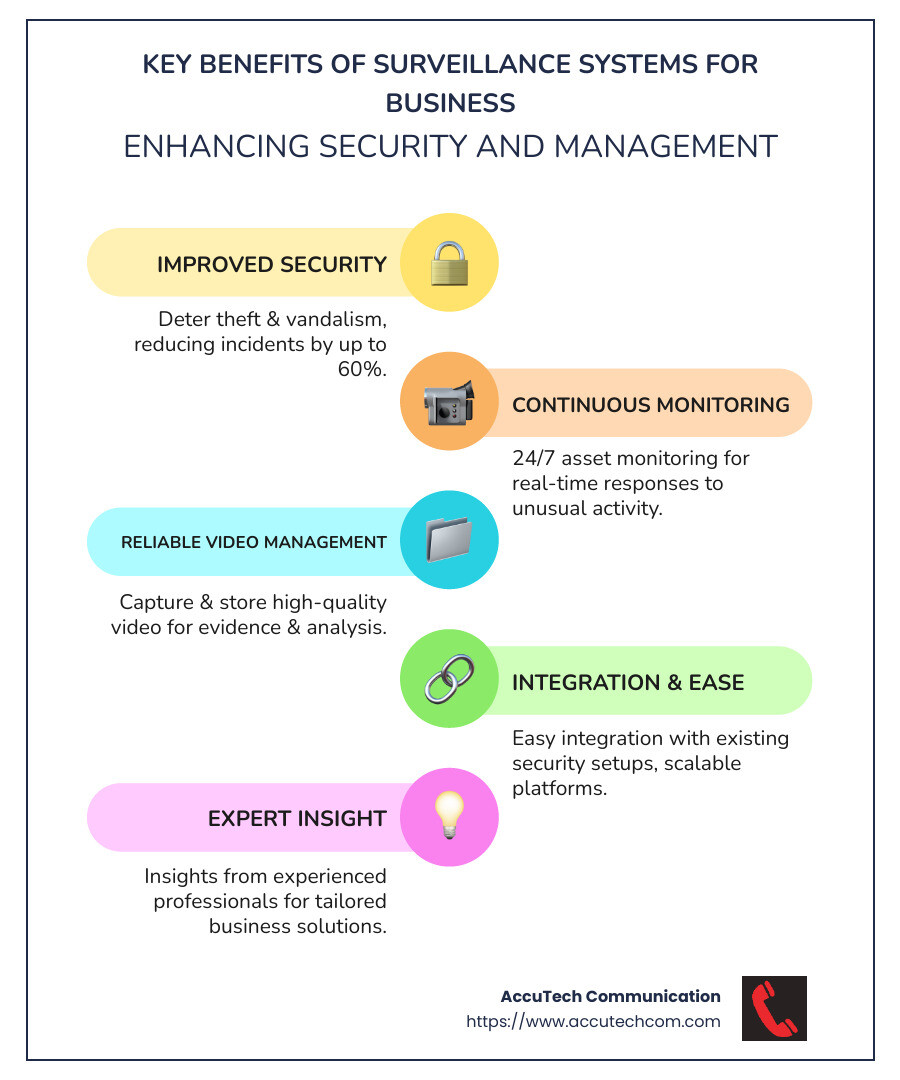
In today’s business landscape, having a surveillance system for business is not just an option; it’s a necessity for enhancing security and peace of mind. Here’s what you should know:
- Improved Security: Deter theft and vandalism, reducing incidents by up to 60%, as studies from the University of North Carolina suggest.
- Continuous Monitoring: Keep an eye on assets 24/7, ensuring real-time responses to any unusual activity.
- Reliable Video Management: Capture and store high-quality video footage for evidence and analysis, enhancing situational awareness.
- Integration and Ease: Modern systems offer easy integration with existing security setups and ONVIF® compliant platforms, making them scalable and versatile.
I’m Corin Dolan, an expert in the field with experience in crafting custom communication and surveillance systems for the business sector. With over two decades of experience, I’ve helped countless businesses implement robust surveillance system for business solutions to protect their assets and ensure seamless operations.
Simple surveillance system for business glossary:
– commercial security
– live video monitoring
– camera monitoring
Understanding Surveillance Systems for Business
When it comes to securing your business, understanding the types of surveillance systems available is crucial. Let’s break it down:
NVR Systems
Network Video Recorder (NVR) systems are at the forefront of modern business security. They work with digital IP cameras, which process video and audio signals digitally. This means clearer, high-resolution footage compared to older systems. NVRs can be wired or wireless, offering flexibility based on your needs. Wired systems use Power over Ethernet (PoE), simplifying installation by providing power and data through a single cable.
DVR Systems
Digital Video Recorder (DVR) systems are a more traditional choice, using analog cameras connected via coaxial cables. While reliable, they lack the flexibility and high-definition quality of NVR systems. DVRs are best suited for businesses that already have existing analog infrastructure and want a cost-effective solution.
IP Cameras
IP cameras are the backbone of a modern surveillance system. They connect via the internet and offer a host of advanced features like high-definition video, remote access, and smart analytics. With IP cameras, businesses can monitor their premises from anywhere in the world using a smartphone or computer. This makes them ideal for both small businesses and larger enterprises looking to improve their security posture.

Key Differences
Here’s a quick comparison to help you decide which system suits your business best:
| Feature | NVR Systems | DVR Systems |
|---|---|---|
| Camera Type | Digital IP Cameras | Analog Cameras |
| Video Quality | High-Resolution | Standard Definition |
| Installation | Wired (PoE) or Wireless | Wired |
| Flexibility | Highly Scalable | Less Flexible |
| Advanced Features | Yes (e.g., face recognition) | Limited |
Understanding these systems will help you choose the right surveillance system for business needs, ensuring safety and security for your assets.
Next, we will explore the top features of modern surveillance systems that can further improve your business security.
Top Features of Modern Surveillance Systems
In today’s world, having a robust surveillance system for business is more important than ever. Let’s explore some of the top features that modern systems offer to keep your business secure and efficient.
AI Analytics
Modern surveillance systems are more than just cameras—they’re smart. With AI analytics, these systems can detect unusual activity and alert you in real-time. For instance, AI can differentiate between a customer and an employee, or even recognize when someone is loitering. This means fewer false alarms and more accurate monitoring.
Fact: 60% of burglars avoid targets with video surveillance. (Source: airef.org)
AI can also help with business operations. Imagine having insights into customer behavior or identifying peak times in your store. This data can help improve customer service and optimize staffing.
Remote Monitoring
Gone are the days when you had to be on-site to keep an eye on things. With remote monitoring, you can view live and recorded video from anywhere in the world. All you need is a smartphone or computer with internet access.
This feature is perfect for business owners who travel frequently or manage multiple locations. You can check in on your business anytime, ensuring everything runs smoothly even when you’re away.
Tip: Remote monitoring can also be integrated with other systems, like intrusion detection, for a comprehensive security solution.
High-Resolution Video
Clear video footage is crucial when it comes to identifying faces, license plates, or other details. Modern surveillance systems offer high-resolution video, giving you crisp and clear images day or night.
With advancements in camera technology, you can expect high-definition video that captures every detail. This is especially important in low-light conditions, where traditional cameras might struggle.
Example: Dome cameras offer true day/night viewing functionality, providing clear images regardless of the lighting conditions.
These features make modern surveillance systems indispensable tools for any business. By leveraging AI analytics, remote monitoring, and high-resolution video, you can improve your security measures and gain valuable insights into your operations.
Next, we’ll compare wired and wireless surveillance systems to help you decide which setup is right for your business.
Wired vs. Wireless Surveillance Systems
When choosing a surveillance system for business, understanding the difference between wired and wireless systems is key. Both have their unique advantages and challenges, and knowing these can help you make the best decision for your business.
Wired Systems
Wired surveillance systems are known for their reliability. They connect cameras to the recording device through physical cables, which means they are less susceptible to interference and provide a stable connection. This makes them ideal for businesses that require consistent and uninterrupted video feeds.
- Power over Ethernet (PoE): One of the standout features of wired systems is PoE. This technology allows a single Ethernet cable to provide both power and data to cameras, simplifying installation and reducing the number of cables needed. It’s a neat solution for businesses looking to streamline their setup.
- Scalability: Wired systems can support a large number of cameras, making them suitable for businesses with extensive surveillance needs. You can easily expand the system as your business grows without worrying about signal interference.
Drawback: The installation of wired systems can be costly and time-consuming due to the need for extensive cabling. This might not be ideal for all businesses, especially those in rented spaces.
Wireless Systems
Wireless systems offer more flexibility compared to their wired counterparts. They transmit video signals over Wi-Fi, which eliminates the need for extensive cabling and makes installation easier and faster.
- Flexibility: These systems are perfect for businesses that need to move their cameras frequently or have spaces where running cables is impractical. You can position cameras anywhere within the range of your Wi-Fi network.
- Advanced Features: Many wireless systems come with advanced features like AI analytics and remote monitoring, giving businesses the ability to monitor operations from anywhere.
Drawback: The performance of wireless systems heavily depends on the strength and reliability of the internet connection. A weak or unstable connection can lead to dropped feeds, which might be a concern for businesses in areas with poor network coverage.
Choosing the Right System
The choice between wired and wireless systems largely depends on your business’s specific needs. If you prioritize reliability and have a stable infrastructure, a wired system with PoE might be the best choice. On the other hand, if you need flexibility and ease of installation, a wireless system could be more suitable.
Understanding these differences can help you select a surveillance system for business that meets your security requirements and fits within your operational constraints.
Next, we’ll tackle some frequently asked questions about surveillance systems to further guide your decision-making process.
Frequently Asked Questions about Surveillance Systems for Business
Is it legal for businesses to have hidden cameras?
In many places, including California, businesses can use hidden cameras, but there are important rules to follow. California law allows video surveillance as long as it doesn’t infringe on reasonable privacy expectations. This means no cameras in areas where people expect privacy, like restrooms or changing rooms.
Tip: Always inform employees and customers that surveillance is in place, even if cameras are not visible. This transparency helps maintain trust and avoids potential legal issues.
How much does a security system cost for a small business?
The cost of a surveillance system for business can vary widely based on several factors. For a small business, prices can range from a few hundred to several thousand dollars. Key factors include:
- Number of cameras: More cameras mean higher costs.
- Installation: Professional installation can add to the expense, but it ensures the system is set up correctly.
- Features: Advanced features like AI analytics and remote monitoring can increase the price but offer more value.
Advice: Consider your specific needs and budget. It might be worth investing in a system that can grow with your business.
How many cameras can I connect to my NVR security system?
The number of cameras you can connect to an NVR system depends on the channels the system supports. NVR systems typically offer 4, 8, 16, or more channels. If scalability is important for your business, choose a system with more channels than you currently need. This allows you to add cameras as your security needs grow.
Consideration: Ensure your NVR system has enough storage capacity to handle the video data from all connected cameras, especially if you plan to expand in the future.
Next, we’ll conclude with how AccuTech Communications can provide reliable service for your surveillance needs in Massachusetts and beyond.
Conclusion
When it comes to choosing a surveillance system for business, reliability and expertise are key. At AccuTech Communications, we pride ourselves on delivering both. Based in Massachusetts, we’ve been serving businesses in Massachusetts, New Hampshire, and Rhode Island since 1993. Our commitment? Provide certified, reliable service with a focus on quality.
Why Choose AccuTech Communications?
- Experience: With decades of experience, we understand the unique needs of businesses in our region. From small enterprises to large corporate campuses, our team is equipped to handle it all.
- Expertise: Our skilled technicians are trained to ensure your surveillance system is optimized for peak performance. We offer comprehensive solutions, including network cabling, business phone systems, and data center technologies.
- Customization: Every business is different, and so are its security needs. We work closely with you to design a surveillance system that fits your specific requirements and budget.
- Support: Our dedicated support team is always ready to assist you. Whether you have questions about your system or need technical help, we’re just a call away.
At AccuTech Communications, we believe in building lasting relationships with our clients. Many businesses have trusted us for over two decades, and we are committed to continuing that tradition of excellence.
Ready to improve your business security with a reliable surveillance system? Contact us for a consultation and let us help you create a customized solution that meets your needs. Your security is our priority.
