
Telecommunications Construction: Top 5 Powerful Insights 2024
Telecommunications construction plays a pivotal role in shaping our digital world, connecting businesses and communities through advanced network infrastructures. Whether it’s laying underground cables or erecting tall communication towers, this essential sector supports how we work, learn, and communicate every day. In a rapidly evolving landscape, telecommunications construction ensures that robust, high-performance networks continue to meet the growing demand for fast and reliable connectivity.
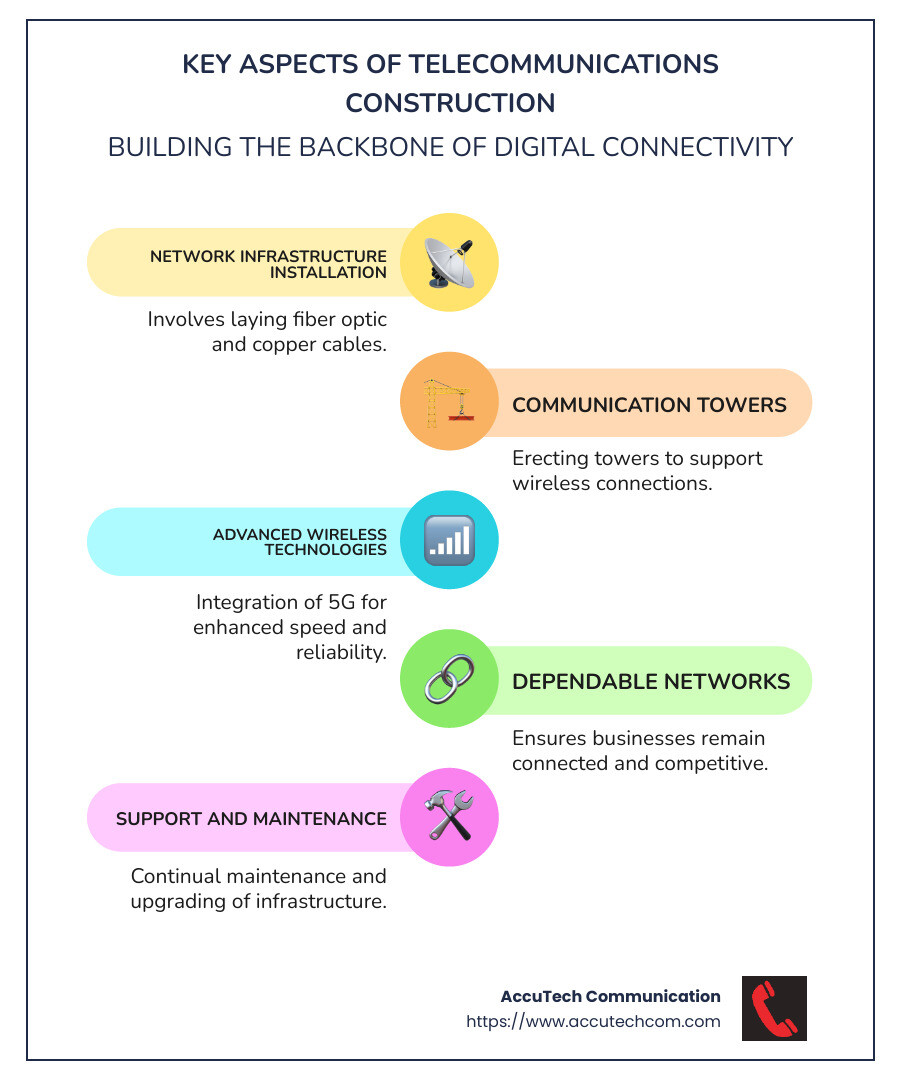
- Key Aspects of Telecommunications Construction:
- Installation of network infrastructure, including fiber optic and copper cables.
- Development of communication towers to facilitate wireless connections.
- Integration of advanced wireless technologies like 5G to improve speed and reliability.
Securing a dependable network has become a necessity—not just a convenience. With the seamless integration of modern technologies, telecommunications construction ensures that businesses remain connected and competitive.
As someone deeply entrenched in this field, I’m Corin Dolan, the owner of AccuTech Communications. Since 1993, I’ve leveraged my expertise in telecommunications construction to help countless businesses, particularly in sectors like healthcare, improve their communication systems. Let’s explore how this sector underpins our digital age.
Basic telecommunications construction glossary:
– cable installation contractors
– low voltage cabling
– telecommunications contractor
What is Telecommunications Construction?
Telecommunications construction is the backbone of our digital world. It involves building and maintaining the infrastructure that allows us to communicate, share information, and stay connected globally. This includes everything from laying cables underground to installing towering communication structures.
Network Infrastructure
At its core, telecommunications construction focuses on creating a robust network infrastructure. This infrastructure includes the physical elements that enable data transmission, such as fiber-optic and copper cables. These cables form the highways of our digital communication, carrying vast amounts of data at incredible speeds.
Fiber-optic technology is particularly essential. It uses light to transmit data, offering faster and more reliable internet connections compared to traditional copper cables. This technology is pivotal in supporting high-speed broadband services, which are crucial for activities like teleworking and streaming.
Communication Towers
Another critical component is the development of communication towers. These structures are vital for wireless technology, enabling signals to travel over long distances. Communication towers support various forms of wireless communication, including mobile phone networks and radio broadcasts.
With the rise of 5G technology, communication towers have become even more important. 5G promises faster speeds and more reliable connections, changing how we use mobile devices and the internet. This advancement requires a dense network of towers to ensure coverage and performance.
Wireless Technology
Wireless technology is a key driver of modern telecommunications. It allows devices to connect without physical cables, offering flexibility and convenience. From WiFi in homes and offices to cellular networks that keep us connected on the go, wireless technology is an integral part of daily life.
The integration of 5G into wireless networks is set to revolutionize connectivity. It will enable new applications like smart cities, autonomous vehicles, and advanced IoT (Internet of Things) solutions, all of which rely on seamless, high-speed communication.
In summary, telecommunications construction is about more than just building networks; it’s about laying the groundwork for future innovations. By enhancing network infrastructure, erecting communication towers, and advancing wireless technology, this sector ensures that we stay connected and competitive in an changing digital landscape.

Next, we’ll dig into the key components of telecommunications construction, exploring the roles of fiber optic and copper cables, communication towers, and wireless technology in more detail.
Key Components of Telecommunications Construction
Telecommunications construction is essential for creating the networks that keep us connected. Let’s explore two crucial components: fiber optic and copper cable installation and communication towers and wireless technology.
Fiber Optic and Copper Cable Installation
Fiber optic cables and copper cables are the lifelines of digital communication. These cables are responsible for transmitting data, voice, and video across vast distances.
- Fiber Optic Cables: These are made of thin strands of glass or plastic and use light to transmit data. They are known for their high-speed capabilities and reliability. Fiber optics support broadband services, making them crucial for internet connectivity, teleworking, and streaming. They can carry data over long distances without losing quality, which is why they are favored for modern telecommunications networks.
- Copper Cables: Although older than fiber optics, copper cables are still widely used, especially in telephone lines. They are effective for shorter distances and are often found in local networks. Copper cables are more affordable but are limited in speed and data capacity compared to fiber optics.
The installation process involves careful planning and execution. This includes laying cables underground or suspending them on poles. Proper installation ensures that the network can handle high volumes of data traffic efficiently.
Communication Towers and Wireless Technology
Communication towers and wireless technology form the backbone of mobile and wireless communication.
- Communication Towers: These towering structures are essential for transmitting signals over large areas. They support various wireless technologies, including mobile phone networks and radio broadcasts. As the demand for wireless services grows, the need for more communication towers increases.
- Wireless Technology: This technology allows devices to connect without physical cables. It includes mobile networks, WiFi, and emerging technologies like 5G. Wireless technology offers flexibility and convenience, enabling connectivity anywhere within range.
- 5G Technology: The latest in mobile networks, 5G promises faster speeds and lower latency. It supports innovative applications like smart cities and autonomous vehicles. To achieve this, a dense network of communication towers is necessary to ensure coverage and performance.
These components are critical to the telecommunications sector, enabling seamless data transmission and connectivity. As technology evolves, the demand for efficient and robust network infrastructure continues to grow, driving advancements in telecommunications construction.

Next, we’ll explore the role of telecommunications contractors, who design, install, maintain, and repair these vital systems.
The Role of Telecommunications Contractors
Responsibilities and Skills
Telecommunications contractors play a vital role in ensuring our digital world stays connected. They are the experts behind the scenes who design, install, maintain, and repair telecommunications systems. Let’s break down what they do and the skills they need.
Design and Planning
Before any cables are laid or towers erected, contractors engage in thorough design and planning. This phase involves understanding the client’s needs and the technical requirements of the project. Contractors must:
- Create detailed plans for network infrastructure.
- Ensure compliance with local regulations and safety standards.
- Coordinate with city and state authorities for necessary permits.
Installation
Once the design is ready, the installation phase begins. This is where the real groundwork happens. Contractors are responsible for:
- Aerial and Underground Cabling: Installing cables either above ground on poles or underground through trenches. This includes both fiber optic and copper cables.
- Setting up communication towers for wireless networks. This requires precision to ensure signal coverage and strength.
Maintenance and Repairs
Telecommunications systems need regular upkeep to stay efficient. Contractors provide ongoing maintenance to prevent issues and ensure systems run smoothly. When problems arise, they perform repairs to fix any faults quickly. Key tasks include:
- Routine inspections and troubleshooting.
- Emergency repairs to minimize downtime.
- Upgrading systems to keep up with technological advancements.
Safety Standards
Safety is a top priority in telecommunications construction. Contractors must adhere to strict safety protocols to protect workers and the public. This includes:
- Using proper safety gear and equipment.
- Training teams to handle hazardous situations.
- Ensuring all installations comply with safety regulations.
Telecommunications contractors are the backbone of network infrastructure. Their work ensures that the systems we rely on daily are robust and reliable. Their role will continue to evolve, adapting to new technologies and growing demands.
Next, we’ll explore how telecommunications systems are integrated into buildings, supporting data transmission and workplace communication.
Telecommunications Systems in Buildings
Essential Building Components
Telecommunications systems are crucial for seamless data transmission and effective workplace communication. Let’s explore the key components that make these systems work inside buildings.
Infrastructure and Cabling
Building a robust telecommunications infrastructure starts with proper cabling. This is the backbone that supports all data and voice communications. There are two main types of cables used:
- Fiber Optic Cables: These are ideal for high-speed data transmission over long distances. They offer greater bandwidth compared to traditional copper cables.
- Copper Cables: Often used for shorter distances, these are still reliable for many business phone systems and local networks.
Proper cable management is essential for easy maintenance and upgrades. This involves organizing cables neatly and ensuring they are easily accessible.
Data Centers
Data centers serve as the nerve center of any building’s telecommunications system. They house the servers and network equipment needed to store, process, and manage data. Key features of a data center include:
- Cooling Systems: To prevent overheating of equipment.
- Backup Power: Ensures continuous operation during power outages.
- Security Measures: Protects sensitive data from unauthorized access.
Business Phone Systems
Business phone systems are another critical component. They facilitate communication within the organization and with external clients. Modern systems often use Voice over Internet Protocol (VoIP) technology, which transmits voice over the internet rather than traditional phone lines. This offers:
- Cost Savings: Lower costs compared to traditional phone services.
- Flexibility: Easily scalable to accommodate growing businesses.
- Advanced Features: Such as call forwarding, voicemail to email, and conferencing.
Workplace Communication
Effective workplace communication relies on a well-integrated telecommunications system. This includes:
- Wireless Networks: Providing employees with mobility and flexibility. Wireless access points are strategically placed to ensure strong, reliable connections throughout the building.
- Video Conferencing Systems: Enabling virtual meetings and collaboration. These systems often require high-quality audio and video transmission capabilities.
By integrating these essential components, buildings can support efficient data transmission and workplace communication. This infrastructure is not just about wires and cables; it’s about creating a seamless communication environment that meets the demands of modern businesses.
In the next section, we’ll explore the latest trends and innovations changing telecommunications construction.
Trends and Innovations in Telecommunications Construction
Emerging Technologies
In telecommunications construction, technology is constantly evolving. Two of the most significant advancements are 5G and AI.
5G is revolutionizing wireless communication. It offers faster speeds, lower latency, and the ability to connect more devices simultaneously. This is crucial for supporting emerging technologies like autonomous vehicles and smart cities. With 5G, we can expect more reliable connections, even in densely populated areas.
AI is also making waves in the telecom industry. It helps in optimizing networks by predicting outages and managing data traffic more efficiently. AI-driven systems can also improve customer service by providing instant responses to common queries through chatbots or virtual assistants.
These technologies are not just futuristic concepts; they are already being implemented and changing how we communicate.
Industry Outlook
The telecom industry is ready for significant changes, driven by increasing data consumption. As more devices connect to the internet, the demand for data continues to rise. This trend is pushing telecom companies to expand and upgrade their infrastructure.
In 2024, telecom industry trends suggest that competition will intensify, especially in the broadband sector. Consumers will have more choices, leading to better services and pricing. Companies that adapt quickly to these changes, like integrating 5G and AI, will thrive.
The economic impact of these advancements is substantial. Improved connectivity can boost productivity and innovation across various sectors, from healthcare to education. As businesses and communities rely more on digital connectivity, the role of telecommunications construction becomes even more vital.
As we dig deeper into telecommunications, it’s clear that staying ahead of these trends and innovations is crucial for success. In the next section, we’ll address some frequently asked questions about telecommunications construction, helping to explain this essential industry.
Frequently Asked Questions about Telecommunications Construction
What is telecommunications construction?
Telecommunications construction involves building the infrastructure that allows us to communicate over long distances. This includes installing fiber optic cables, communication towers, and other essential components. These structures enable data transmission for internet, phone services, and more. As highlighted in the research, reliable connectivity is crucial for modern activities like teleworking and telehealth.
What is a telecom construction job description?
A telecom construction job often includes tasks like designing, installing, and maintaining telecommunications systems. Workers handle both aerial and underground cabling, ensuring everything meets safety standards. They might also engage in project management and coordinate with local authorities for permits. The role requires a blend of technical skills, safety awareness, and problem-solving abilities.
What is a telecommunications contractor?
A telecommunications contractor is a company or individual hired to build and maintain telecom infrastructure. They are responsible for tasks like installing fiber and copper cables, setting up communication towers, and ensuring systems are up-to-date. Contractors like Quest, mentioned in the research, emphasize safety and quality, working with both public and private clients to bridge the connectivity gap.
Understanding these aspects of telecommunications construction helps us appreciate the complex work behind the seamless connectivity we rely on daily.
Conclusion
At AccuTech Communications, we pride ourselves on being a trusted partner in telecommunications construction. Since 1993, we’ve been delivering certified and reliable services to businesses across Massachusetts, New Hampshire, and Rhode Island. Our commitment to quality and competitive pricing ensures that our clients receive the best value for their investment.
Our certified services are a cornerstone of what we offer. We understand the importance of reliable connectivity in today’s world. Whether it’s installing network cabling or setting up business phone systems, our team is dedicated to providing solutions that meet the highest standards. This commitment to excellence has allowed us to build lasting relationships with our clients, many of whom have been with us for decades.
Competitive pricing is another key aspect of our service. We believe that top-notch telecommunications infrastructure should be accessible to businesses of all sizes. By offering fair and transparent pricing, we make it possible for our clients to benefit from advanced technology without breaking the bank.
Our commitment to quality goes beyond just the services we provide. It’s about ensuring that every project is completed with attention to detail and a focus on safety. Our skilled technicians and engineers are trained to handle even the most complex installations, ensuring that our clients’ networks are optimized for peak performance.
If you’re looking for a reliable partner to handle your telecommunications needs, contact us today. Let us help you build a strong and efficient network that supports your business’s growth and success.
