
Video Surveillance: Top 10 Must-Know Benefits 2024
Why Video Surveillance Matters
Video surveillance is an essential tool for maintaining security and monitoring in both public and private spaces. It allows for real-time observation and recording of activities in specific areas, which can be crucial for deterrence, proof, and safety. Here are some quick points to understand the value of video surveillance:
- Security Improvement: Provides a strong visual component to your security measures, allowing visibility into ongoing activities.
- Real-Time Monitoring: Enables instant observation and recording of events as they happen, helping in quick response and decision-making.
- Evidence Collection: Recorded footage serves as valuable evidence in incidents requiring investigation.
Whether for enhancing safety, boosting productivity, or collecting evidence, video surveillance is a cornerstone of modern security systems.
As Corin Dolan, owner of AccuTech Communications, I bring decades of experience in the field. Having worked alongside numerous businesses, I understand the vital role video surveillance plays in securing premises and streamlining operations. This guide will further explain how video surveillance can improve your security setup and ensure seamless integration with your existing systems.
Video surveillance terminology:
– live video monitoring
– security camera monitoring
– commercial security
Understanding Video Surveillance
Types of Video Surveillance Systems
Video surveillance systems are diverse, offering several options depending on your needs. Let’s explore the most common types:
- Analog Systems: These traditional systems use analog cameras connected to a Digital Video Recorder (DVR). They are cost-effective and straightforward but may lack the advanced features of newer systems.
- Digital Systems: Digital cameras capture images in a digital format, which offers higher resolution and better image quality. They connect to a Network Video Recorder (NVR) and can be integrated with other digital technologies.
- IP Systems: Internet Protocol (IP) systems allow cameras to send and receive data via a network. These systems support higher resolutions and advanced features like remote access and AI-powered analytics.
Each system type has its strengths and can be custom to specific needs, whether it’s a small business setup or a large corporate environment.
Key Features of Video Surveillance
Modern video surveillance systems come with a host of features designed to improve security and monitoring capabilities:
- High-Resolution Imaging: Clear, detailed images are crucial for identifying individuals and events. High-resolution cameras ensure that footage is sharp and usable.
- Night Vision Capabilities: Essential for 24/7 surveillance, night vision allows cameras to capture clear footage in low-light conditions.
- Motion Detection: This feature triggers recording only when movement is detected, saving storage space and making it easier to review footage.
These features not only improve security but also streamline operations by providing valuable insights into daily activities.
By understanding the types and key features of video surveillance systems, you can select the right setup for your specific needs. This knowledge ensures that your system is both effective and efficient, providing peace of mind and improved security.
Benefits and Challenges of Video Surveillance
Advantages of Video Surveillance
Video surveillance offers a range of benefits that can significantly improve both security and operational efficiency.
- Boosting Safety & Security: Acting as the ever-watchful eye, these systems deter potential criminals, safeguarding your assets and protecting your employees. The presence of cameras alone can discourage unlawful activities.
- Improved Productivity: Knowing they are being monitored can motivate employees to perform better. This leads to increased productivity and a more efficient workplace.
- Providing Valuable Evidence: In disputes or legal scenarios, clear video evidence can be invaluable. It can confirm events and help resolve conflicts quickly and fairly.
- Streamlined Operations: Beyond security, video footage can offer insights into operational inefficiencies, helping businesses optimize workflows and improve processes.
Challenges and Considerations
While the benefits are clear, there are also challenges and considerations when implementing a video surveillance system.
- Privacy Concerns: Balancing security with privacy is crucial. It’s important to ensure that surveillance does not infringe on personal rights. Transparent policies and clear communication can help address these concerns.
- Dependence on the Internet: Many surveillance systems rely on a stable internet connection. A weak or interrupted network can impact their effectiveness, potentially leaving gaps in security coverage.
- Maintenance Costs: Beyond the initial setup, ongoing maintenance and upgrades can add to the overall expense. Regular checks are necessary to ensure the system remains functional and up-to-date.
- Technical Glitches: Like any technology, surveillance systems can experience technical issues. Having reliable support in place is essential to address problems swiftly and maintain continuous security monitoring.
By carefully weighing these pros and cons, businesses can make informed decisions about their video surveillance needs. Understanding both the advantages and challenges helps ensure that the system implemented is effective, efficient, and respectful of privacy concerns.
How Video Surveillance Works
Integration with Other Systems
Video surveillance is more than just cameras capturing footage. It integrates seamlessly with other security systems to provide comprehensive protection. Here’s how it works:
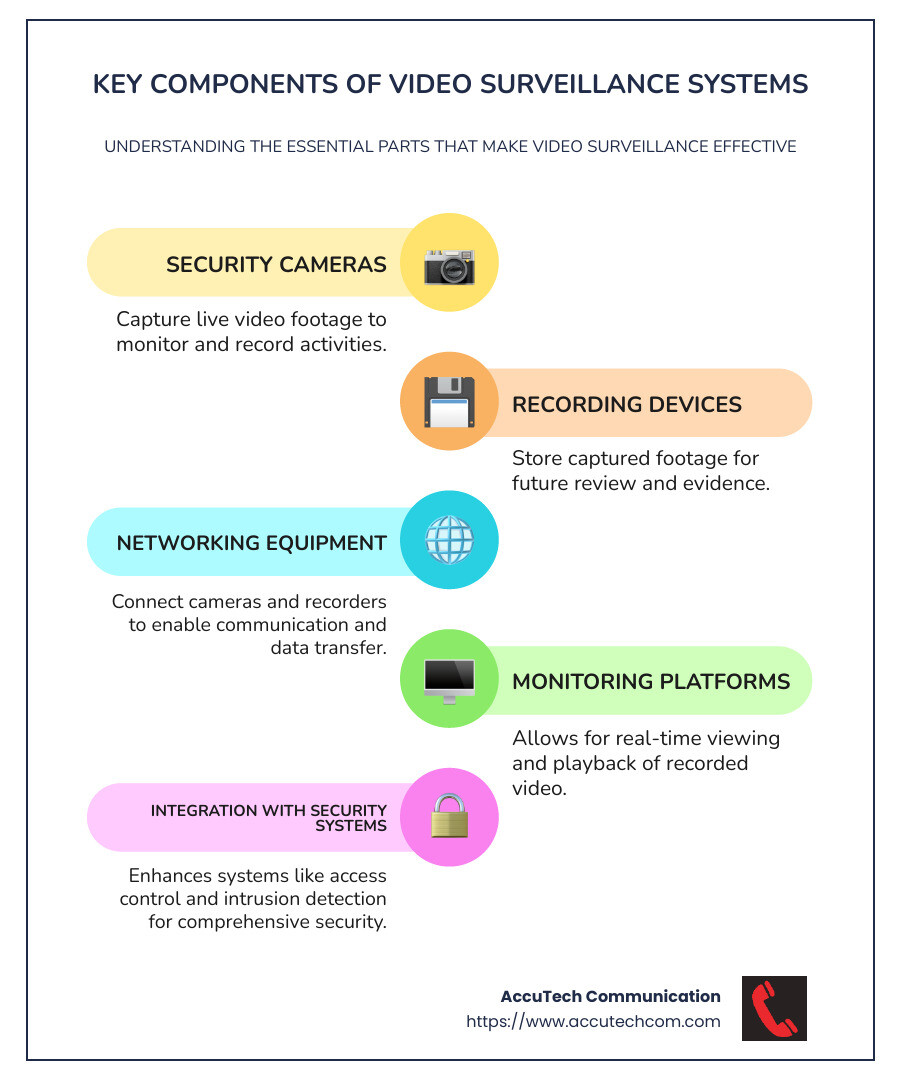
- Cameras: These are the eyes of the system, capturing footage in various lighting conditions and environments. From fixed dome cameras to PTZ (pan-tilt-zoom) cameras, each type serves a specific purpose. For instance, PTZ cameras can cover large areas by rotating and zooming, making them ideal for expansive spaces.
- Recorders: Once the cameras capture footage, it’s sent to recorders. These devices store the video for later review. Digital Video Recorders (DVRs) are common in analog systems, while Network Video Recorders (NVRs) are used in IP systems. They ensure that all captured footage is safely stored and easily accessible.
- Monitors: Security personnel use monitors to watch live feeds or review recorded footage. This allows for real-time decision-making and quick responses to any incidents. Monitors can be stationed on-site or at a remote location, depending on the setup.
- Access Control and Intrusion Systems: Video surveillance can integrate with access control systems, allowing you to verify identities visually. It also works with intrusion detection systems to automatically record events when an alarm is triggered. This synergy improves overall security by providing multiple layers of protection.
Cloud-Based Video Surveillance
The advent of cloud technology has revolutionized video surveillance. Here’s why cloud-based solutions are gaining popularity:
- Cloud Storage: Instead of relying solely on physical recorders, footage can be stored in the cloud. This eliminates the need for extensive hardware and provides virtually unlimited storage capacity. It also protects data from being lost due to hardware failures or theft.
- Remote Access: One of the standout features of cloud-based systems is remote access. You can view live feeds or recorded footage from anywhere using a smartphone, tablet, or computer. This is particularly beneficial for business owners or security personnel who need to monitor multiple locations.
- Scalability: Cloud solutions offer easy scalability. As your needs grow, you can add more cameras and storage without significant infrastructure changes. This flexibility makes it an attractive option for businesses of all sizes.
- Automatic Updates and Maintenance: With cloud-based systems, software updates and maintenance are often handled automatically. This ensures that the system remains up-to-date with the latest features and security patches, reducing the burden on IT staff.
By integrating video surveillance with other security measures and leveraging cloud technology, businesses can create a robust and flexible security infrastructure. This not only improves safety but also provides peace of mind knowing that your premises are continuously monitored and protected.

Frequently Asked Questions about Video Surveillance
What is the difference between a security camera and a surveillance camera?
A security camera and a surveillance camera often serve similar purposes but differ primarily in their use and functionality. Security cameras are typically used for active monitoring. They are part of a security system that might include alarms and notifications, alerting you to potential threats in real-time. These cameras are often used in homes and small businesses.
On the other hand, surveillance cameras are used for passive monitoring. They continuously record footage, which can be reviewed later. This makes them ideal for monitoring large areas, like cities or large commercial spaces, where constant human monitoring isn’t feasible. Surveillance systems often have more advanced features, like facial recognition or motion detection, to aid in reviewing footage.
How do you detect video surveillance?
Detecting video surveillance can be crucial for privacy and security. Here are a few methods:
- Look for Cameras: The most straightforward way is to visually inspect an area for cameras. They might be mounted on walls, ceilings, or hidden in everyday objects.
- Use RF Detectors: Some surveillance cameras transmit data wirelessly. RF (Radio Frequency) detectors can help locate these devices by picking up their signals.
- Check for Glints: At night, shine a flashlight around the area. The lens of a camera often reflects light, which can help you spot it.
- Listen for Noise: Some cameras make noise, like a faint whirring or clicking, especially if they have a pan-tilt-zoom function. Listen carefully in a quiet environment.
In what states are hidden cameras illegal?
The legality of hidden cameras varies by state, with laws often focusing on the expectation of privacy. Generally, it is illegal to record someone in a place where they have a reasonable expectation of privacy, like bathrooms or dressing rooms. Here are a few examples:
- California: It’s illegal to record someone in a private area without consent.
- New York: Similar to California, New York prohibits recording in private places without permission.
- Florida: Recording someone without their consent in a private setting is against the law.
Always check local laws for specifics, as regulations can change and may have nuances depending on the situation.
By understanding these differences and legal considerations, you can make informed decisions about using and installing video surveillance systems.
Conclusion
Ensuring the safety and security of your business is more important than ever. Video surveillance systems play a crucial role in safeguarding properties and providing peace of mind. At AccuTech Communications, we understand the importance of reliable and effective surveillance solutions.
Based in Massachusetts, AccuTech Communications has been a trusted leader in the field of business communications since 1993. Our expertise extends beyond just video surveillance; we provide comprehensive solutions, including network cabling, business phone systems, and data center technologies, custom to meet the unique needs of businesses in Massachusetts, New Hampshire, and Rhode Island.
What sets us apart is our commitment to quality and service. Our certified technicians ensure that every installation is performed to the highest standards, providing you with a system that is not only robust but also reliable. We offer competitive pricing without compromising on quality, making us a preferred partner for many businesses in the region.
Whether you’re looking to install a new surveillance system or upgrade your existing infrastructure, AccuTech Communications is here to help. Our team is dedicated to providing solutions that improve security while respecting privacy and legal considerations.
For more information about our services, or to request a consultation, visit our network cabling installation page. Let us help you build a stronger, more secure network for your business.
