
RJ45 Network Cable: Top 2024 Review Guide for Success
RJ45 network cable is an essential component for achieving seamless connectivity in any modern business setting. These cables serve as the backbone of network cabling, ensuring efficient data transfer in Ethernet systems. Here are the key points you need to know if you’re looking to purchase:
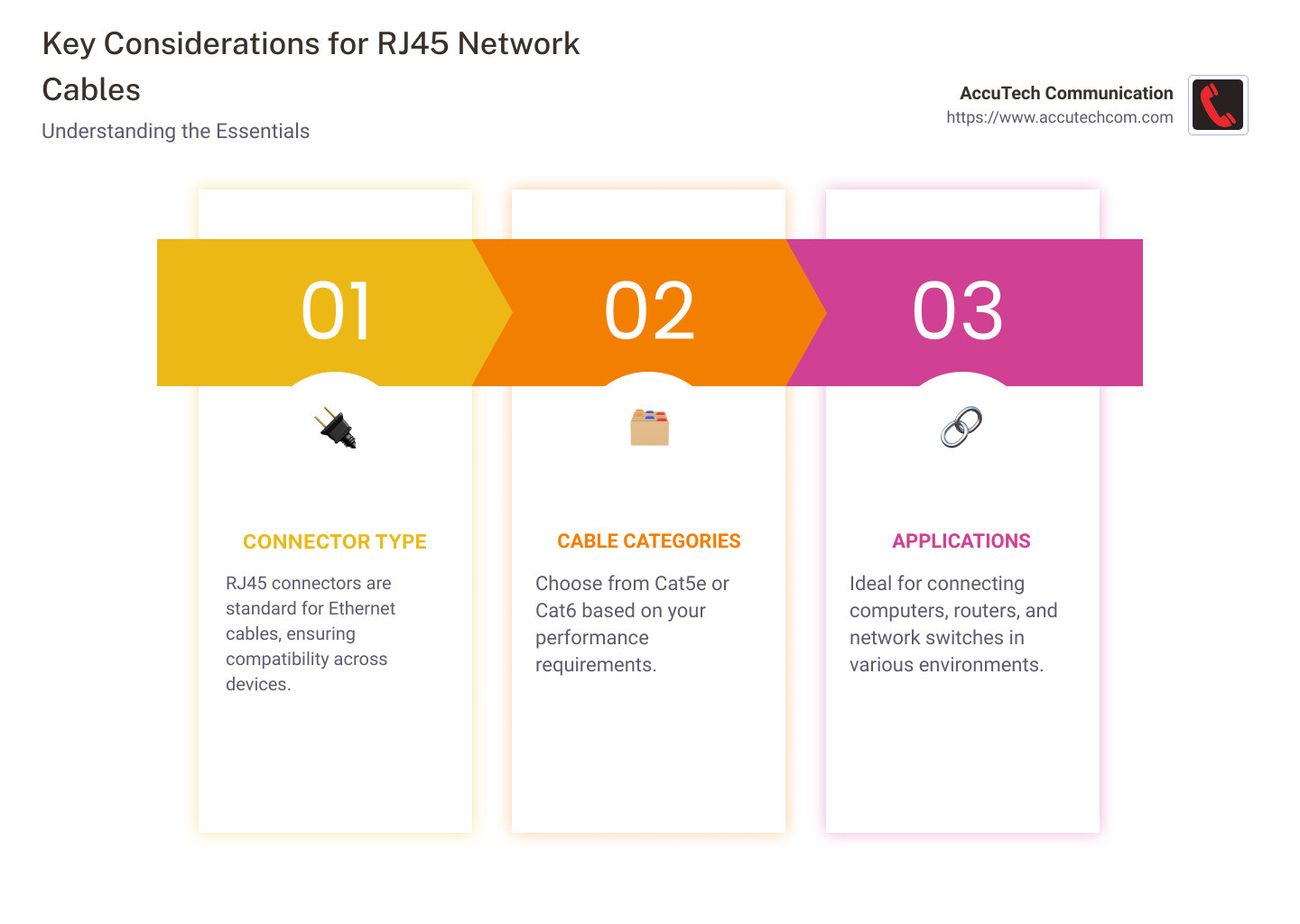
- Connector Type: RJ45 connectors are standard for Ethernet cables.
- Cable Categories: Commonly used types include Cat5e and Cat6, each offering different levels of performance.
- Applications: Suitable for connecting computers, routers, and network switches.
As businesses like those in healthcare increasingly rely on advanced networking solutions, selecting the right RJ45 network cable is crucial for maintaining robust and uninterrupted communications.
I’m Corin Dolan, owner at AccuTech Communications, and with over two decades of experience in network cabling, I’m here to guide your understanding of RJ45 network cable. Our expertise ensures your business gets the connectivity solutions it needs to thrive.
Looking forward to diving deeper into the field of network cabling!
Terms related to rj45 network cable:
– ethernet cable wiring
– network cable categories
– network cable tester
Understanding RJ45 Network Cables
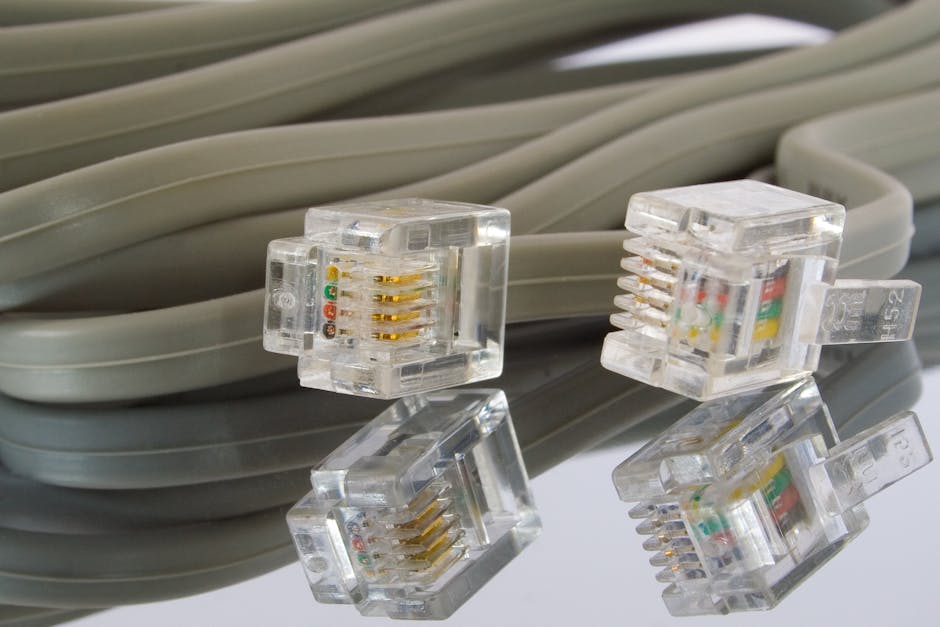
When it comes to connecting your devices to a network, the RJ45 connector is the go-to choice. It’s the tiny plug at the end of an Ethernet cable that clicks into place, connecting your computer, router, or switch to the rest of the network. The design of the RJ45 is simple but effective, making it the standard for most Ethernet networks.
Ethernet cables are the highways of your network. They carry data between devices, ensuring everything from video calls to file downloads happen smoothly. These cables come in various categories, like Cat5e and Cat6, each offering different speeds and capabilities. The choice depends on your specific needs, like how fast you need data to travel and the distance it needs to cover.
Inside these cables, you’ll find what’s known as twisted pair wiring. This design involves twisting two wires together to reduce interference from other electronic devices. It’s a clever way to ensure data travels cleanly and quickly, even in environments crowded with electronic signals.
In summary, when you’re deciding on an RJ45 network cable, think about the connector type, the category of cable, and the twisted pair design. These elements work together to provide reliable connectivity, crucial for any business aiming to maintain seamless communications.
Types of RJ45 Network Cables
When choosing an RJ45 network cable, you’ll encounter terms like Cat6 and Cat5e. These refer to different categories of cables, each with its own strengths.
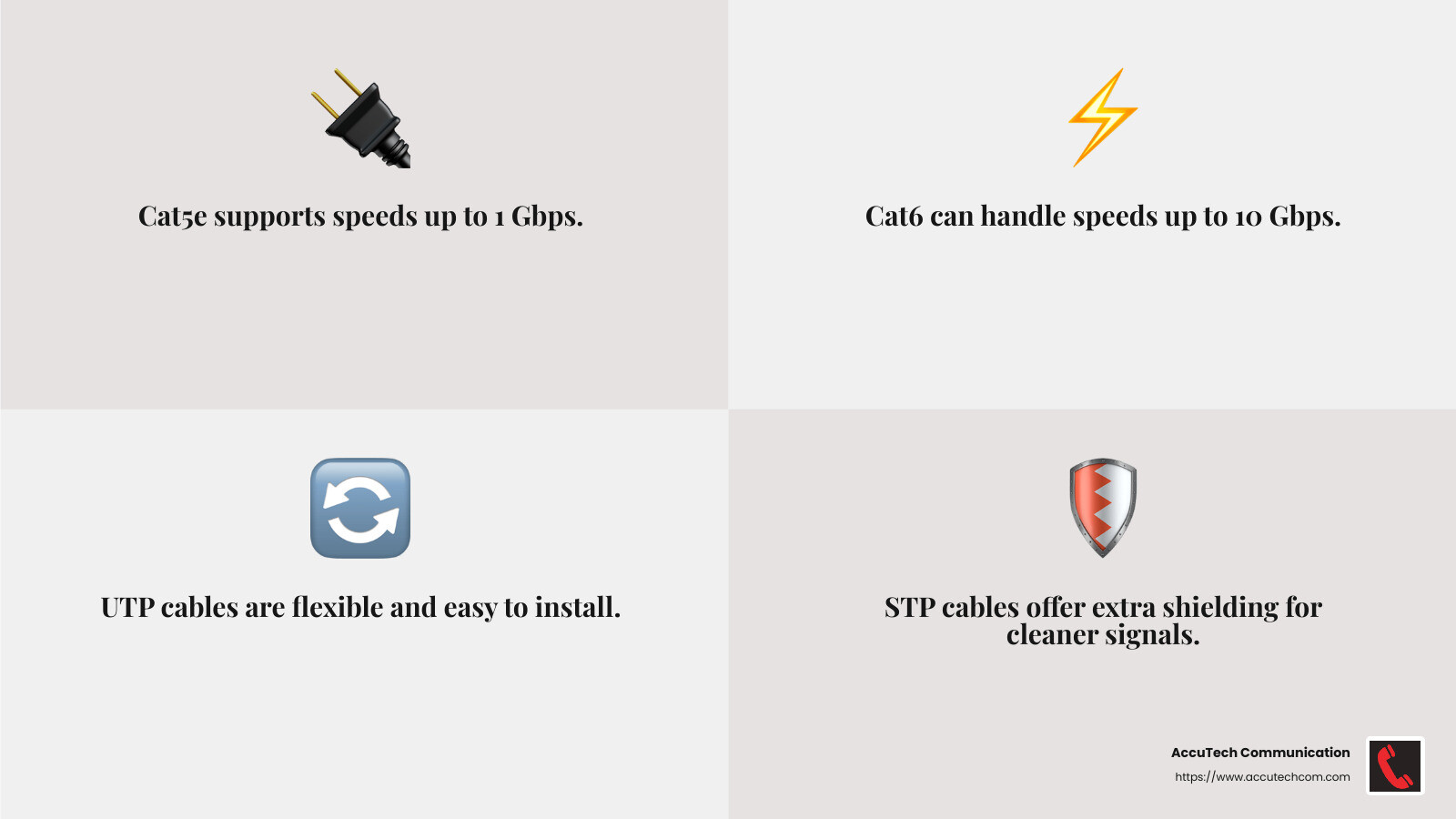
Cat5e Cables (Category 5 Improved) are a popular choice for home and small business networks. They support speeds up to 1 Gbps (gigabit per second) and are suitable for most everyday tasks, like browsing the web or streaming videos. Cat5e cables are often used because they offer a good balance between performance and cost.
Cat6 Cables take things up a notch. They can handle speeds up to 10 Gbps, but only over shorter distances. This makes them ideal for larger networks or data centers where high-speed data transfer is crucial. If you’re setting up a network that needs to support heavy data loads, Cat6 is a solid option.
Both Cat5e and Cat6 cables use UTP (Unshielded Twisted Pair) wiring. This means the wires inside the cable are twisted together without additional shielding. UTP cables are common because they’re flexible and easy to install, making them a go-to choice for many network setups.
However, in environments with a lot of electronic interference, STP (Shielded Twisted Pair) cables might be necessary. These cables have an extra layer of shielding that protects the twisted pairs from external noise, ensuring a cleaner signal. STP cables are often used in industrial settings or areas with high electromagnetic interference.
In summary, the type of RJ45 network cable you choose—whether it’s Cat5e or Cat6, UTP or STP—depends on your specific needs. Consider the speed and distance requirements of your network, as well as the environment in which the cables will be used. With the right choice, you can ensure your network is both fast and reliable.
Choosing the Right RJ45 Network Cable
When selecting the perfect RJ45 network cable, consider three key factors: data transfer speed, compatibility, and performance. These elements will guide you to the best choice for your specific needs, ensuring a smooth and efficient network experience.
Data Transfer Speed
The speed of data transfer is crucial, especially in today’s digital world. Cat5e cables support speeds up to 1 Gbps, which is adequate for most home and small business networks. They’re perfect for everyday tasks like browsing or streaming.
On the other hand, Cat6 cables can handle speeds up to 10 Gbps, but only for shorter distances. This makes them ideal for environments where high-speed data transfer is essential, such as data centers or larger networks. If your network demands more speed, Cat6 is the way to go.
Compatibility
Compatibility is another important factor. Ensure that the cable you choose is compatible with your existing network devices. Most modern devices are designed to work with both Cat5e and Cat6 cables. However, if you have older equipment, double-check compatibility to avoid any connectivity issues.
Performance
Performance isn’t just about speed; it’s also about reliability and signal quality. UTP cables (Unshielded Twisted Pair) are common due to their flexibility and ease of installation. They work well in most environments.
However, if your setup is in an area with significant electromagnetic interference, consider STP cables (Shielded Twisted Pair). The extra shielding in STP cables provides better protection against interference, ensuring a cleaner signal.
In conclusion, choosing the right RJ45 network cable involves balancing speed, compatibility, and performance. Think about your specific network needs and environment to make the best choice. With the right cable, you can achieve a fast, reliable, and efficient network setup.
Frequently Asked Questions about RJ45 Network Cables
Is RJ45 the same as an Ethernet cable?
RJ45 connectors are the standard connectors used on Ethernet cables. So, when people talk about Ethernet cables, they usually mean cables with RJ45 connectors. These connectors are the small, rectangular plugs with eight pins that snap into place when connected to a network device.
Ethernet networks rely on these cables to connect computers, routers, and switches, allowing data to flow smoothly across the network. In summary, while RJ45 refers to the connector, Ethernet cables are the cables that use these connectors.
What is the difference between CAT6 and RJ45?
Understanding the difference between Cat6 cables and an RJ45 jack can be a bit confusing. Simply put, Cat6 refers to the category of the Ethernet cable, while RJ45 is the type of connector on the ends of the cable.
Cat6 cables are designed for high-speed data transfer, supporting up to 10 Gbps for short distances. They have more twists per inch compared to Cat5e, reducing interference and crosstalk. Meanwhile, the RJ45 jack is the connector that plugs into network devices. It’s like the handshake between the cable and your device, ensuring a secure connection.
Is Cat8 still RJ45?
Cat8 cables are the latest in Ethernet cabling, designed for ultra-fast data transfer speeds up to 25 or even 40 Gbps, primarily used in data centers and high-performance networks. Despite their advanced capabilities, Cat8 cables still use the RJ45 connector, making them backward compatible with older network equipment.
This backward compatibility means you can use Cat8 cables with devices that support RJ45, although you’ll only benefit from the higher speeds if all your network components are Cat8-compatible. This makes upgrading your network more flexible and less costly, as you can replace components gradually without losing connectivity.
Conclusion
When it comes to choosing the right RJ45 network cable, partnering with a reliable provider is crucial. AccuTech Communications stands out as a leader in the field, offering certified service and competitive pricing.
Since 1993, we’ve been serving businesses across Massachusetts, New Hampshire, and Rhode Island with a commitment to quality. Our expertise ensures that your network infrastructure is optimized for peak performance, whether you’re a small business or a large corporate campus.
Our team of skilled technicians and engineers is dedicated to providing solutions that meet your specific needs. From consultation and design to installation and maintenance, we cover every aspect of network cabling.
Choosing AccuTech means choosing a partner who understands the importance of reliable and efficient connectivity. Our competitive pricing ensures that you get the best value for your investment, while our certified service guarantees that your network is in expert hands.
For more information on how we can support your business with top-notch network cabling solutions, visit our Network Cable Services page. Let us help you build a stronger network today.
