
Network Cabling Service: Top Providers Revealed 2025
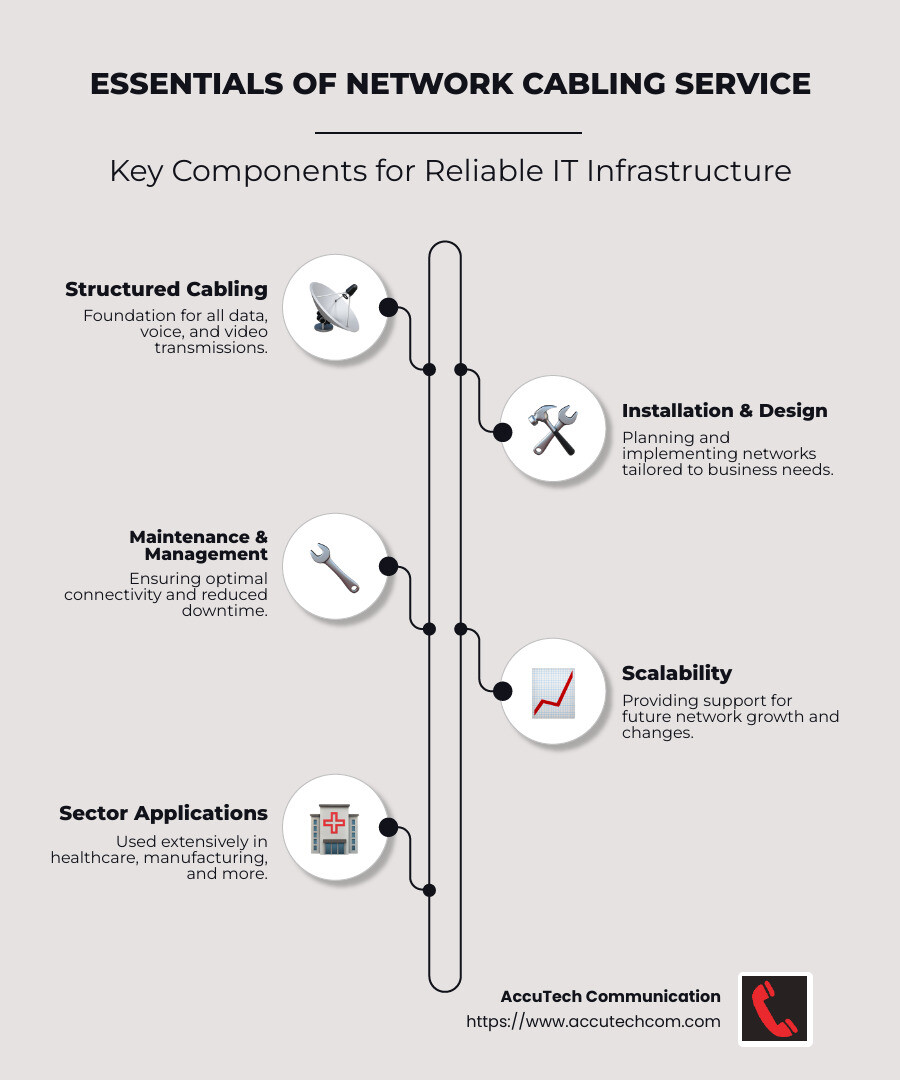
Network cabling service is a crucial component of modern IT infrastructure. It provides the backbone for robust communication systems across various sectors, including healthcare and manufacturing. These services cover everything from installation and maintenance to the strategic management of cables that facilitate high-speed data transfer.
If you’re seeking a quick answer on network cabling, here are the essentials:
– Structured cabling underlies all data, voice, and video transmissions.
– A proper network cabling service ensures reduced downtime and optimal connectivity.
– It involves planning, designing, and implementing cabling networks custom to business needs.
– Reliable cabling solutions offer scalable support for both present and future network requirements.
I’m Corin Dolan, your guide to understanding the importance of network cabling service. With years of expertise in business communications, I’ve helped numerous organizations in Massachusetts and beyond optimize their IT infrastructures for reliability and efficiency. My passion lies in designing seamless and future-proof cabling solutions custom to your business needs.
Network cabling service word roundup:
– cabling installer
– cat6 network cable
– internet wiring
Understanding Network Cabling Services
Network cabling services are the backbone of any IT infrastructure. Imagine them as the highways for your data, voice, and video transmissions. Without them, information can’t flow smoothly between your devices, servers, and other critical components.
Installation
Installation is the first step in setting up a robust network. It involves planning and designing the cabling layout to meet your specific business needs. This step is crucial because a well-thought-out installation minimizes interference and maximizes data speed.
AccuTech Communication excels in this area, offering structured cabling services that ensure your network is built on a solid foundation. Our technicians are skilled in both fiber optic and coaxial cabling, ensuring that your infrastructure is ready for high-speed data transfer.
Maintenance
Once your network is up and running, regular maintenance is key to keeping it in peak condition. This includes routine inspections to check for wear and tear, as well as troubleshooting any issues that arise. Maintenance helps in identifying potential problems before they become major disruptions.
AccuTech provides ongoing support to ensure your network remains reliable. Our team is available 24/7 for emergency repairs and troubleshooting, ensuring minimal downtime for your business.
Management
Effective management of your cabling infrastructure involves organizing and documenting your network layout. This ensures easy access for maintenance and upgrades. Proper management also includes cable testing to certify that your system meets industry standards.
Our team at AccuTech is experienced in managing complex network infrastructures. We offer services like cable management and documentation, which help in maintaining an organized and efficient network system.
Infrastructure
The infrastructure of your network includes all the physical components that support data transmission. This includes entrance facilities, equipment rooms, backbone cabling, telecommunications rooms, horizontal cabling, and work areas. Each component plays a vital role in ensuring seamless connectivity.
At AccuTech, we understand the importance of a well-designed infrastructure. Our experts work closely with you to design and implement a network that supports your current needs while being scalable for future growth.
By focusing on these key areas—installation, maintenance, management, and infrastructure—AccuTech Communication ensures that your network cabling service is second to none. Our commitment to quality and reliability helps businesses across Massachusetts and beyond stay connected and competitive.
Now that you have a solid understanding of the fundamentals, let’s explore who the top providers in the industry are and what sets them apart.
Top Network Cabling Service Providers
When it comes to choosing a network cabling service, three key factors stand out: quality installation, technical expertise, and excellent customer service. These elements are essential for ensuring a reliable and efficient network infrastructure.
Quality Installation
The foundation of any robust network is a quality installation. A precise and well-executed setup minimizes potential issues like interference and data loss. AccuTech Communication is renowned for its meticulous approach to installation. We prioritize structured cabling that not only meets current needs but is also scalable for future growth. Our technicians are skilled in handling both fiber optic and coaxial cabling, ensuring high-speed data transfer with minimal disruptions.
Technical Expertise
Technical expertise is crucial for any network cabling project. It involves understanding the intricate details of network design and implementation. At AccuTech, our technicians and engineers are highly trained and experienced. They bring a wealth of knowledge to each project, ensuring that your network infrastructure is optimized for peak performance. We have nationwide access to Avaya/Nortel manufacturer support, which improves the reliability and quality of our service.
Customer Service
Exceptional customer service sets top providers apart. It’s not just about installing cables; it’s about building lasting relationships with clients. AccuTech Communication excels in this area, offering responsive and courteous service. Our team works closely with clients to understand their specific needs and provides custom solutions. We are committed to maintaining open lines of communication, ensuring that any concerns are addressed promptly and effectively.
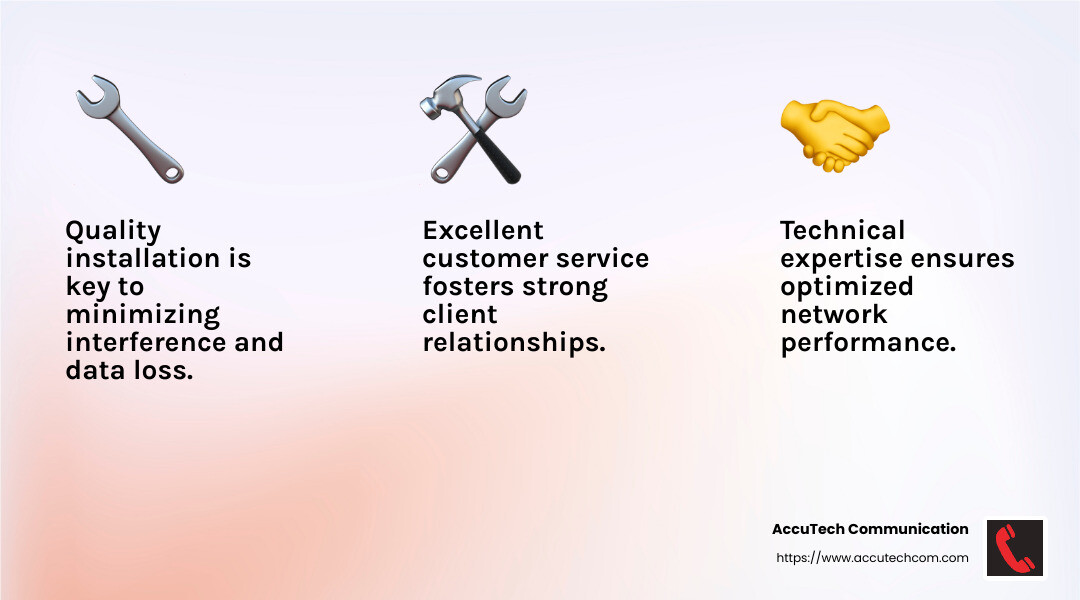
By focusing on these core aspects—quality installation, technical expertise, and customer service—AccuTech Communication continues to be a trusted partner for businesses across Massachusetts, New Hampshire, and Rhode Island. Our dedication to excellence helps ensure that your network infrastructure is not only reliable but also ready to meet future demands.
Let’s now dig into the key components of structured cabling to understand how these services are integrated into your business setup.
Key Components of Structured Cabling
Structured cabling is the backbone of any efficient network infrastructure. Let’s break down its key components to understand how they contribute to a seamless network experience.
Entrance Facilities
The entrance facilities are where the outside world connects with your internal network. This is the point where external service provider cables meet your building’s cabling system. Think of it as the gateway for all incoming and outgoing data. Proper setup here ensures that your network can handle external communications efficiently and securely.
Equipment Room
The equipment room is the heart of your network infrastructure. It’s where critical network devices like servers, switches, and routers are housed. This room needs to be organized and well-ventilated to ensure optimal equipment performance. A well-maintained equipment room minimizes the risk of hardware failure and keeps your network running smoothly.
Backbone Cabling
Backbone cabling is the main highway for data within your building. It connects entrance facilities, equipment rooms, and telecommunications rooms. This cabling is crucial for high-speed data transfer and should be designed to handle large volumes of data traffic. Backbone cabling is usually made up of fiber optic cables due to their high capacity and speed.
Telecommunications Room
The telecommunications room serves as a hub for managing and distributing network connections to different areas of a building. It’s where horizontal cabling connects to the backbone cabling. This room contains patch panels and other equipment to facilitate data flow throughout the building. Proper setup and maintenance are essential for efficient data distribution.
Horizontal Cabling
Horizontal cabling connects telecommunications rooms to individual work areas. This is the cabling that runs through walls, ceilings, and floors, delivering network connectivity to desks and workstations. It’s important to plan horizontal cabling carefully to ensure flexibility and scalability as your business grows.
Work Area
The work area is where end-users interact with the network. This includes computers, phones, and other devices connected to the network. Properly set up work areas ensure that employees have reliable and fast access to network resources, enhancing productivity and communication.
Understanding these components helps you appreciate the complexity and importance of a well-designed structured cabling system. Each part plays a vital role in ensuring a robust and efficient network infrastructure.
Next, we’ll explore the different types of network cables used in structured cabling systems to see how they contribute to overall network performance.
Types of Network Cables
Choosing the right type of network cable is crucial for building a reliable and efficient network. Let’s explore the different types of cables commonly used in network cabling services and how they fit into your IT infrastructure.
Coaxial Cables
Coaxial cables are one of the oldest types of network cables. They consist of a central conductor, an insulating layer, a metallic shield, and an outer cover. Coaxial cables are commonly used for cable television and internet connections. They are known for their durability and ability to handle high-frequency signals with minimal interference.
Fiber Optic Cables
Fiber optic cables are the gold standard for high-speed data transfer. They use light to transmit data, which allows for incredibly fast speeds and long-distance communication without signal loss. Fiber optic cables are ideal for backbone cabling in data centers and large networks that require high bandwidth. They are also immune to electromagnetic interference, making them a reliable choice for critical network infrastructure.
Shielded Twisted Pair (STP) Cables
Shielded twisted pair (STP) cables are designed to reduce electromagnetic interference by using a shielding material around the twisted pairs of wires. This makes them suitable for environments with high electrical interference, such as industrial settings. STP cables provide better performance compared to unshielded cables, but they can be more expensive and harder to install due to their rigidity.
Unshielded Twisted Pair (UTP) Cables
Unshielded twisted pair (UTP) cables are the most common type of network cable used in local area networks (LANs). They consist of pairs of twisted wires without additional shielding. UTP cables are cost-effective, flexible, and easy to install. They are suitable for most office environments where electromagnetic interference is minimal. Categories like Cat 5e, Cat 6, and Cat 6a fall under this type, each offering varying levels of performance and speed.
In summary, selecting the right type of network cable depends on your specific needs and environment. Whether you’re setting up a small office or a large data center, understanding these cable types will help you build a robust and efficient network.
Next, we’ll dive into the best practices for network cabling services to ensure your system remains reliable and efficient.
Network Cabling Service Best Practices
To ensure your network cabling service is top-notch, it’s crucial to follow these best practices: cable management, documentation, testing, and certification. Let’s explore each of these areas.
Cable Management
Good cable management is the backbone of a reliable network. It involves organizing cables in a neat, accessible manner. This not only prevents tangling but also reduces the risk of damage. Proper cable management makes maintenance easier and minimizes downtime. Use cable trays, ties, and labels to keep everything in order.
Documentation
Documenting your network cabling setup is a must. This includes keeping records of cable types, lengths, and routes. Proper documentation helps technicians understand your network layout quickly, saving time during troubleshooting or upgrades. It also ensures consistency and reduces errors when expanding or modifying the network.
Testing
Once your cables are installed, testing is essential to ensure they work correctly. This involves checking for signal integrity, speed, and connectivity. Regular testing identifies issues before they become major problems. Using specialized tools, technicians can verify that cables meet performance standards.
Certification
Certification is the final step in ensuring your network cabling meets industry standards. Certified cables have been tested to ensure they meet specific performance criteria, like the TIA/EIA-568 and BICSI standards mentioned in the research. Certification provides peace of mind that your network will perform reliably under various conditions.
By adhering to these best practices, you can maintain a robust and efficient network infrastructure. Up next, we’ll tackle some frequently asked questions about network cabling services to further improve your understanding.
Frequently Asked Questions about Network Cabling Services
What are network cabling services?
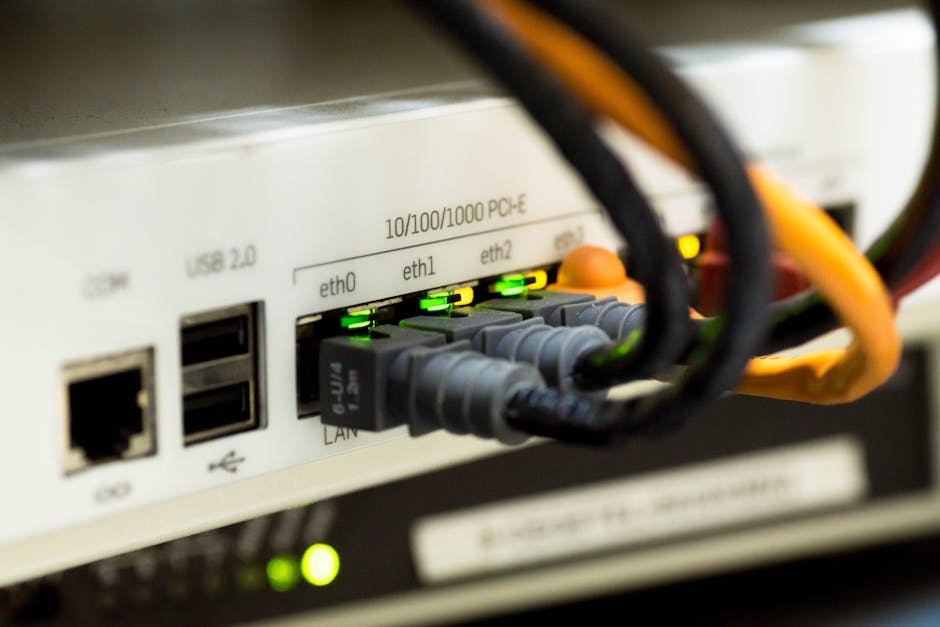
Network cabling services involve the installation, maintenance, and management of the physical cables that connect your IT infrastructure. These services ensure that your devices, like computers and printers, communicate effectively.
- Installation: This is the process of setting up cables to connect all your network devices. It involves planning cable routes, selecting the right type of cables, and installing them in a way that minimizes interference and maximizes performance.
- Maintenance: Regular check-ups and repairs keep your network running smoothly. Maintenance includes inspecting cables for wear, fixing any issues, and making sure everything is up to standard.
- Management: Managing the cabling involves organizing and documenting the network layout. This makes it easier to troubleshoot problems and plan for future expansions.
How much do network cabling services cost?
The cost of network cabling services can vary based on several factors:
- Technician Experience: Skilled technicians may cost more but bring expertise that ensures quality work.
- Company Reliability: Choosing a reliable company can save money in the long run by preventing frequent repairs and downtime.
- Project Size: Larger projects require more materials and labor, which increases costs.
Investing in quality service can lead to fewer issues and better network performance.
How do I run network cabling?
Running network cabling involves careful planning and execution. Here’s a simple guide to get you started:
- Server Location: Decide where your main server or network hub will be. This is the central point from which cables will run to various devices.
- Cable Measurement: Measure the distances between your server and each device. This helps in selecting the right length of cables, reducing waste and ensuring proper connectivity.
- Hardware Selection: Choose the appropriate cables and connectors based on your network needs. Options include coaxial, fiber optic, and twisted pair cables, each with its own benefits.
By following these steps, you can set up a reliable network that meets your business needs. As you continue to explore network cabling, keep these FAQs in mind to guide your decisions effectively.
Conclusion
Choosing the right network cabling service is crucial for your business’s success, and that’s where AccuTech Communications comes in. With over 30 years of experience, we pride ourselves on delivering certified services that meet industry standards. Our team of skilled technicians ensures that your network infrastructure is not only reliable but also optimized for peak performance.
One of the standout features of AccuTech is our commitment to quality. We understand that your network is the backbone of your business operations, and any downtime can be costly. That’s why we focus on providing top-notch services that minimize interruptions and improve productivity. Our expertise in structured cabling, from entrance facilities to horizontal cabling, ensures a seamless and efficient setup.
Moreover, we offer competitive pricing without compromising on quality. Our services are designed to provide value, ensuring that you get the most out of your investment. Whether you’re a small business or a large corporate campus, we tailor our solutions to fit your specific needs and budget.
In addition to our technical excellence, we are committed to exceptional customer service. We work closely with you throughout the project, from planning to implementation, ensuring that every step aligns with your expectations. Our responsive and courteous staff are always on hand to address any concerns and provide ongoing support.
If you’re looking for a reliable partner to improve your network infrastructure, AccuTech Communications is your go-to provider. Explore our network cabling services to see how we can help strengthen your business communications.
Contact us today to experience the AccuTech difference—where quality meets affordability, and customer satisfaction is our top priority.
