
Cat 5 Cable Speed: Top Performance in 2025 Explained
Cat 5 cable speed is a frequent consideration when networking experts assess infrastructure needs, especially for businesses that rely heavily on efficient data transmission. Before diving into the details, here’s a quick overview:
- Maximum Speed: Cat 5 cables can handle up to 100 Mbps.
- Frequency Limit: They operate at a frequency of 100 MHz.
- Ideal Uses: Suitable for basic networking and cost-effective installations.
In Ethernet cables, understanding the capabilities of each type is crucial. Network cabling is the backbone that supports smooth data flow across systems, essential for businesses aiming for high-speed and reliable communication. Each type of cable has its own characteristics, influencing the efficiency of data transmission. Whether you’re laying the groundwork for a new network or upgrading an existing one, the choice of cable can profoundly impact performance and productivity.
Having spent years in the industry, I, Corin Dolan, possess a wealth of experience in optimizing networks with the right cables. My expertise ensures that businesses get the most out of their Cat 5 cable speed choices. Now, let’s dig into the specifics of how Cat 5 fits into your networking puzzle.

Cat 5 cable speed terms to learn:
– network cable speeds
– network cable categories
– ethernet cable wiring
Understanding Cat 5 Cable Speed
When it comes to Ethernet cables, the Cat 5 cable is often the starting point for many network setups. It delivers data speeds of up to 100 Mbps and operates at a frequency of 100 MHz. This makes it suitable for basic networking needs, like connecting computers within a home or small office. However, as data demands increase, understanding the differences between Cat 5, Cat 5e, and Cat 6 becomes essential.
Cat 5 vs. Cat 5e
The Cat 5e (Category 5 Improved) was developed to improve on the original Cat 5 standard. While both can support a maximum length of 100 meters, Cat 5e offers a significant upgrade in speed and performance. It supports Gigabit Ethernet, which means it can handle up to 1000 Mbps. This makes Cat 5e a better choice for environments that require faster data transfer and reduced crosstalk, which is interference from neighboring cables.
Cat 5e cables are the go-to for many businesses because they provide a cost-effective solution while still supporting high-speed internet connections. They are also backward compatible with Cat 5, making them an easy upgrade for existing networks.
Cat 5 vs. Cat 6
The Cat 6 cable takes performance to another level. It is designed to operate at a frequency of 250 MHz, which allows it to support 10GBASE-T or 10-Gigabit Ethernet over shorter distances (up to 55 meters). This higher frequency means Cat 6 can handle more data at once, akin to expanding a two-lane highway to a four-lane one, allowing for more traffic to pass through simultaneously.
For businesses looking to future-proof their network, Cat 6 is a solid investment. It not only supports faster speeds but also offers improved protection against crosstalk and interference compared to Cat 5 and Cat 5e. This makes it ideal for data centers or any setting where high-speed data transfer is crucial.
In summary, while Cat 5 cable speed is suitable for basic needs, upgrading to Cat 5e or Cat 6 can provide significant benefits in terms of speed and reliability. Understanding these differences helps in making informed decisions about network cabling infrastructure.
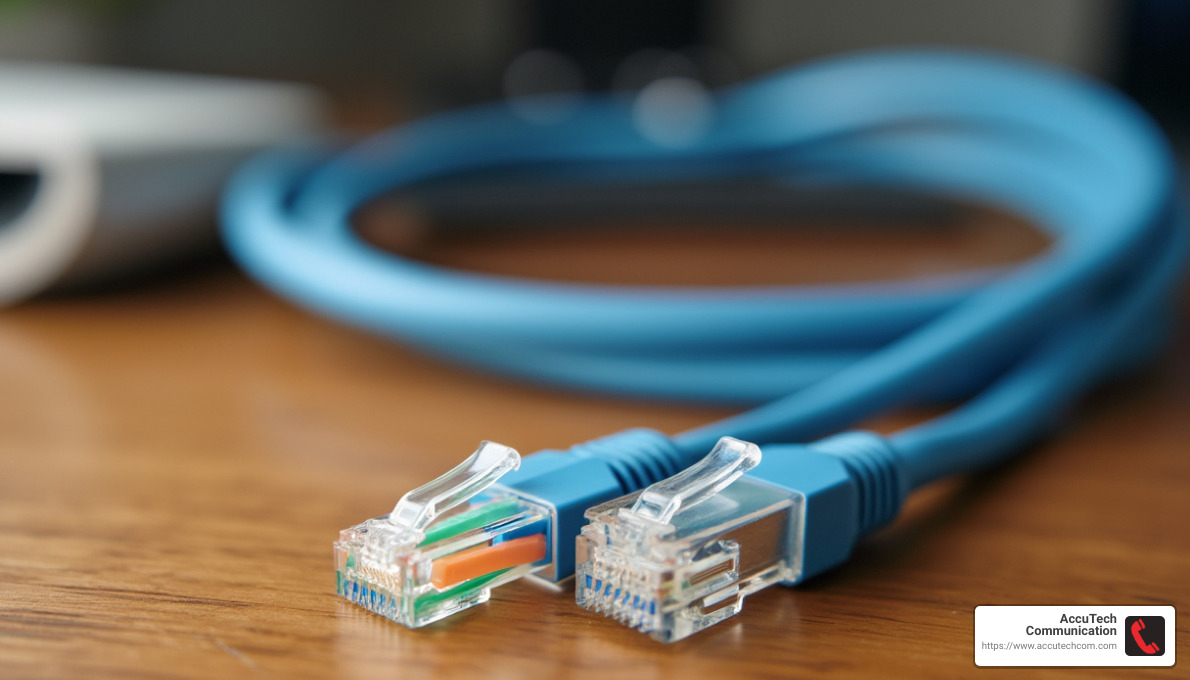
Performance Factors of Cat 5 Cables
When evaluating the performance of Cat 5 cables, it’s important to consider several key factors: data transfer, crosstalk, interference, bandwidth, and length limitations.
Bandwidth and Frequency
Cat 5 cables operate at a frequency of 100 MHz, which determines their data capacity and signal quality. This frequency allows Cat 5 cables to support data transfer speeds of up to 100 Mbps. While this is adequate for many basic applications, such as web browsing and streaming music, it may fall short for more demanding tasks like HD video streaming or large file transfers.
The signal quality in Cat 5 cables can be affected by crosstalk and interference. Crosstalk occurs when the signal from one wire pair interferes with another, which can degrade performance. Cat 5 cables are designed with twisted pairs to minimize this issue, but they are not as effective as newer standards like Cat 5e or Cat 6.
Maximum Length and Limitations
The maximum length for a Cat 5 cable is 100 meters (about 328 feet), as specified by the TIA/EIA 568 standard. Beyond this length, the signal can degrade, leading to signal loss. This is particularly important in larger installations, where maintaining signal integrity over long distances is crucial.
In situations where longer distances are necessary, repeaters or network switches can be used to boost the signal. However, these additional components can add complexity and cost to a network setup.
In summary, while Cat 5 cables offer a solid foundation for basic network needs, their limitations in bandwidth and length make them less suitable for high-performance applications. Upgrading to Cat 5e or Cat 6 can provide improved performance, especially in environments that demand better data transfer and reduced interference.
Comparing Cat 5 with Other Ethernet Cables
When it comes to Ethernet cables, the differences between categories can significantly affect network performance. Let’s explore how Cat 5 stacks up against some of the more advanced options available today.
Cat 5 vs. Cat 7
Cat 7 cables are designed for high-performance networking. They support data transmission speeds of up to 10 Gbps and operate at a frequency of 600 MHz. This makes them ideal for applications requiring high bandwidth and fast data transfer, such as data centers or large enterprise networks.
One of the standout features of Cat 7 is its advanced shielding. Each pair of wires is individually shielded, and there’s an overall shield around the entire cable. This provides excellent protection against crosstalk and interference, ensuring a clean and reliable signal even in environments with a lot of electronic noise.
In contrast, Cat 5 cables max out at 100 Mbps with a frequency of 100 MHz. While adequate for basic tasks, they can’t compete with the high-speed capabilities and robustness of Cat 7.
Cat 5 vs. NBASE-T
The NBASE-T standard is a game-changer for networks needing more speed without replacing existing cabling. It supports speeds of 2.5 Gbps and 5 Gbps over traditional Cat 5e and Cat 6 cables, thanks to the 802.3bz standard.
This means you can achieve faster speeds without the need for costly upgrades to Cat 7 or fiber optics. NBASE-T is particularly beneficial for businesses looking to improve their network performance without the hassle of replacing their entire cabling infrastructure.
While Cat 5 cables can support some of these speeds over very short distances, they don’t hold up over longer runs. Cat 5e, however, can take better advantage of NBASE-T, providing a more cost-effective solution for those who need improved performance without a full overhaul.
In summary, while Cat 5 cables offer a basic level of performance, more advanced options like Cat 7 and technologies like NBASE-T provide significant advantages in speed, shielding, and future-proofing. For environments where speed and reliability are critical, upgrading from Cat 5 to these newer standards can make a noticeable difference.
Frequently Asked Questions about Cat 5 Cable Speed
Can a Cat 5 cable support 1000 Mbps?
In short, no. Cat 5 cables are limited to speeds of up to 100 Mbps. For those looking to reach Gigabit Ethernet speeds of 1000 Mbps, upgrading to Cat 5e is necessary. Cat 5e cables are an improved version of Cat 5, designed to handle higher speeds and reduce interference. They are backward compatible, meaning they can work with older networking equipment while providing a significant boost in performance.
Is Cat 5 cable outdated?
Yes, Cat 5 cables are considered outdated, especially in today’s high-speed internet environment. Most modern networks require faster data transfer rates than what Cat 5 can provide. With the rise of smart homes and connected devices, the demand for higher bandwidth has grown. Cat 5e and Cat 6 cables offer better options for those looking to future-proof their networks with higher speeds and reduced crosstalk.
How does Cat 5 compare to Cat 6 in terms of speed?
The difference in speed between Cat 5 and Cat 6 is significant. While Cat 5 cables max out at 100 Mbps with a frequency of 100 MHz, Cat 6 cables can handle speeds up to 10GBASE-T, or 10 Gbps, over short distances, with a frequency of 250 MHz. This makes Cat 6 ideal for environments where high-speed data transfer is crucial, such as offices with heavy internet usage or homes with multiple streaming devices.
Cat 6 cables also have better shielding against interference, making them more reliable in environments with high electronic noise. For those looking to future-proof their network, upgrading from Cat 5 to Cat 6 is a wise investment.
Conclusion
In the world of technology, having a robust network infrastructure is crucial. Here at AccuTech Communications, we understand the importance of quality cabling in building a reliable and efficient network. Our expertise in network cabling services ensures that your business remains connected and competitive.
Cat 5 cables have served their purpose well, but as technology evolves, so do our needs. While Cat 5 cables are limited to 100 Mbps, newer options like Cat 5e and Cat 6 provide the speed and reliability required for modern applications. These advancements help reduce interference and support higher data transfer rates, making them ideal for today’s demanding network environments.
At AccuTech Communications, we are committed to offering certified, reliable service with a focus on quality. We provide comprehensive network cabling solutions, from consultation and design to installation and maintenance. Our services ensure that your network infrastructure is optimized for performance, no matter the size or complexity of your business.
For businesses in Massachusetts, New Hampshire, and Rhode Island, we offer a range of services custom to meet your specific needs. Whether you are upgrading an existing network or installing a new one, our team is here to help you steer the complexities of network cabling.
Explore our network cable services to learn how we can support your business in achieving optimal network performance. Let us help you build a strong foundation for your digital future.
