
Cat6 Cables: 2025’s Ultimate Networking Choice
Cat6 cables are a pivotal component of modern network infrastructure, facilitating high-speed data transfer and reliable Ethernet connections. These cables support data rates up to 10 Gigabits per second, making them suitable for both enterprise environments and demanding applications. Key highlights include:
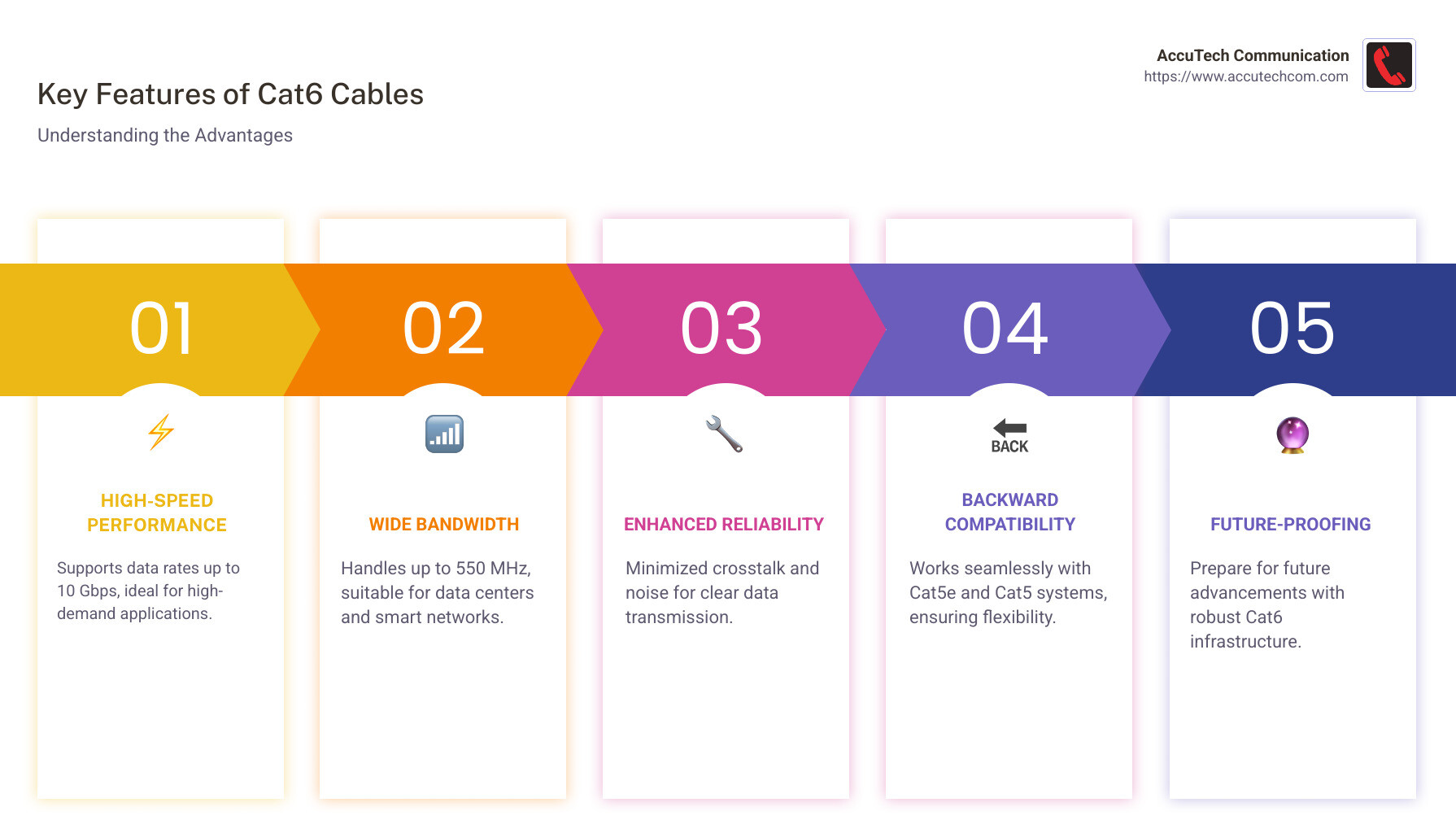
- High-speed performance: Up to 10 Gbps for efficient data handling.
- Wide bandwidth: Supports up to 550 MHz, ideal for data centers and smart technology.
- Improved reliability: Reduced crosstalk and noise interference for clear data transmission.
Implementing Cat6 network cabling ensures seamless communication and robust connectivity, crucial for industries where efficient data exchange is key.
As Corin Dolan, I leverage over two decades of experience in business communications, specializing in Cat6 solutions to optimize network performance. This introduction sets the stage for an in-depth look at the benefits and applications of Cat6 cables.
Important cat6 terms:
– network cable categories
– ethernet cable wiring
– network cable speeds
Understanding Cat6 Cables
Cat6 cables are a type of twisted pair cable, which means they contain pairs of wires twisted together. This design helps reduce electromagnetic interference and improves signal quality. The twisting is a simple yet effective technique that minimizes crosstalk—the unwanted transfer of signals between communication channels.
Backward Compatibility
One of the standout features of Cat6 cables is their backward compatibility. They can seamlessly integrate with older network systems, such as Cat5 and Cat5e. This means you can upgrade parts of your network to Cat6 without overhauling the entire system. It’s a smart investment for future-proofing your infrastructure while maintaining compatibility with existing devices.
Crosstalk Reduction
Crosstalk is a common issue in network cabling, where signals from one cable interfere with another. This can lead to data errors and slower network speeds. Cat6 cables are designed to meet stringent specifications that significantly reduce crosstalk and system noise. This ensures clearer data transmission, which is vital for maintaining high network performance.

Twisted Pair Innovation
The twisted pair design in Cat6 cables is not just about reducing interference; it’s also about enhancing overall performance. With a frequency of up to 250 MHz, Cat6 cables offer improved performance over their predecessors. This makes them ideal for environments where high-speed data transfer is crucial, such as data centers and modern office spaces.
In summary, Cat6 cables represent a significant leap forward in network cabling technology. Their twisted pair design, backward compatibility, and ability to minimize crosstalk make them a top choice for anyone looking to upgrade their network infrastructure.
Cat6 vs Other Ethernet Cables
When choosing Ethernet cables, it’s crucial to understand how Cat6 compares to other options like Cat5e and Cat7. Each type has its unique features and benefits.
Cat5e vs Cat6
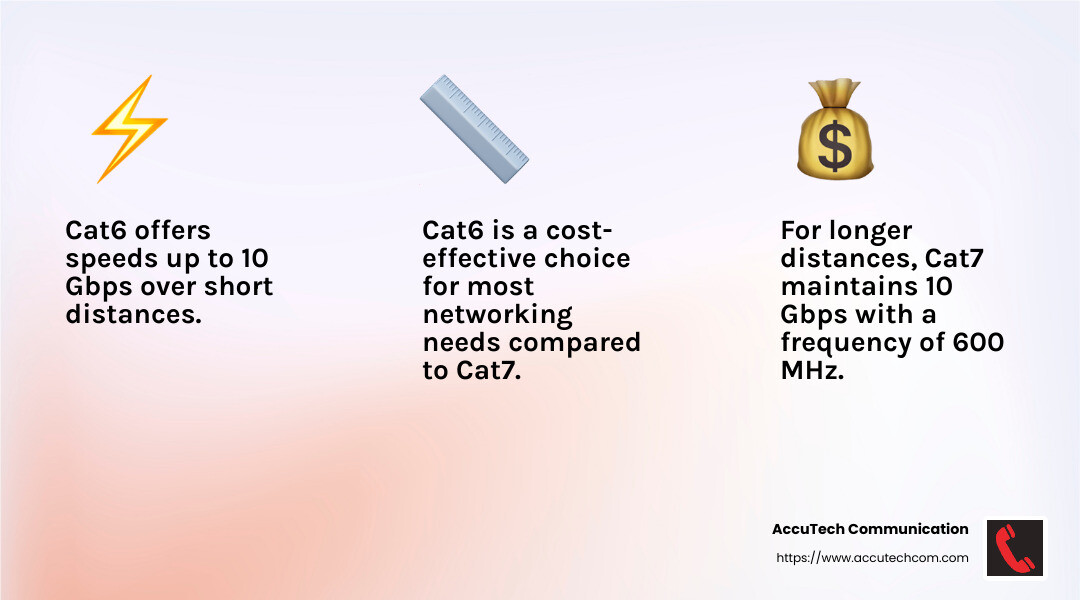
Cat5e cables have been popular for a long time. They offer a reliable solution for basic networking needs, supporting speeds up to 1 Gigabit per second (Gbps). However, Cat6 cables take it a step further, offering speeds up to 10 Gbps over short distances. This makes Cat6 a better choice for environments requiring faster data transfer, like offices with high data demands.
Moreover, Cat6 cables have better shielding and twist ratios than Cat5e, meaning they handle crosstalk and interference more effectively. This results in a more stable and efficient network, especially in environments with high electromagnetic interference.
Cat6 vs Cat7
Cat7 cables are the next step up from Cat6, offering even higher performance. They support speeds up to 10 Gbps at longer distances and have a frequency of up to 600 MHz, compared to Cat6‘s 250 MHz. This makes Cat7 ideal for future-proofing your network, especially in data centers or large enterprises.
However, Cat7 cables come with a higher cost and require specialized connectors. For many small to medium-sized businesses, Cat6 offers a balanced solution, providing excellent speed and performance without the complexity and expense of Cat7.
Speed Comparison
When it comes to speed, here’s a quick comparison:
- Cat5e: Up to 1 Gbps
- Cat6: Up to 10 Gbps (short distances)
- Cat7: Up to 10 Gbps (longer distances)
Cat6 cables strike a good balance between cost and performance, making them a versatile choice for most networking needs. Whether you’re upgrading an existing system or setting up a new network, Cat6 provides a robust and future-ready solution.
Installation and Performance
Installing Cat6 Cables
Proper installation of Cat6 cables is crucial to ensure they meet performance standards. These cables must be handled with care to avoid kinks or tight bends. The bend radius should be at least four times the cable’s outer diameter. This helps maintain the integrity of the twisted pairs inside, which is essential for reducing crosstalk and maintaining signal quality.
The termination process is equally important. Ensure that the wire pairs are not untwisted beyond 13 mm (0.51 inches) and the outer jacket is not stripped back excessively. This keeps the cables within specification limits and prevents performance issues.
Maximum Length
For optimal performance, the maximum length of a Cat6 cable is 100 meters (328 feet). This includes a 90-meter (295-foot) permanent link, typically solid horizontal cabling between connectors like patch panels and wall jacks, plus an additional 10 meters (33 feet) of stranded patch cordage. Some manufacturers may claim support for longer distances, but this would exceed the TIA 568–2.D standard and could affect reliability.
Shielding and Electromagnetic Interference
In environments with high electromagnetic interference (EMI), shielding might be necessary to prevent data corruption. Cat6 cables can include shielding that runs through the cable alongside the twisted pairs, maintained by a drain wire. This shielding is connected to the chassis at each end through the jacks, which helps in reducing interference.
However, this setup can sometimes create ground loops, where unwanted currents flow in the network cable shield, potentially inducing noise in the signal. Care should be taken during installation to avoid such issues.
By following these installation guidelines and understanding the performance capabilities of Cat6 cables, you can ensure a reliable and efficient network setup. Whether for a small business or a large enterprise, Cat6 offers a robust solution for high-speed data transfer and network stability.
Frequently Asked Questions about Cat6
What is Cat6 used for?
Cat6 cables are a popular choice for setting up Local Area Networks (LANs). They connect computers, routers, switches, and other networking equipment, ensuring smooth data transfer across devices. Their ability to handle high data rates makes them ideal for businesses, schools, and even home networks that demand reliable and fast internet connections.
Is Cat6 faster than Cat5e?
Yes, Cat6 is faster than Cat5e. While Cat5e cables can support speeds up to 1 Gigabit per second (Gbps), Cat6 can handle speeds up to 10 Gbps over shorter distances. This makes Cat6 a better option for applications that require higher data transfer rates, such as video streaming or large file transfers.
Is Cat7 better than Cat6?
Cat7 cables offer more advanced shielding compared to Cat6, providing even better protection against electromagnetic interference. This makes them suitable for environments with lots of electronic noise. However, the increased shielding also means Cat7 cables are bulkier and more expensive. While Cat7 is more future-proof, Cat6 provides a balance of performance and cost, making it a practical choice for most current applications.
By understanding these aspects, you can make informed decisions about your networking needs and choose the right cable for your setup.
Conclusion
At AccuTech Communications, we pride ourselves on delivering top-notch network cabling solutions, including Cat6 cables, which are a cut above the rest. Our team has been serving businesses in Massachusetts, New Hampshire, and Rhode Island since 1993, consistently providing reliable and certified services.
Quality service is at the heart of what we do. Our technicians are skilled and experienced, ensuring that your network infrastructure is optimized for peak performance. We understand that your network is the backbone of your business, and we are committed to making it strong and efficient.
When it comes to competitive pricing, we offer solutions that fit a wide range of budgets without compromising on quality. Our long-standing relationships with clients are a testament to our commitment to delivering value and excellence.
Whether you need a robust LAN setup or are looking to future-proof your network with the latest in Ethernet technology, AccuTech Communications is your trusted partner. For more information on our services, visit our Network Cable Services page.
Experience the difference with AccuTech Communications, where quality meets affordability.
