What is a VoIP Business Phone System?
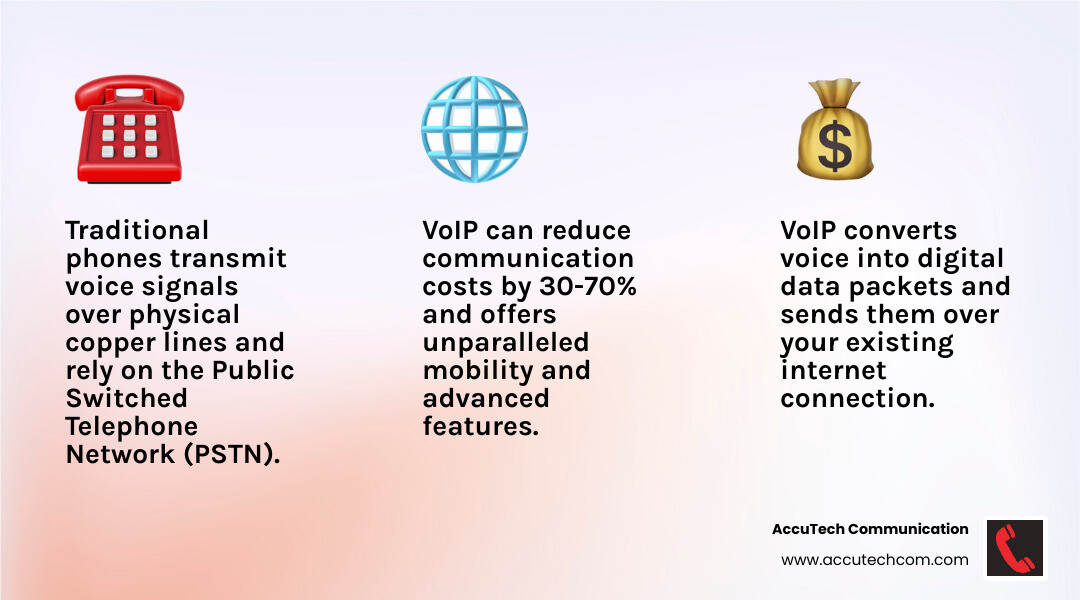
Business phone service VoIP (Voice over Internet Protocol) is a modern communication solution that transmits voice calls over the internet instead of traditional copper phone lines. Here’s what you need to know:
Key Components:
- Cloud PBX – Your phone system lives in the cloud, not in a bulky server room
- SIP Trunking – The technology that connects your internet to the phone network
- Internet-Based Calling – Voice data travels as packets over your network connection
Why It Matters:
- Costs 30-70% less than traditional phone systems
- Works from anywhere with an internet connection
- Scales up or down instantly as your team grows
- Includes advanced features like video conferencing and team messaging
Unlike traditional analog phone systems that require physical phone lines and on-premises equipment, VoIP converts your voice into digital data. This data travels over your existing internet connection to reach the person you’re calling. Think of it as email for phone calls – instead of needing a separate network, everything runs through your internet.
For businesses across Massachusetts, New Hampshire, and Rhode Island, this shift isn’t just about technology. It’s about staying competitive in an era where remote work, mobile teams, and instant collaboration are the norm. Whether you’re running a healthcare practice that needs HIPAA-compliant calling or a manufacturing facility coordinating across multiple shifts, VoIP gives you the flexibility traditional systems simply can’t match.
The transition from traditional PBX systems to cloud-based VoIP represents one of the most significant upgrades a business can make to its communication infrastructure. You’re not just swapping one phone for another – you’re gaining access to unified communications that integrate voice, video, messaging, and collaboration tools into a single platform.
I’m Corin Dolan, owner of AccuTech Communications, and for over 30 years I’ve helped businesses across Massachusetts, New Hampshire, and Rhode Island modernize their communication systems with business phone service VoIP solutions that actually work. From installing structured cabling to deploying enterprise-grade VoIP systems, I’ve seen how the right setup transforms how teams connect and serve their customers.
Simple guide to business phone service voip terms:
The Unbeatable Advantages of VoIP for Your Business
In today’s business world, communication is king. For companies in Massachusetts, New Hampshire, and Rhode Island, adopting a business phone service VoIP system isn’t just an upgrade; it’s a strategic move that offers a multitude of benefits, helping us compete with larger rivals.
One of the most compelling advantages is cost savings. Our research shows that VoIP systems typically beat analog telephony costs by a significant 30-70%. This isn’t just a minor tweak; it’s a game-changer for your budget. How do we achieve such savings? VoIP services use your existing internet connection, eliminating the need for expensive traditional phone lines and the fees imposed by phone companies. This also makes long-distance and international calls dramatically cheaper, as they’re treated as internet data rather than costly per-minute charges. This financial efficiency allows businesses to reallocate resources to other critical areas, fostering growth and innovation. You can learn more about how a business phone system saves business costs.
Beyond the immediate financial benefits, VoIP offers unparalleled scalability. Imagine your business in Worcester, MA, experiencing rapid growth. With a traditional phone system, adding new employees or expanding to a new office would involve complex installations, new wiring, and significant downtime. With VoIP, adding or removing users is often as simple as a few clicks in an online portal. This flexibility means your communication infrastructure can effortlessly grow (or shrink) with your business, without incurring prohibitive costs or operational delays.
Mobility is another huge win, especially for businesses with remote teams or employees constantly on the go across New England. A business phone service VoIP system allows your team to make and receive calls from anywhere with an internet connection – whether they’re at home in Boston, at a client site in Manchester, NH, or traveling for business from Providence, RI. This “work from anywhere” capability is facilitated by softphones (apps on computers or mobile devices) that replicate a traditional desk phone’s functionality. This flexibility ensures that your business lines are always active, promoting seamless communication and collaboration, irrespective of physical location.
Finally, VoIP systems provide access to a suite of professional features that were once exclusive to large enterprises. These advanced functionalities, from auto-attendants to video conferencing, lift your company’s image and streamline operations. They allow even small businesses in Sudbury, MA, to project a polished, professional front, enhancing customer perception and improving overall efficiency. This comprehensive approach to communication is vital for building strong relationships with clients and partners. Find more about integrated Business Communication Systems.
7 Essential Features for Your Business Phone Service VoIP
Choosing the right business phone service VoIP means looking beyond just making calls. It’s about selecting a system that empowers your team, streamlines operations, and improves customer interactions. Here are seven essential features we recommend for any modern business in Massachusetts, New Hampshire, or Rhode Island:
1. Automated Attendant & Smart Call Routing
First impressions matter, and a professional greeting can set the tone for every customer interaction. An automated attendant acts as your virtual receptionist, guiding callers to the correct department or individual using an interactive voice response (IVR) menu. Beyond simple greetings, smart call routing features like call queues and ring groups ensure calls are directed efficiently, minimizing wait times and improving customer satisfaction. Imagine a customer calling your office in Marlborough, MA, and being seamlessly directed to sales, support, or accounting without human intervention. This feature is a powerhouse for managing call volumes and delivering a superior customer experience.
2. Unified Communications (UCaaS)
Modern business communication isn’t just about voice calls anymore. Unified Communications as a Service (UCaaS) platforms integrate various communication channels into a single, cohesive system. This means your team can seamlessly switch between team messaging, video conferencing, and phone calls, all within one interface. Features like file sharing and business texting further improve collaboration, making it easier for employees in different locations-from Woburn, MA to Nashua, NH-to work together effectively. This centralized platform fosters a more connected and productive work environment.

3. Mobility and Softphone Support
The ability to work from anywhere is no longer a luxury; it’s a necessity. With desktop and mobile softphone apps, your team can make and receive business calls directly from their computers, tablets, or smartphones. This ensures that your business number is always accessible, maintaining a professional presence even when employees are out of the office. Whether an employee is at a trade show in Providence, RI, or working remotely, they can access all the features of their office phone system, ensuring continuity and flexibility.
4. CRM and Productivity Tool Integrations
For any business striving for efficiency, integrating your phone system with other critical business software is crucial. Business phone service VoIP systems often connect with Customer Relationship Management (CRM) platforms and other productivity tools. Features like “call pop” automatically display customer information when they call, allowing your team to offer personalized service instantly. Automated call logging saves time and ensures accurate record-keeping, streamlining workflows and enhancing overall operational efficiency. Explore how this integration can transform your operations in our article on VoIP PBX and Beyond: Demystifying MA Business Phone Systems.
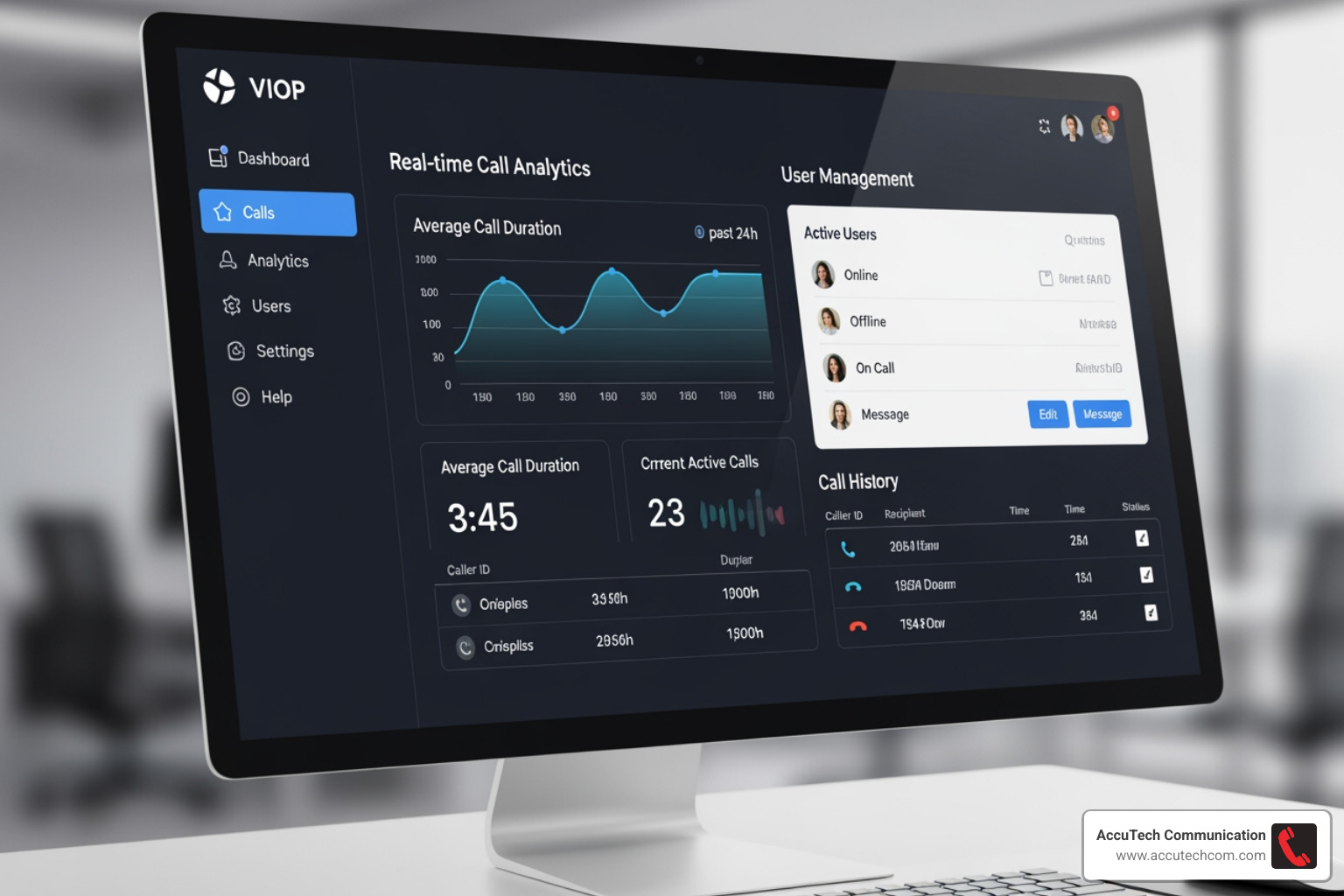
5. Advanced Call Management & Analytics
Understanding your call data is key to making informed business decisions. Advanced call management features include call recording for quality assurance and training, voicemail-to-email transcription for quick message retrieval, and call monitoring tools for supervisors. Comprehensive performance reports provide valuable insights into call volumes, agent performance, and customer interactions. This data-driven approach allows you to optimize your communication strategies and improve customer service.
6. Security and Reliability Features
Security is paramount for any business communication system. A robust business phone service VoIP should offer strong security measures like encryption for calls and messages, and multi-factor authentication (MFA) to protect user accounts. For healthcare providers in Massachusetts, New Hampshire, or Rhode Island, HIPAA compliance considerations are non-negotiable. We understand the importance of secure communications and ensure our solutions meet stringent industry standards. Furthermore, reliable providers offer Service Level Agreements (SLAs) guaranteeing uptime and provide essential services like E911, which ensures your location information is accurately sent to emergency services, complying with regulations like the Ray Baum Act.
7. Scalability and System Administration
The beauty of cloud-based VoIP is its inherent scalability and ease of administration. As your business evolves, you can effortlessly add or remove users, lines, and features without needing specialized hardware or complex reconfigurations. A centralized online portal allows for real-time changes to call routing, user settings, and feature assignments. This means less reliance on IT resources and more agility for your business to adapt and grow. We’ve created a table to illustrate the typical differences between basic and advanced VoIP plans:
| Feature Category | Basic Business Phone Service VoIP Plan | Advanced Business Phone Service VoIP Plan |
|---|---|---|
| Core Calling | Unlimited domestic calling, caller ID, call waiting, voicemail. | All Basic features, plus international calling packages, call recording, and voicemail-to-email transcription. |
| Collaboration | Basic team messaging. | Advanced team messaging with file sharing, video conferencing with screen sharing, and task management integrations. |
| Mobility | Mobile app for calls and voicemail. | Full-featured mobile and desktop softphone apps with presence status and call transfer capabilities. |
| Integrations | Limited or no integrations. | CRM integration (e.g., Salesforce, HubSpot), Microsoft 365/Google Workspace integration, and API access for custom solutions. |
| Analytics & Reporting | Basic call logs. | Advanced call analytics, real-time dashboards, and customizable reports on call volume, duration, and agent performance. |