
Why Businesses Are Switching to 4G CCTV Cameras with SIM Cards
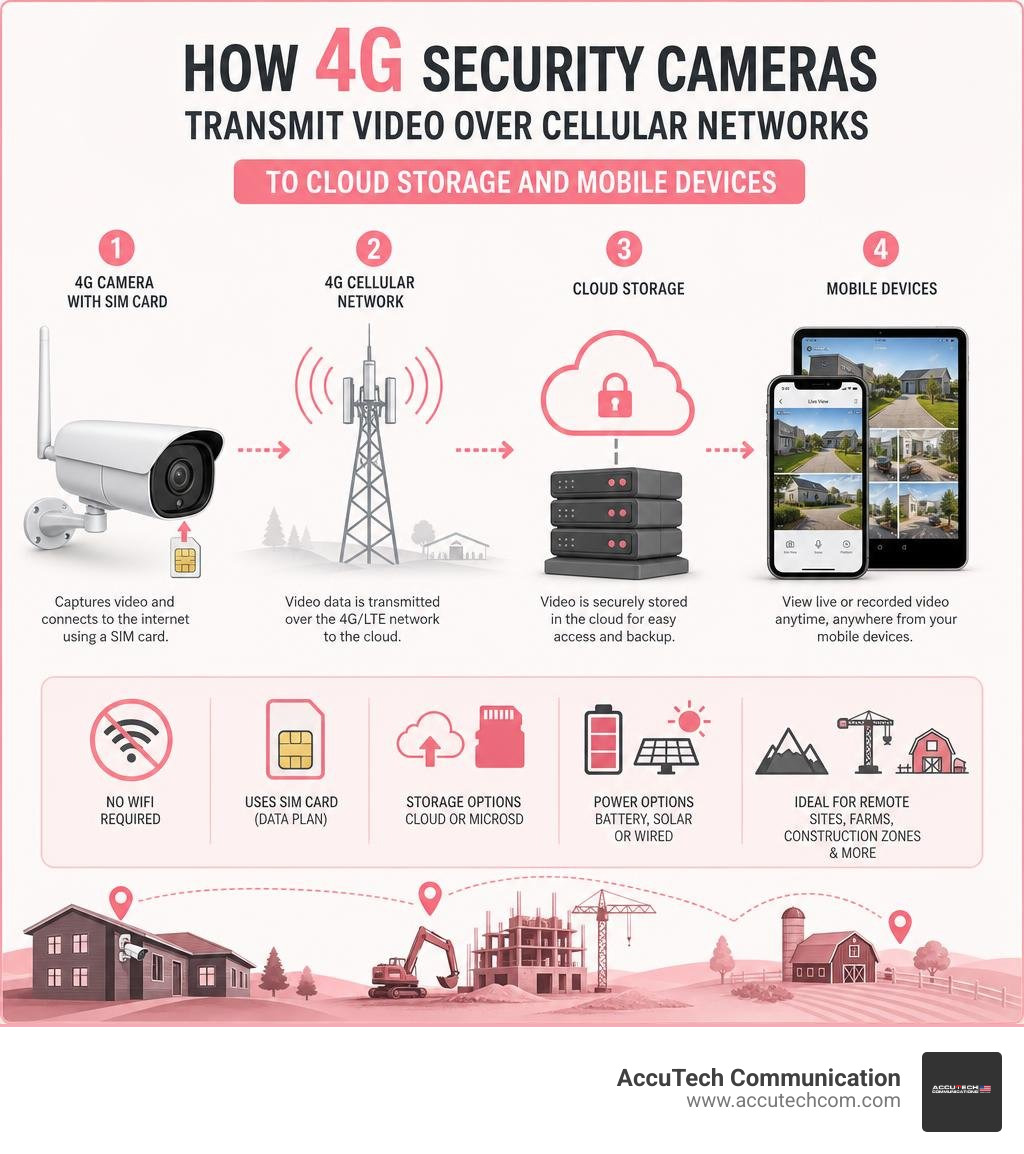
A 4G CCTV camera with SIM card is a security camera that connects to the internet using a mobile cellular network — just like a smartphone — instead of relying on WiFi or wired infrastructure.
Here’s what you need to know at a glance:
- No WiFi required — operates anywhere with 4G cellular coverage
- Uses a SIM card (standard, micro, or nano) with a data-only plan
- Typical data usage — 2GB to 5GB per month under normal conditions
- Power options — solar panel, rechargeable battery, or wired power
- Storage options — local microSD card (up to 128GB) or cloud backup
- Best for — remote sites, construction zones, farms, and locations without existing network infrastructure
- Resolution — modern models reach up to 4K 8MP, with color night vision and PTZ controls
For commercial operations in Massachusetts, New Hampshire, and Rhode Island, this technology solves a real problem: how do you secure a site that has no internet, no power runs, and no time for a complex installation?
Traditional wired CCTV systems are powerful, but they depend on existing network infrastructure. WiFi cameras are convenient, but their range is limited and signal reliability can be inconsistent — especially on large commercial properties or temporary job sites.
4G cellular cameras cut through both of those limitations. They transmit video over the same mobile networks your phone uses, making them truly location-independent.
That said, they’re not the right fit for every situation. Data costs, carrier coverage, and hardware selection all affect whether a cellular camera is the smart choice for your business.
This guide covers everything commercial operators need to know — from how these cameras work to how to choose, deploy, and maintain them effectively.
I’m Corin Dolan, owner of AccuTech Communications, and I’ve spent decades helping commercial clients across New England design and implement surveillance systems — including 4G CCTV cameras with SIM cards for sites where traditional infrastructure simply isn’t an option. In the sections below, I’ll walk you through everything your business needs to make a confident, informed decision.
What is a 4G CCTV Camera with SIM Card?
A cellular security camera is a standalone surveillance device built to operate without a local local area network (LAN) connection. Instead of wiring the device into an Ethernet switch or pairing it with a local WiFi router, you insert a cellular SIM card directly into the camera’s body.
These devices connect to regional cellular towers owned by major telecommunications providers. When you deploy a 4G CCTV camera with SIM card, you are essentially giving the camera its own cellular subscription. This allows the camera to send real-time alerts, stream live video to your mobile device, and upload critical footage to cloud servers completely independent of any local network.
For businesses looking to establish a comprehensive CCTV Security Camera system, cellular technology bridges the gap between high-security monitoring and extreme physical isolation. By utilizing standard, micro, or nano-SIM cards, these cameras function as fully realized IP cameras that can be accessed remotely from anywhere in the world, as long as there is cellular coverage.
How Cellular Security Cameras Differ from WiFi Systems
Understanding the differences between cellular and WiFi security systems is essential for planning your commercial security layout. WiFi cameras are excellent for indoor office spaces or areas immediately adjacent to your main building. However, they suffer from strict range limitations, signal degradation through physical barriers, and vulnerability to local power or internet outages.
A 4G cellular camera operates on a completely different network paradigm. It does not compete for bandwidth on your local corporate network, which protects your internal business operations from high-volume video traffic.
Below is a direct comparison of how these two wireless security options stack up:
| Feature | 4G Cellular CCTV Camera | Traditional WiFi Camera |
|---|---|---|
| Primary Connection | 4G LTE / 5G Mobile Networks | 2.4GHz / 5GHz Local WiFi Router |
| Range Limits | Virtually unlimited (anywhere with cellular signal) | Typically 100–150 feet from the router |
| Power Autonomy | High (often paired with solar and battery) | Low (usually requires nearby AC outlet) |
| Network Security | Highly secure cellular encryption | Vulnerable to local WiFi hacking/jamming |
| Operational Costs | Monthly data plan subscription required | Free (utilizes existing building internet) |
| Deployment Speed | Minutes (plug-and-play) | Hours (requires router pairing/network configuration) |
Key Features of a 4G CCTV Camera with SIM Card
Modern 4G security cameras are packed with enterprise-grade features designed to withstand the elements while providing crystal-clear imaging.
- Ultra-High Resolution: Historically, cellular cameras were limited to low-resolution streams to conserve mobile data. Today, systems easily deliver 2K (3MP/4MP) and even 4K (8MP) resolutions, allowing you to capture fine details like license plates and facial features.
- Smart Detection and AI Filtering: Built-in Passive Infrared (PIR) sensors and edge-based AI algorithms analyze motion in real time. By distinguishing between human/vehicle shapes and environmental movement (like wind or animals), these cameras reduce false alarms by up to 90%.
- Advanced Dual-Lens Options: Devices like the Reolink Duo 4G – LTE 2K Battery Solar Dual-Lens Camera | Reolink Official offer a 150-degree horizontal field of view with minimal distortion, effectively doing the work of two traditional cameras with a single cellular connection.
- Flexible Night Vision Modes: Many models feature both traditional infrared night vision (reaching up to 65 feet in pitch darkness) and powerful spotlights that enable full-color night vision to help identify clothing and vehicle colors after dark.
- Rugged Weatherproofing: These cameras are built for the harsh New England elements. With IP66 or IP67 weatherproof ratings, they operate reliably in extreme temperatures ranging from -20°C to 60°C, easily surviving Massachusetts blizzards and summer humidity.
- Pan-Tilt-Zoom (PTZ) Functionality: Many 4G cameras offer 355-degree horizontal panning and 120-degree vertical tilt, which can be controlled remotely via a smartphone app. This gives your security team complete situational awareness over a wide area. Some models, like the ZY-G1 4G LTE Cellular Security Camera | No WiFi Needed – ieGeek, combine PTZ with robust battery designs for maximum coverage.
Commercial Benefits and Use Cases for Cellular Surveillance
For businesses operating in New England, protecting physical assets is a 24/7 job. Implementing Commercial Security Cameras that utilize cellular data allows you to extend your security perimeter far beyond the physical walls of your offices.

Whether you need to monitor a sprawling parking lot in Worcester, a remote storage yard in Manchester, NH, or a waterfront dock in Providence, RI, cellular cameras provide the flexible, reliable coverage your business demands.
Remote Site Security and Monitoring
The most common application for cellular surveillance is securing properties that lack traditional utility connections.
- Construction Sites: Construction yards are prime targets for tool theft, copper wire scavenging, and vandalism. Because these sites are constantly evolving, running permanent network cables is highly impractical. 4G cameras can be mounted to temporary poles and moved as the job progresses.
- Agricultural Properties and Farms: Large farms and nurseries have massive perimeters that are impossible to cover with WiFi. Cellular cameras allow owners to monitor livestock, secure equipment sheds, and keep an eye on remote access gates.
- Utility Substations and Water Treatment Facilities: Critical infrastructure sites are often located in isolated areas. Utilizing a dedicated cellular connection ensures that security teams receive immediate alerts if an unauthorized entry occurs, keeping public utilities safe.
- Storage Yards and Parking Lots: Businesses that manage vehicle fleets or outdoor inventory can deploy cellular cameras to the far corners of their properties without the massive expense of trenching cables.
By integrating these cameras into your broader CCTV for Business strategy, you gain eyes on your most vulnerable assets without compromising on video quality or reliability.
Temporary and Rapid Deployment Scenarios
Some security needs are temporary. Setting up a permanent security network for a weekend event or a short-term project is a waste of capital. This is where rapid-deployment cellular systems shine.
For example, municipal departments and event coordinators can utilize systems like the 4G Solar-Powered Security Camera kit | Harotech. These all-in-one kits can be deployed on a heavy-duty tripod or utility pole in less than ten minutes. They are perfect for:
- Public Festivals and Concerts: Monitor crowd flow and secure entrance gates during temporary public gatherings.
- Seasonal Storage Areas: Protect temporary retail garden centers or holiday inventory yards.
- Emergency Management: Deploy rapid-response cameras to monitor areas affected by storm damage, flooding, or public safety incidents across New England.
Technical Considerations: Data Plans, Storage, and Power
Deploying a cellular camera system requires a shift in how you think about power and data. Because these units are designed to be self-sustaining, you must balance your storage needs, power availability, and data budgets.
Estimating Monthly Data Usage
Data consumption is the primary operational cost of running a 4G security camera. On average, a cellular security camera uses 2GB to 5GB of data per month under standard operating conditions. However, your actual data usage will depend heavily on several factors:
- Recording Mode (Continuous vs. Motion-Triggered): Continuous 24/7 streaming will exhaust a standard data plan in a matter of days. To conserve data, commercial cellular cameras are typically configured to record only when their PIR sensors detect motion.
- Video Resolution and Bitrate: Streaming in 4K resolution requires significantly more data than streaming in 1080p or 2K. Most cameras allow you to set a lower-resolution “sub-stream” for live viewing while saving the high-resolution “main-stream” to local storage.
- Remote Live Viewing Frequency: Every time a security manager logs into the mobile app to view a live stream, the camera uses cellular data. Keeping live streams short and purposeful is key to managing costs.
- Video Compression Standards: Modern cameras that support H.265 video encoding save approximately 40% to 50% on both storage space and cellular data compared to older H.264 models.
To manage these requirements, businesses often use specialized Prepaid Data Only Sim Card for Security Camera | 4G Network plans. These IoT-specific SIM cards automatically connect to the strongest regional network (whether AT&T, T-Mobile, or Verizon) and offer flexible, data-only packages designed specifically for surveillance devices.
Alternatively, some models feature built-in virtual SIM (VSIM) technology, such as the 4G Solar Outdoor Security Camera with 360-Day Unlimited VSIM Data,Remo – MOES, which includes pre-packaged annual data plans directly from the manufacturer.
How to Choose a 4G CCTV Camera with SIM Card for Your Business
When selecting a cellular camera for commercial use, look beyond the basic hardware specs. Consider these critical criteria:
- Carrier Compatibility: Ensure the camera supports the specific LTE bands used by carriers in your geographic area. In New England, signal strength can vary wildly between urban centers like Boston and rural parts of New Hampshire.
- Power Autonomy: Look for cameras with large-capacity internal batteries (typically 10,400mAh or higher) paired with high-efficiency solar panels (5W to 8W). A quality solar setup, like the Solar Outdoor Camera Wireless, 4G 2-Way 10400Mah | K&F Concept – KENTFAITH, ensures the camera remains powered even during consecutive cloudy days.
- Storage Redundancy: To avoid costly cloud subscription fees and reduce data usage, prioritize cameras that support local storage via high-end microSD cards (up to 128GB or 256GB). This allows the camera to record high-resolution footage locally, which you only download over the cellular network when an incident occurs.
Professional Installation and Cost Breakdown
While many cellular cameras are marketed as simple, DIY-friendly devices, deploying them across a commercial enterprise requires a professional approach. Proper placement, signal testing, and mounting are the differences between a reliable security net and a system that constantly drops offline.
Average Hardware and Operational Costs
When budgeting for a commercial cellular camera deployment, you must account for both upfront hardware costs and ongoing operational fees.

Based on general industry averages compiled from public online data, commercial-grade 4G security cameras typically range from $150 to $600+ per camera for the hardware alone, depending on resolution, PTZ capabilities, and solar accessories. Specialty industrial kits or multi-camera cellular hubs can range anywhere from $800 to over $2,500 for high-end, rapid-deployment setups.
On the operational side, cellular data plans generally cost between $10 and $50 per month per camera, depending on your data limits and carrier contracts.
Please note: All prices mentioned in this guide are average market costs sourced from publicly available internet data and do not represent the actual pricing of AccuTech Communications. Every commercial project is unique, and we provide customized estimates based on your specific site needs.
Why Professional Installation Matters
For businesses in Massachusetts, New Hampshire, and Rhode Island, partnering with a certified integrator like AccuTech Communications ensures your system is built to last.
Our team specializes in:
- Signal Strength Optimization: We perform comprehensive RF signal testing at your installation sites to ensure your cameras have a stable, high-speed connection to local cell towers.
- Optimal Mounting and Angle Adjustment: We mount cameras at the recommended height of 8 to 10 feet to maximize PIR detection range while keeping the units safe from tampering. We also position solar panels at the perfect 30-to-45-degree angle facing south to capture maximum sunlight during New England winters.
- Seamless System Integration: If your business already has an established security framework, we can help integrate your new cellular cameras with your existing video management software (VMS) or access control systems.
By relying on professional Security Camera Installations, you avoid the common pitfalls of DIY setups, such as poor signal reception, rapid battery drain, and improper weatherproofing.
Frequently Asked Questions About Cellular Security
Do 4G security cameras require a monthly subscription?
The camera hardware itself does not strictly require a manufacturer subscription if it supports local storage via a microSD card. However, because these cameras transmit video over mobile networks, you must maintain an active cellular data plan with a mobile carrier. This can be managed via a prepaid data-only SIM card or a monthly contract with a major telecom provider.
Can these cameras operate completely off-grid?
Yes. When a 4G cellular camera is equipped with a high-capacity rechargeable battery and paired with a compatible solar panel, it can operate indefinitely without any connection to the electrical grid. The solar panel charges the battery during the day, and the battery powers the camera’s low-consumption sleep and recording modes through the night.
What happens if the cellular signal is weak?
If a camera is installed in an area with poor cellular reception, you may experience delayed alerts, pixelated video, or frequent offline statuses. To resolve this, professional installers can equip the camera with high-gain external antennas or signal boosters. In some cases, switching to a carrier with better local coverage using a multi-network roaming SIM card is the best solution.
Conclusion
A 4G CCTV camera with SIM card is a game-changing solution for modern businesses, offering unparalleled flexibility and security in areas where traditional networks cannot reach. By eliminating the need for local WiFi and wired power, these systems allow you to protect valuable assets, monitor remote job sites, and maintain complete situational awareness no matter where your properties are located.
However, designing a reliable, cost-effective cellular surveillance network requires careful planning around data usage, power management, and hardware selection.
Since 1993, AccuTech Communications has provided certified, reliable, and competitively priced technology services to businesses throughout Massachusetts, New Hampshire, and Rhode Island. Whether you need structured cabling, advanced network integration, or a tailored commercial surveillance setup, our team is here to help.
To find the perfect surveillance setup for your regional business, explore our guide on Business Security Solutions: Finding the Perfect Camera System for Your Enterprise, or contact us today to request a professional estimate.
